As dawn breaks over neighborhoods from southern Spain to western Germany, many families are reshaping their routines before the day's fiercest heat arrives. Children are taken to playgrounds in the early morning rather than the afternoon. Windows are opened before sunrise and shutters closed as temperatures climb. Outdoor work, shopping and exercise increasingly take place before midday, reflecting a rhythm that has become familiar during Europe's increasingly severe summers.
The adjustments have become part of daily life after a record-breaking June heatwave pushed temperatures above 40 degrees Celsius across large parts of the continent, disrupting transport, straining electricity networks and contributing to thousands of excess deaths. Scientists say Europe is the world's fastest-warming continent, and the latest heatwave has underscored how families are adapting in homes and communities originally designed for milder climates.
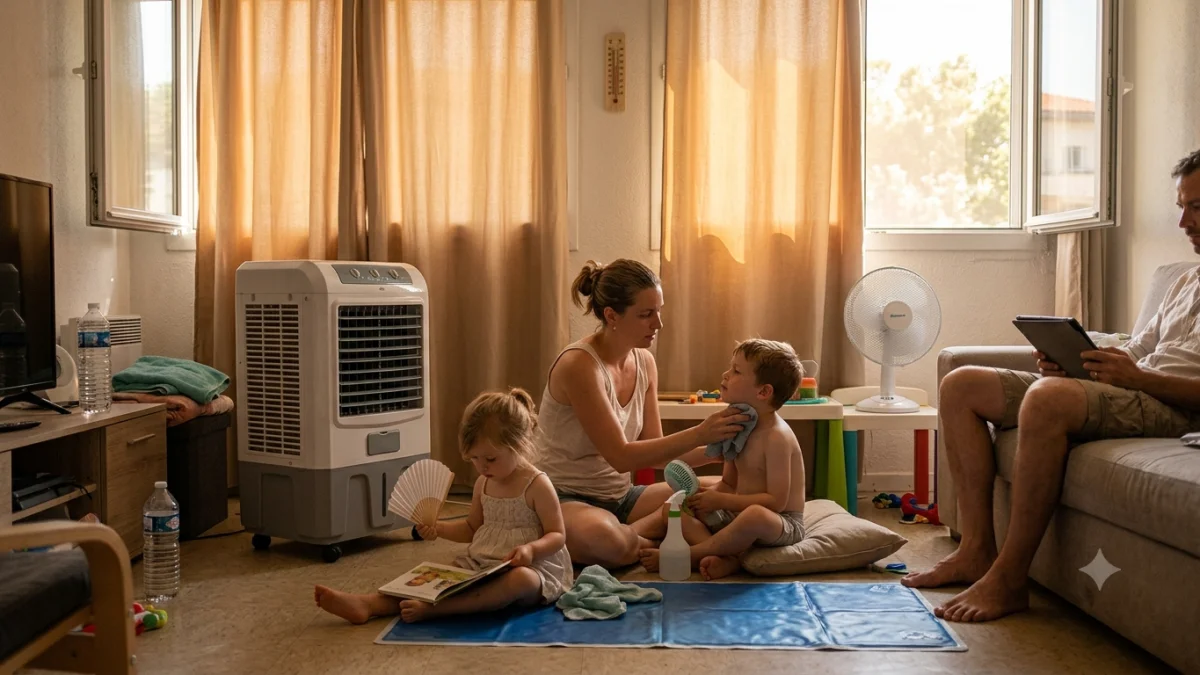
For many households, staying cool has become a practical challenge rather than an occasional inconvenience. Retailers across several countries reported surging demand for fans and portable air conditioners as temperatures climbed. In Paris, long queues formed outside appliance stores, while social media posts showed shoppers waiting for cooling equipment that quickly sold out.
Those scenes reflect a broader reality across Europe, where residential air conditioning remains far less common than in many hotter regions of the world. Much of the continent's housing stock was built to retain warmth during winter rather than release heat in prolonged summer extremes. During the latest heatwave, families relied on blackout blinds, cross-ventilation, cooling centers and carefully planned daily schedules to reduce exposure during the hottest hours.
Authorities have encouraged residents to check regularly on elderly relatives and neighbors, who remain among those most vulnerable to heat-related illness. Public health agencies issued repeated warnings urging people to stay hydrated, avoid strenuous outdoor activity during peak temperatures and seek cooler indoor spaces whenever possible.
The consequences of failing to adapt have become increasingly visible. Spain reported around 1,000 excess deaths linked to the June heatwave, while France, Belgium and the Netherlands together later reported several thousand excess deaths associated with the extreme temperatures. Public health officials said many victims were older people, particularly those living alone or in care facilities and private homes.
For working families, the heat has also altered the structure of the working day. Construction companies shifted crews to early morning hours, delivery firms equipped employees with cooling kits, and employers distributed additional drinking water, fruit and shaded rest breaks. Some municipalities restricted outdoor labor during the hottest periods as temperatures reached levels once considered exceptional.
The economic effects extend beyond the workplace. Schools temporarily closed in several countries, cultural attractions adjusted operating hours and transport systems struggled with heat damage to infrastructure, including warped railway tracks and softened road surfaces. Families planning holidays or simply commuting to work found themselves navigating disruptions that have become increasingly associated with European summers.
Climate researchers say these experiences illustrate a larger shift. A rapid analysis by World Weather Attribution concluded that human-caused climate change made the June 2026 heatwave substantially more likely and more intense. Researchers have repeatedly warned that as global temperatures continue to rise, heatwaves across Europe are expected to become both more frequent and more severe.
The challenge, many experts argue, is that Europe's climate policies have historically focused more heavily on reducing greenhouse-gas emissions than preparing homes, infrastructure and public services for unavoidable warming already underway. Krzysztof Bolesta, Poland's deputy climate minister, told Reuters that Europe "has not been good enough on adaptation," reflecting concerns that resilience measures have not kept pace with increasingly extreme weather.
Local governments are beginning to respond by expanding cooling shelters, planting more urban trees, redesigning public spaces and exploring ways to make buildings more resistant to prolonged heat. Health officials note that adaptation measures introduced since the deadly 2003 European heatwave have helped reduce mortality, but they also caution that recent events demonstrate how much work remains.
For many families, however, adaptation is measured less through policy than through everyday habits. Parents monitor weather forecasts with unusual attention. Grandparents postpone afternoon outings. Evening meals move outdoors only after temperatures ease, while windows remain shut against the afternoon sun and reopen late at night in hopes of cooler air.
Those quiet adjustments, repeated across millions of households, illustrate how Europe's changing climate is reshaping ordinary routines. What was once considered an exceptional spell of summer weather is becoming an increasingly familiar feature of family life, leaving communities to balance immediate ways of coping with the longer-term challenge of living in a continent that continues to warm.