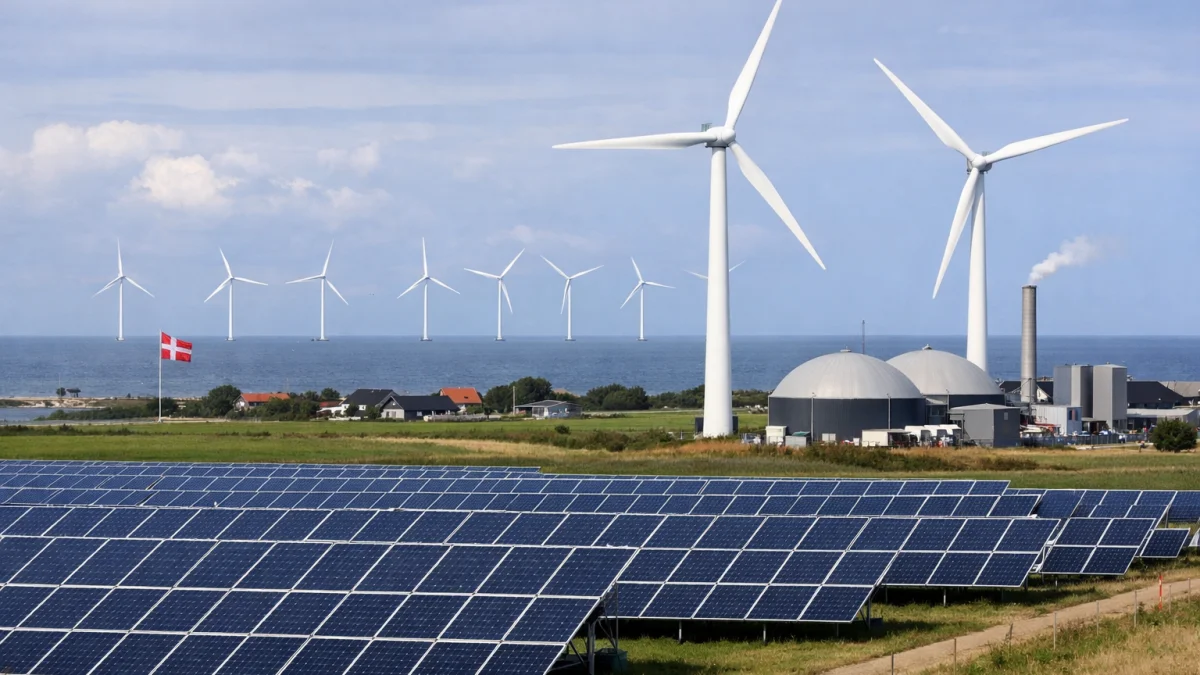
COPENHAGEN — Denmark remained the European Union's leading producer of renewable electricity as new Eurostat data showed the country generated 90.0% of its electricity from renewable sources in the first quarter of 2026, underscoring its continued dominance in the bloc's energy transition.
The figures, published by the EU's statistical office on July 1, placed Denmark ahead of Portugal, where renewables accounted for 82.9% of electricity generation, and Lithuania at 75.7%. Wind power remained the principal source of Denmark's renewable electricity output, according to Eurostat.
Across the European Union, renewable sources supplied 45.5% of electricity generated during the January-March period, up from 42.7% in the corresponding quarter of 2025. Wind was the largest contributor to renewable electricity generation, accounting for 44.9% of renewable output, followed by hydropower at 28.0% and solar energy at 17.3%, Eurostat said.
The latest figures highlight Denmark's long-standing investment in wind energy and related infrastructure, which has enabled the Nordic country to maintain one of the world's highest shares of renewable electricity production. Eurostat said Denmark's renewable generation was predominantly powered by wind, while Portugal's output relied mainly on hydropower and Lithuania's on wind energy.
The data come as the European Union continues efforts to reduce dependence on imported fossil fuels and expand domestically produced clean energy. According to Eurostat, renewable sources accounted for 47.3% of the EU's electricity generation during 2025, while renewables represented about one-quarter of the bloc's gross final energy consumption in 2024, leaving further progress necessary to meet the EU's legally binding 2030 renewable energy targets.
Recent comments from International Energy Agency Executive Director Fatih Birol and EU Energy Commissioner Dan Jørgensen have also emphasized the need for faster electrification across Europe, arguing that wider adoption of electricity in transport, heating and industry is essential for strengthening energy security and reducing reliance on imported hydrocarbons.
Despite the overall increase in renewable electricity generation, significant differences remain among EU member states. Eurostat reported that Czechia, Malta and Slovakia recorded the lowest shares of renewable electricity generation during the first quarter of 2026, illustrating the uneven pace of the energy transition across the bloc.