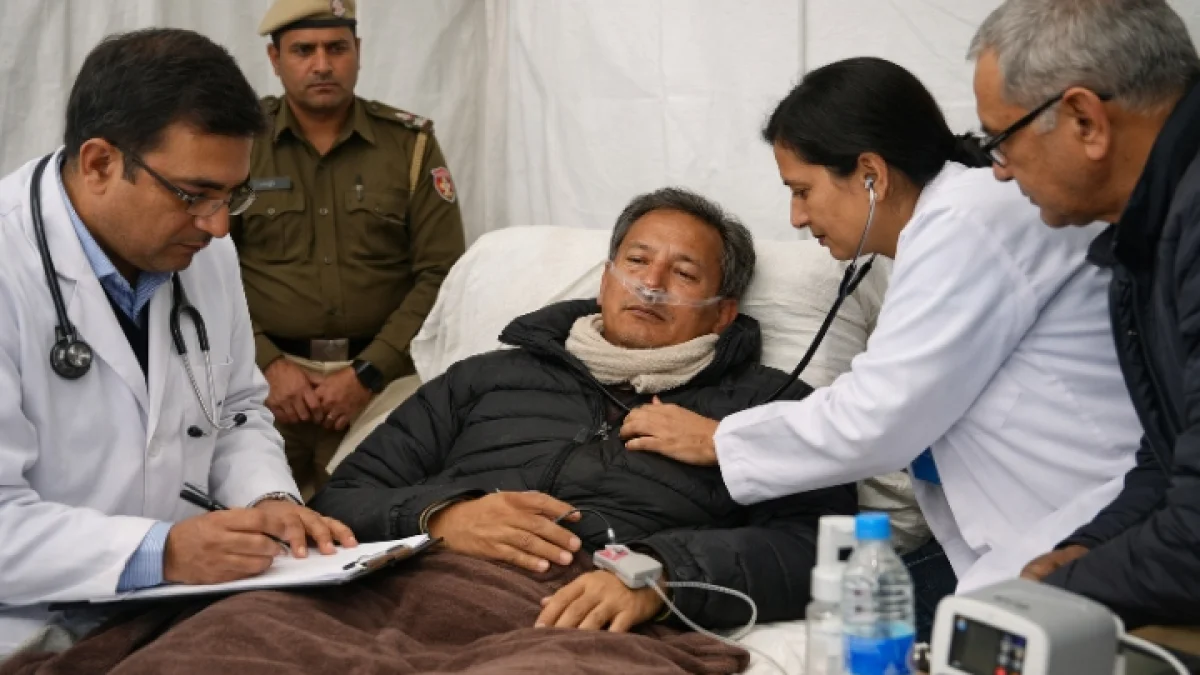
NEW DELHI—The Delhi High Court on Tuesday continued to monitor the health of climate activist Sonam Wangchuk, ordering his transfer from Safdarjung Hospital to a private medical facility after reviewing medical assessments that concluded he required continuous monitoring while on an extended hunger strike, according to court proceedings.
The division bench of Chief Justice D.K. Upadhyaya and Justice Tejas Karia allowed Wangchuk to be shifted to Medanta Hospital after hearing submissions from government lawyers, doctors from AIIMS and Safdarjung Hospital, and Wangchuk's personal physicians. The Centre told the court it had no objection to the transfer sought by Wangchuk's wife, Dr. Gitanjali Angmo.
The court's decision followed its earlier directions requiring authorities to conduct daily medical monitoring of Wangchuk and provide any treatment considered necessary if his condition deteriorated. During those proceedings, the bench emphasized that every life was precious and said government authorities should make all efforts to safeguard his health.
Wangchuk, 59, has been on a hunger strike since June 28 in support of a youth-led protest movement demanding accountability over alleged irregularities in competitive examinations, including the medical entrance examination. The protest has called for the resignation of Union Education Minister Dharmendra Pradhan.
Authorities moved Wangchuk from the protest site at Jantar Mantar to Safdarjung Hospital after citing concerns over his deteriorating health and the High Court's earlier order requiring medical supervision. His supporters and family subsequently challenged the move, arguing that he should be allowed treatment at a private hospital of his choice.
Before issuing Tuesday's order, the High Court sought medical reports from Safdarjung Hospital, AIIMS and other doctors involved in Wangchuk's care. The bench said its primary concern was preserving his life and ensuring appropriate medical supervision while considering the family's request for transfer.
The transfer order came after the court found broad agreement among the medical professionals who addressed the bench that Wangchuk required constant observation because of the risks associated with his prolonged fast. The government informed the court that it did not oppose the transfer.
The matter remains under judicial oversight as Wangchuk continues to receive medical care, with the High Court having stressed that his condition should remain under continuous clinical monitoring.