SEOUL — The world's leading memory chip manufacturers are accelerating investments in production capacity for high-bandwidth memory (HBM), betting that sustained demand from artificial intelligence infrastructure will continue to drive growth even as the industry works to ease supply constraints.
South Korea's SK Hynix on Monday launched a planned U.S. listing expected to raise about $28 billion, saying proceeds would be used to expand semiconductor manufacturing capacity in South Korea and purchase advanced production equipment, including extreme ultraviolet lithography systems, as demand for AI memory chips continues to rise.
The fundraising comes as Samsung Electronics and SK Hynix both pursue large-scale capital spending to expand output of advanced memory products used alongside AI accelerators in data centers. Industry analysts say the rapid adoption of generative AI has shifted production priorities toward HBM, a premium form of DRAM that enables faster data transfer for AI training and inference workloads.
SK Group Chairman Chey Tae-won said in June that SK Hynix aims to double its wafer production capacity over the next five years, while warning that supply bottlenecks for AI memory could persist for several years despite aggressive investment plans.
Samsung is also expected to continue expanding memory production after benefiting from a sharp increase in AI-related demand. Analysts forecast the company will report another quarter of strong earnings as higher DRAM and NAND prices, supported by tight supply, boost profitability. Demand for advanced AI systems has outpaced available memory supply, contributing to higher average selling prices across much of the industry.
Research firms say memory manufacturers are increasingly reallocating fabrication capacity toward HBM because the products command substantially higher margins than conventional DRAM. While that strategy has strengthened earnings for leading suppliers, it has also tightened availability of standard memory products used in servers, personal computers and consumer electronics.
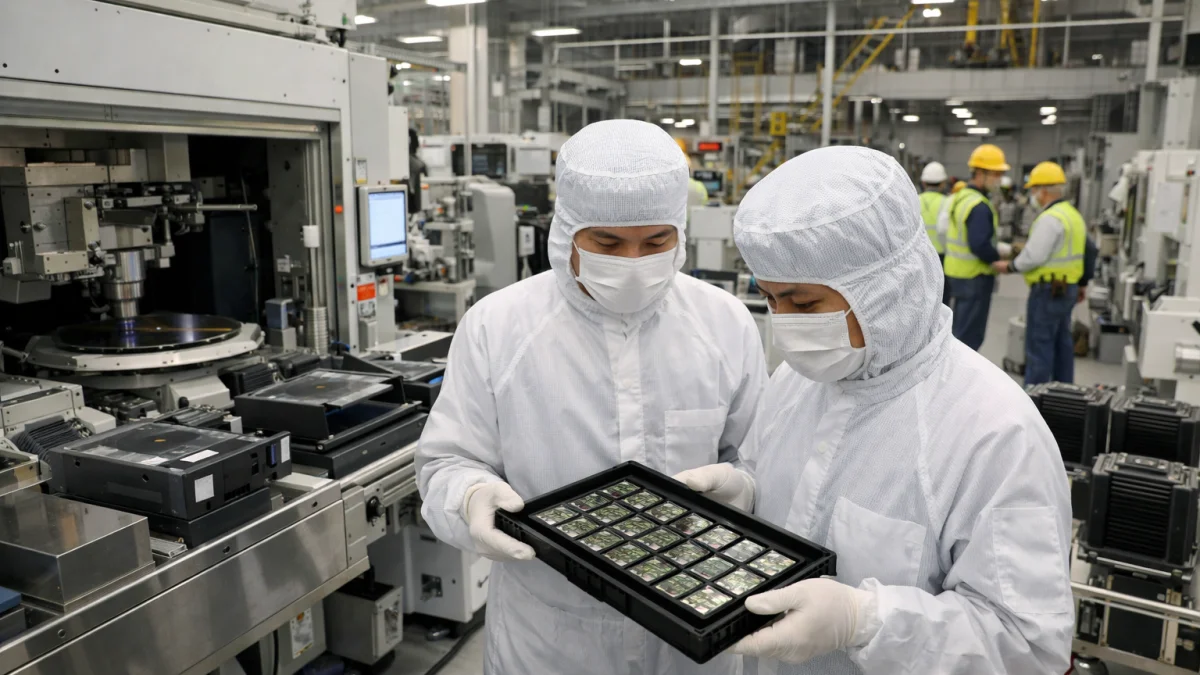
Governments are also supporting expansion efforts. South Korea recently announced a broad semiconductor investment initiative with Samsung and SK Hynix aimed at reinforcing the country's leadership in advanced memory manufacturing through new fabrication plants and HBM packaging facilities.
Despite the industry's capacity expansion, analysts caution that bringing new fabrication plants and advanced packaging lines into full production requires years of construction, equipment installation and process qualification. As a result, they expect the market for AI-focused memory chips to remain relatively tight in the near term, with manufacturers continuing to prioritize investments tied to long-term AI infrastructure demand.