LONDON — International efforts to safeguard major shipping lanes from environmental damage have intensified as governments, maritime regulators and industry groups respond to heightened risks posed by recent security incidents and increasing vessel traffic through strategically important waterways.
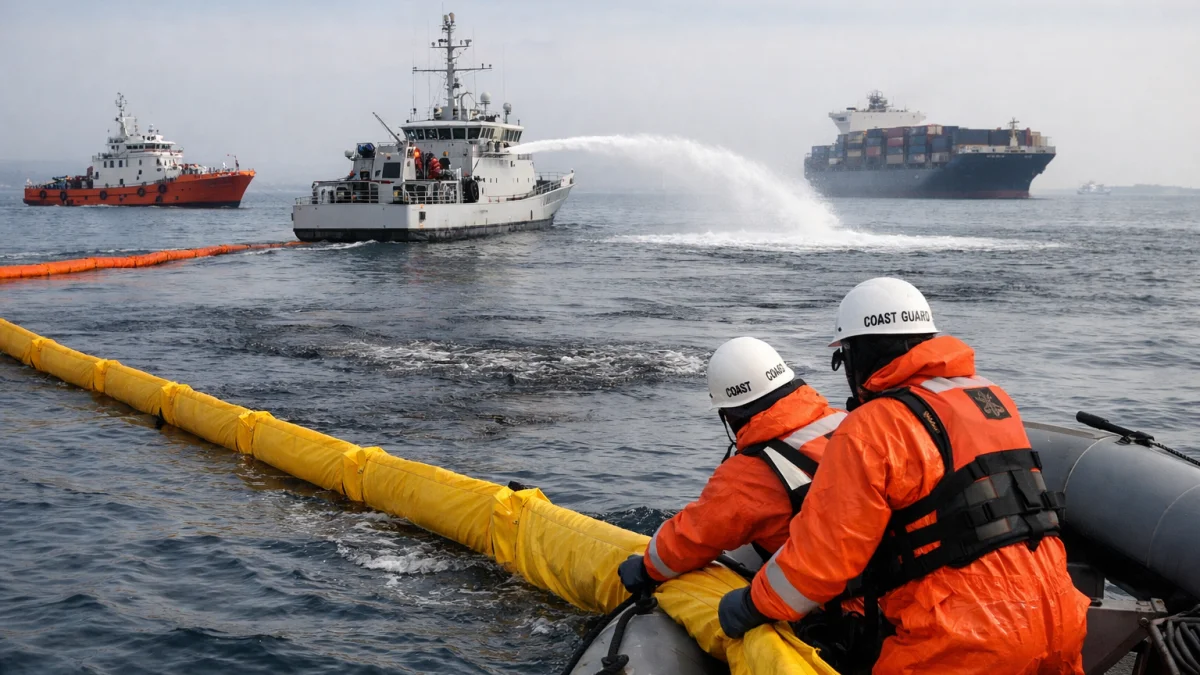
The International Maritime Organization (IMO) said its Marine Environment Protection Committee has adopted a resolution condemning attacks on commercial shipping in and around the Strait of Hormuz because of the heightened risk of marine pollution from potential oil spills, hazardous cargo releases and debris resulting from fires, explosions and other maritime incidents. The committee requested IMO Secretary-General Arsenio Dominguez to monitor environmental impacts and report developments to the organization's governing council.
The IMO said the Persian Gulf and adjacent waters are particularly vulnerable to environmental damage because of their ecological significance and their role as one of the world's busiest energy shipping corridors. The agency warned that damage to tankers or other commercial vessels could trigger large-scale pollution affecting marine ecosystems, fisheries and coastal communities.
Speaking during the committee's April session, Dominguez said prolonged disruptions to maritime traffic increase the likelihood of serious environmental accidents alongside risks to seafarers and global trade. He urged member states to continue cooperating on measures that strengthen maritime safety while limiting pollution threats.
Separately, the IMO has advanced broader environmental initiatives aimed at reducing shipping's impact on oceans. The organization approved a 2026 strategy and action plan to address marine plastic litter from ships, reaffirming its objective of eliminating plastic waste discharges from vessels by 2030. Member states also agreed in principle to develop a legally binding instrument to control ships' biofouling, a major pathway for the spread of invasive aquatic species.
The committee also approved a new North-East Atlantic Emission Control Area that will introduce stricter limits on sulphur oxides, nitrogen oxides and particulate matter from ships beginning in 2028 following the treaty's entry into force. According to the IMO, the measures are intended to reduce air pollution while protecting coastal and marine environments.
Recent discussions among governments have also included proposals intended to improve coordination and maintain safe navigation through the Strait of Hormuz following months of regional instability. Officials have emphasized that ensuring uninterrupted shipping must be accompanied by measures that minimize the risk of environmental damage from any future maritime incidents.
The IMO said it will continue monitoring conditions in high-risk maritime corridors while member states pursue additional measures to strengthen both navigational safety and environmental protection.