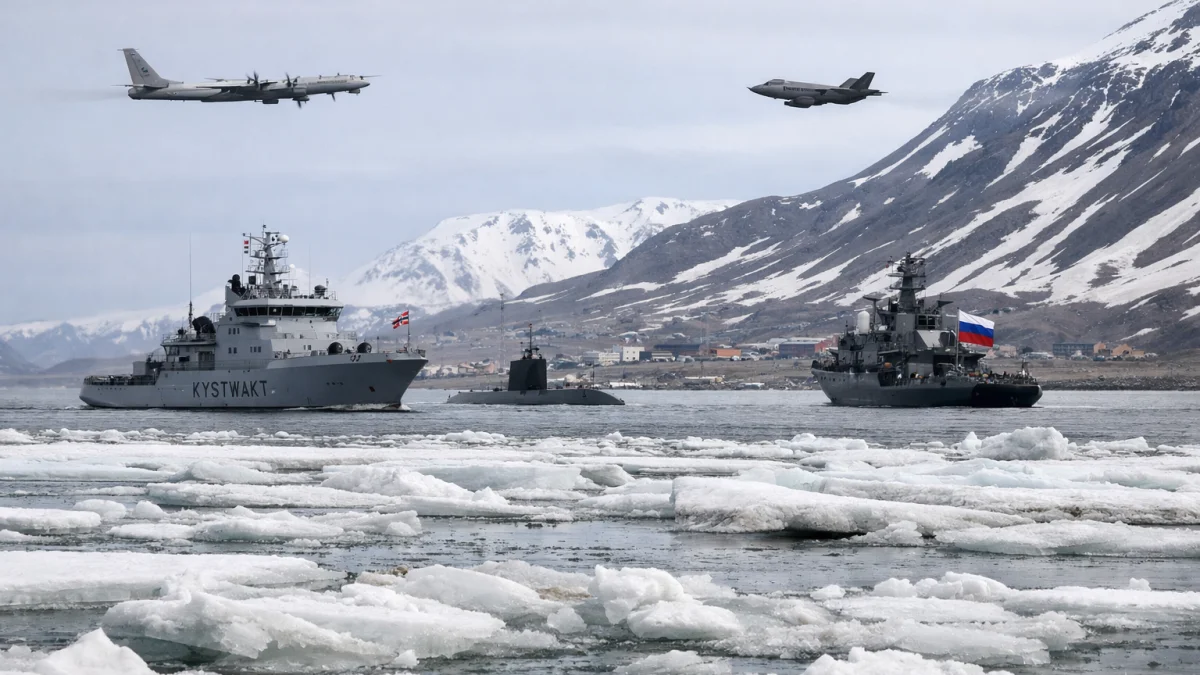
LONGYEARBYEN, Norway— Rapidly shrinking sea ice around Norway's Svalbard archipelago is intensifying strategic competition in the Arctic, as climate-driven environmental change coincides with heightened geopolitical tensions between Russia, NATO members and other powers with interests in the High North.
Satellite observations released by the European Union's Copernicus Earth observation program in June showed sea ice around Svalbard at unusually low levels, following the fourth-lowest Arctic sea ice extent on record for May. Scientists said the retreat of sea ice is altering marine ecosystems while increasing access to Arctic waters that are becoming more navigable during the summer season.
The environmental changes have unfolded alongside growing security concerns over Svalbard, a Norwegian archipelago governed under the 1920 Svalbard Treaty, which grants Norway sovereignty while allowing citizens and companies from treaty signatories to engage in commercial activities under certain conditions.
Norway's intelligence service said in its 2026 annual assessment that Russia continues to view Svalbard as strategically important and is seeking to maintain a long-term presence on the islands through mining, tourism and research. The report said Moscow has also intensified criticism of what it describes as Norway's facilitation of Western military activity in the Arctic, while warning that regional tensions could lead to more assertive Russian behavior if the Kremlin believes its interests are threatened.
Russia has repeatedly rejected suggestions that its civilian presence on Svalbard violates the treaty governing the archipelago, while Norwegian authorities maintain that they administer the islands in accordance with international law.
The Arctic has gained greater strategic importance as melting sea ice improves seasonal access to shipping routes and natural resources. Security analysts say those developments have increased attention from Arctic states and NATO, even as environmental researchers warn that the region remains among the fastest-warming places on Earth.
Reuters reported in June that NATO allies are expanding Arctic surveillance, infrastructure and cold-weather capabilities in response to Russia's military presence across the High North, although officials acknowledge that substantial investments will be required over many years.
Researchers and policymakers caution that the Arctic's environmental transformation presents both ecological risks and geopolitical challenges. While diminished sea ice may create new economic opportunities, scientists warn it also threatens fragile ecosystems and Indigenous livelihoods, underscoring the growing intersection of climate change and international security.
Norwegian authorities have continued to emphasize that Svalbard should remain a region of peaceful civilian activity governed under the treaty framework, while monitoring both environmental changes and evolving security conditions across the Arctic.