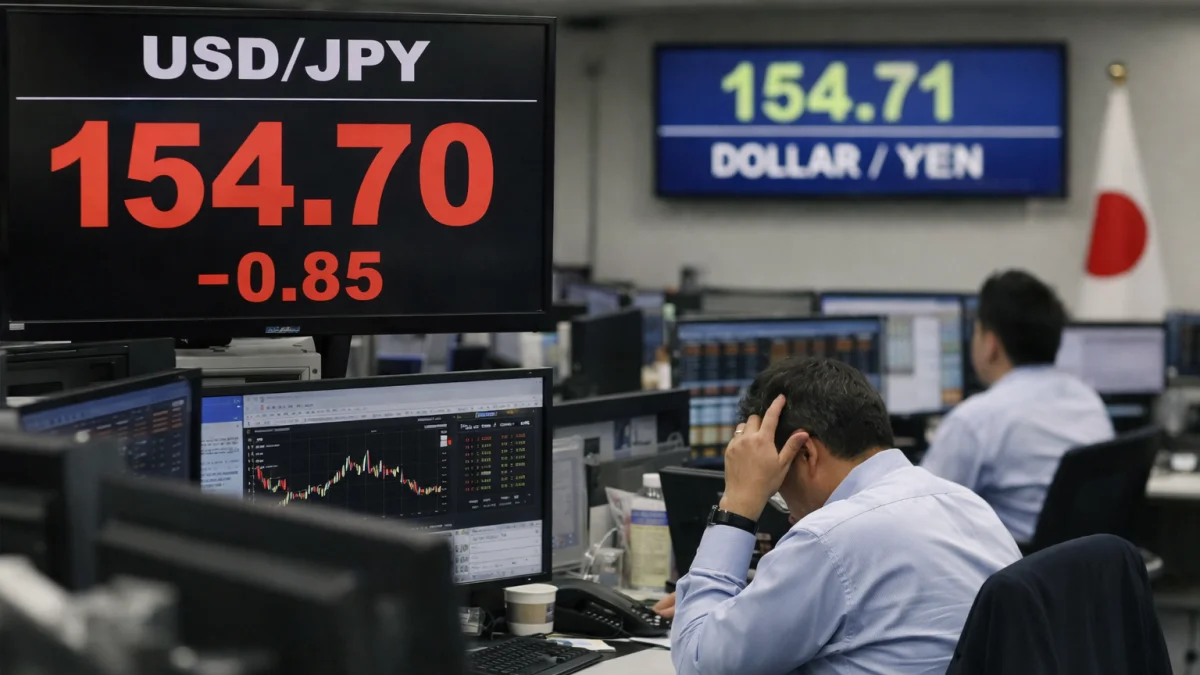
TOKYO — The Japanese yen fell to its weakest level against the U.S. dollar in four decades on Tuesday, trading around 162 yen per dollar, intensifying market expectations that Tokyo could intervene again to support the currency as its prolonged decline raises concerns among policymakers.
The yen’s slide to levels last seen in 1986 has placed foreign exchange markets on alert for possible action by Japan’s Ministry of Finance, which has previously stepped into the market to buy yen and sell dollars. The latest weakness comes despite earlier intervention efforts and signals from Japanese officials that they are prepared to respond to excessive currency volatility.
Japan Finance Minister Satsuki Katayama has said authorities are ready to act when necessary, while avoiding a specific commitment on the timing or scale of any potential intervention. Japanese officials have repeatedly warned against sharp and speculative currency moves, which they say can hurt households and businesses by increasing the cost of imported goods.
The yen’s decline has been driven in part by the continued gap between Japanese and U.S. interest rates. Investors have favored dollar-denominated assets as expectations for a stronger U.S. rate outlook have supported the dollar, while the Bank of Japan has moved more cautiously in tightening monetary policy.
Japan previously spent about 11.7 trillion yen intervening in currency markets in April and May, according to reports, but the impact on the exchange rate proved temporary as market pressures continued. Analysts have said intervention can slow a decline but may not reverse broader currency trends without changes in underlying interest-rate differences.
The weaker yen has added pressure on Japan’s economy because the country relies heavily on imported energy and other commodities priced in dollars. A sustained depreciation could increase import costs and complicate the government’s efforts to manage inflation.
Market participants are also watching upcoming U.S. economic data and central bank signals for clues on the future direction of interest rates, which could influence dollar demand and the yen’s trajectory.
For now, Japanese authorities have not announced a new currency intervention, and the yen remains near its lowest level in about 40 years as traders monitor official comments and market conditions for the next policy move.