The escalation of the Iran conflict has intensified pressure on the global aviation industry by driving crude oil and jet fuel prices sharply higher, eroding airline profitability and raising concerns that elevated travel costs could weigh on passenger demand if geopolitical disruptions persist. Recent earnings reports from major carriers and updated industry forecasts suggest that what began as a regional security crisis has become a significant economic challenge for airlines worldwide.
The significance extends beyond higher fuel bills. Aviation is uniquely exposed to energy price shocks because fuel typically represents one of an airline's largest operating expenses, while carriers also face restrictions on quickly adjusting schedules, aircraft utilization, and ticket pricing. At the same time, conflict-related airspace closures and longer flight routings have increased fuel consumption and reduced operational efficiency, amplifying the financial impact beyond the rise in oil prices alone.
The International Air Transport Association (IATA), representing most of the world's commercial airlines, revised its 2026 financial outlook in June, projecting industry net profit of about $23 billion, roughly half both its earlier forecast and estimated 2025 earnings. The organization attributed the downgrade primarily to war-related disruptions in the Middle East and a sharp increase in jet fuel prices. According to IATA, average jet fuel prices are expected to rise far faster than crude oil because refining margins for aviation fuel have widened, making airlines vulnerable even where crude prices stabilize.
Recent corporate results illustrate how those industry-wide pressures are affecting individual carriers. India's IndiGo reported a quarterly loss after fuel expenses surged by nearly 86% from a year earlier, despite continued revenue growth. The airline said it was evaluating fuel-hedging strategies after acknowledging that its limited protection against rising fuel prices left earnings exposed.
Elsewhere, airlines in Europe and North America have also cited fuel inflation as a major factor behind weaker earnings guidance. EasyJet reported a steep decline in quarterly profit as higher fuel costs offset solid passenger demand, while Southwest Airlines reduced its full-year earnings outlook after reporting a substantial increase in fuel expenses linked to tighter global oil supplies.
The current episode differs from previous energy shocks because airlines are simultaneously confronting higher operating costs and operational disruption. Airspace restrictions across parts of the Middle East have forced many international services onto longer routes, increasing flight times and fuel burn while reducing aircraft utilization. Indian authorities told parliament that carriers had cancelled tens of thousands of international flights because of regional airspace restrictions, underscoring how geopolitical instability can disrupt airline networks even far from the conflict zone.
Historically, aviation has proven highly sensitive to oil price volatility. Previous spikes during the 2008 commodity boom and other geopolitical crises compressed airline margins despite continued passenger demand. Analysts note that today's industry is financially stronger than before the COVID-19 pandemic, with healthier balance sheets and robust travel demand providing some resilience. However, profitability remains structurally thin, leaving airlines vulnerable when fuel prices rise rapidly. IATA estimates that profit per passenger this year will fall to roughly half last year's level, highlighting how quickly higher costs can erode earnings even when aircraft remain full.
Airlines have responded through several measures, including fare increases, capacity adjustments, expanded ancillary revenue and, in some cases, renewed consideration of fuel hedging. Yet each option has limitations. Ticket price increases may offset only part of higher fuel costs if consumers become more price-sensitive, while reducing capacity can protect yields but limit revenue growth. Hedging can smooth short-term volatility but cannot fully shield carriers if elevated prices persist over an extended period.
The effects extend beyond airline balance sheets. Higher aviation costs influence tourism, international business travel, air cargo pricing and broader inflation, particularly in economies heavily dependent on imported energy. For countries across Asia, which rely extensively on Gulf oil supplies, sustained disruption could place additional pressure on refining capacity and jet fuel availability, according to IATA's regional assessment.
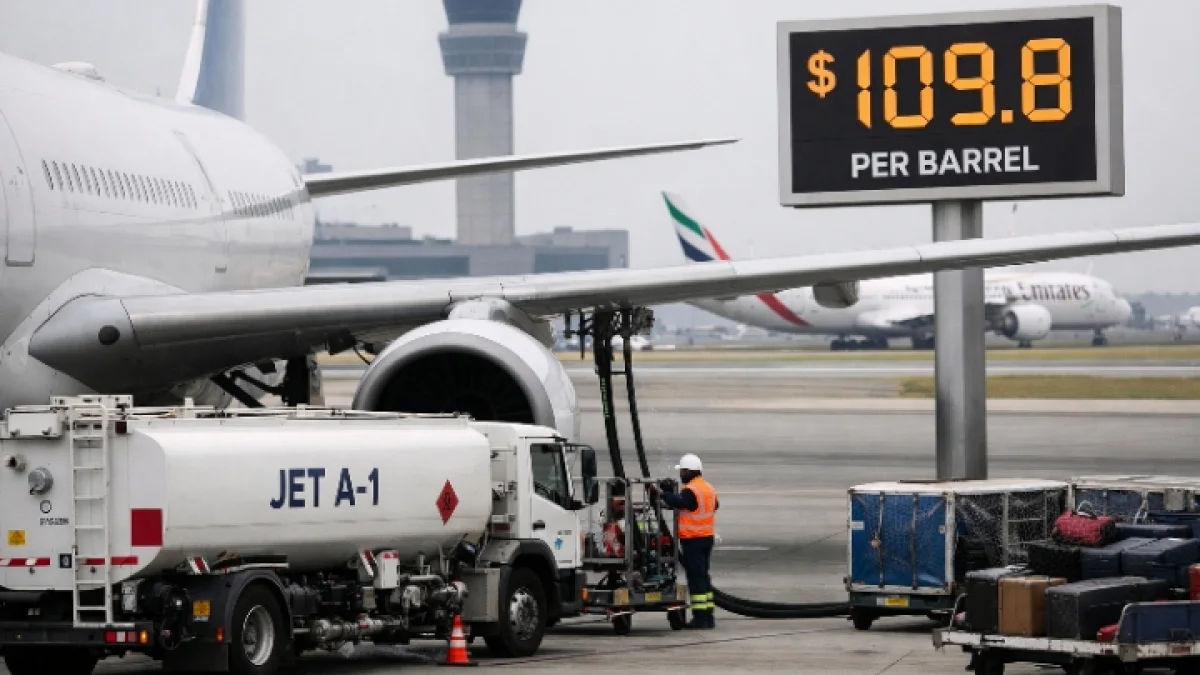
Energy markets remain the principal transmission channel linking the Iran conflict to the wider global economy. Oil prices have approached levels not seen in recent years as investors assess risks to supply routes and regional production. Although fuel markets have remained functional, traders continue monitoring developments affecting shipping lanes and refining capacity because aviation fuel prices often respond more sharply than crude benchmarks during supply disruptions.
The confirmed picture remains one of an aviation industry operating under growing financial strain rather than systemic disruption. Airlines continue to transport record numbers of passengers globally, but profitability has deteriorated as fuel costs and operational disruptions mount. Officials, industry groups and investors are closely monitoring oil markets, airspace restrictions, airline earnings and geopolitical developments to determine whether current cost pressures prove temporary or become a more prolonged challenge for global aviation.