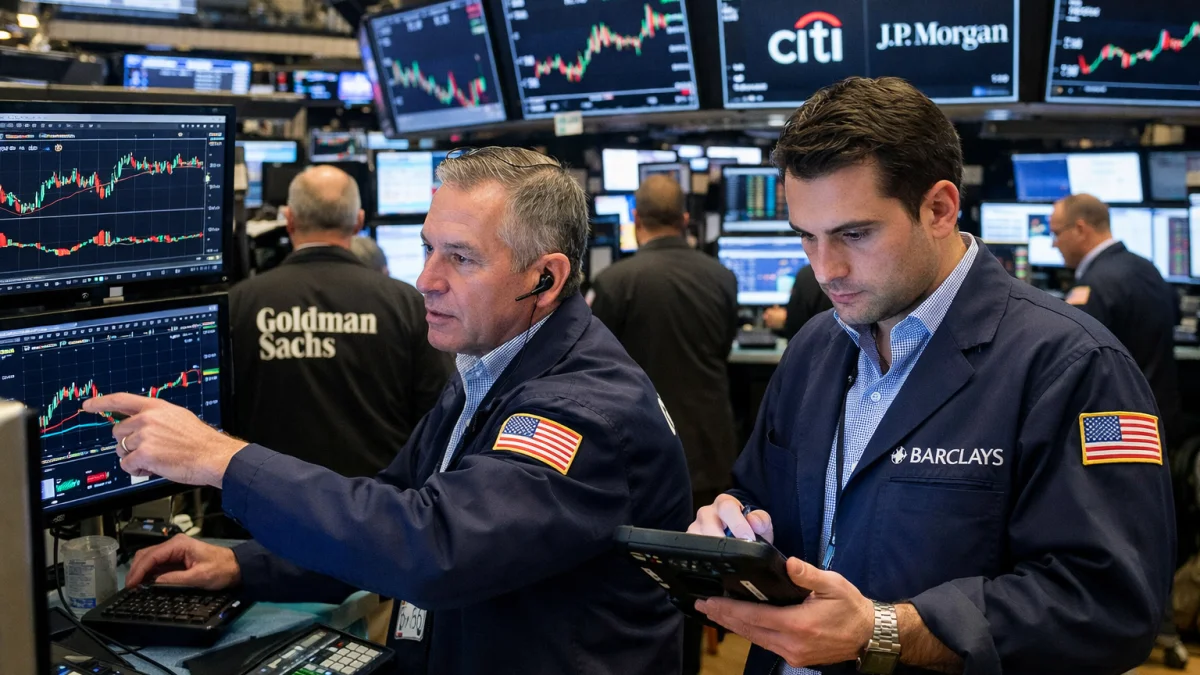
NEW YORK — Wall Street's largest banks reported record or near-record trading revenues in the second quarter as heightened market volatility, a rebound in investment banking activity and strong client demand helped drive earnings that broadly exceeded analysts' expectations.
Results released this week by major U.S. lenders showed trading desks benefited from sharp swings across equity and fixed-income markets, while a pickup in mergers, acquisitions and public listings also lifted fee income. The performance marked one of the strongest quarters for the industry's markets businesses since the pandemic-era boom, according to company filings and analysts.
JPMorgan Chase posted the highest quarterly profit ever reported by a U.S. bank, supported by robust trading and investment banking results. Goldman Sachs reported record equities trading revenue, while Bank of America said its sales and trading business generated record revenue during the quarter. Citigroup also reported record equities trading revenue, contributing to stronger-than-expected overall results. Morgan Stanley's markets division likewise benefited from elevated client activity.
Bank executives attributed the gains to increased customer activity as investors repositioned portfolios amid volatile financial markets, strong interest in artificial intelligence-related companies, major equity offerings and geopolitical uncertainty. Analysts also pointed to a resurgence in capital markets activity, including large initial public offerings and corporate dealmaking, as supporting investment banking fees.
Industry data indicated equity trading was a standout performer across the sector. Several banks reported double-digit percentage increases in trading revenue from a year earlier, with equities businesses outperforming fixed-income operations in many cases. Investment banking fees also climbed to their highest levels since 2021, reflecting a recovery in advisory work and underwriting activity.
Despite the strong quarter, executives cautioned that the favorable conditions may not persist. They cited uncertainty surrounding the economic outlook, geopolitical tensions and financial market conditions, while noting that unusually elevated trading activity can fluctuate significantly from quarter to quarter.
Investors responded unevenly to the earnings reports. Goldman Sachs shares advanced after its results, while reactions in other large bank stocks were mixed as markets weighed strong current performance against management guidance on expenses, future revenue growth and broader economic risks.
The second-quarter results are widely viewed as setting a positive tone for the broader U.S. earnings season, with investors now turning their attention to upcoming reports from companies across other sectors to assess whether strong corporate performance can be sustained through the remainder of 2026.