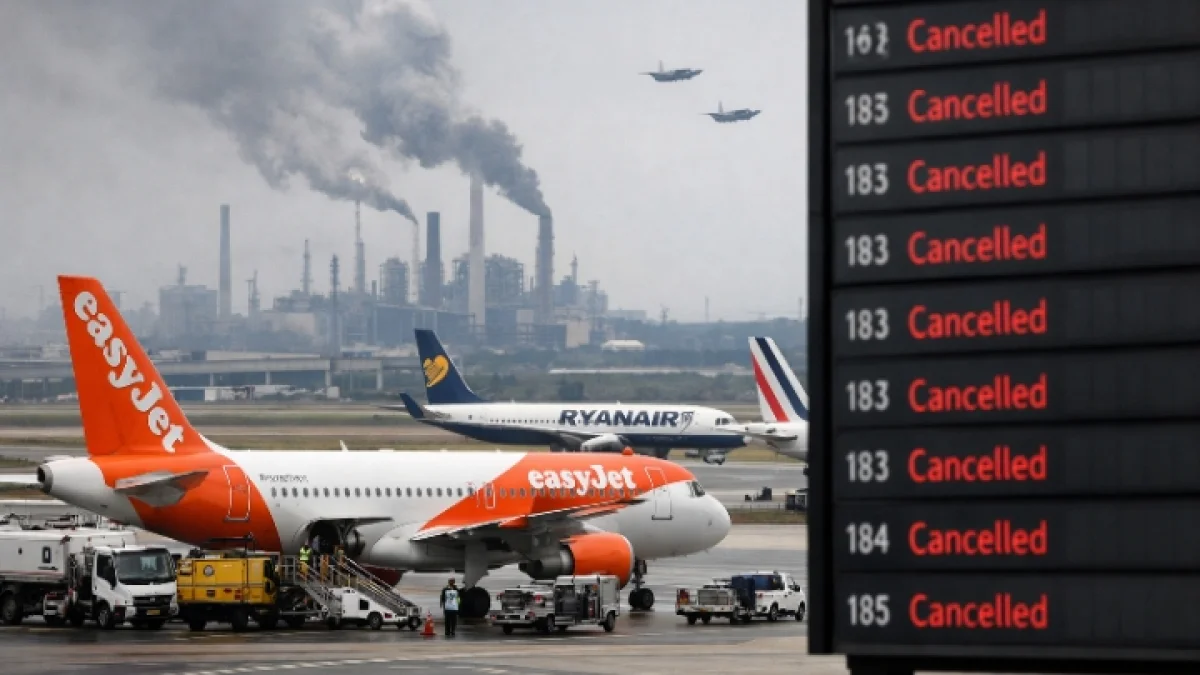
The departure boards across Europe's busiest airports continue to fill with holiday destinations, but behind the steady flow of passengers, airline executives are confronting a more difficult reality. A summer that typically delivers the strongest earnings of the year has instead become a test of how much geopolitical uncertainty the industry can absorb before higher costs and wavering consumer confidence begin to outweigh resilient demand.
That tension has become increasingly visible in recent financial results. European carriers have reported weaker profits as the conflict involving Iran has pushed fuel prices higher, complicated flight planning and encouraged travelers to wait longer before committing to trips. Airlines remain busy, but the economics of carrying millions of passengers have become markedly less favorable.
For Europe's aviation sector, the story is not simply one of weaker earnings. It reflects how conflicts far beyond the continent can ripple through household budgets, corporate travel plans and family holidays, while exposing the narrow profit margins on which airlines often operate.
EasyJet offered one of the clearest illustrations of those pressures when it reported that third-quarter profit had fallen 70% from a year earlier. The airline attributed the decline largely to a sharp increase in fuel costs following the outbreak of war involving Iran, saying its fuel bill had risen by more than £100 million even as it continued flying a similar number of passengers. Chief Executive Kenton Jarvis said demand remained resilient for the peak summer season but acknowledged that travelers had become more cautious, with bookings increasingly shifting closer to departure dates.
Europe's largest airline by passenger numbers has faced similar headwinds. Ryanair reported that quarterly profit had fallen by roughly one-third as higher fuel costs combined with softer fares. Chief Executive Michael O'Leary said uncertainty surrounding the conflict had made consumers more hesitant about booking holidays well in advance, forcing airlines to stimulate demand through lower ticket prices while simultaneously paying more for fuel.
Those experiences echo a broader warning from the International Air Transport Association. The industry's global trade body cut its 2026 profit forecast sharply, saying war-related disruptions in the Middle East, elevated fuel prices and operational uncertainty had dramatically worsened airlines' financial outlook. Although passenger numbers are still expected to reach record levels, much of the additional revenue is being offset by soaring operating expenses, particularly fuel.
For travelers, those financial pressures are often less visible than a ticket price or a delayed departure. Airlines have sought to preserve demand by limiting fare increases where possible, even as fuel has become substantially more expensive. That balancing act has left many carriers absorbing part of the cost increase themselves, eroding profitability during what is traditionally their strongest period.
Industry analysts say airlines have few easy options. Passing every additional cost to passengers risks discouraging travel at a time when household budgets across Europe remain under pressure from broader economic uncertainty. Absorbing the increases instead weakens earnings and limits financial flexibility for fleet investment, hiring and expansion.
The challenge extends beyond fuel. Airspace closures and restrictions linked to geopolitical tensions continue to force airlines onto longer routes in some regions, increasing flying time and fuel consumption. European carriers have also spent years adapting to restrictions over Russian airspace, while new disruptions in the Middle East have added another layer of operational complexity. Those longer routings affect schedules, aircraft utilization and crew planning in ways passengers rarely see but airlines measure carefully every day.
Not every airline has been affected equally. Companies with extensive fuel hedging programs entered the crisis with some protection against immediate price spikes, allowing them to delay the impact of higher market prices. Others with less extensive hedging have seen costs rise more quickly, highlighting how financial strategy can become as important as operational efficiency during periods of geopolitical instability.
Despite the difficult quarter, demand for travel has not disappeared. EasyJet maintained its capacity plans for the year, pointing to healthy summer bookings despite the changing booking patterns. Airlines across Europe continue to report strong passenger volumes, suggesting that many families remain determined to travel even if they delay decisions or search more aggressively for lower fares.
The resilience of passengers has also supported aircraft manufacturers and maintenance providers, which continue to benefit from exceptionally large order backlogs. Delays in new aircraft deliveries have forced many airlines to keep older aircraft in service longer, increasing maintenance needs while reducing the industry's ability to improve fuel efficiency through fleet renewal. The result is an unusual period in which airlines face rising operating costs even as aerospace manufacturers enjoy sustained demand.
For airline employees—from pilots and cabin crews to dispatchers and maintenance engineers—the financial squeeze carries practical consequences. Carriers seeking to protect margins must continuously reassess schedules, aircraft deployment and staffing while maintaining reliable operations during the busiest travel season. Behind each published timetable lies a network of commercial decisions shaped by oil prices, geopolitical developments and consumer behavior that can change from week to week.
The months ahead will depend largely on factors airlines cannot control. Fuel prices, regional security and consumer confidence will influence whether late-summer bookings remain strong enough to offset higher operating costs. Industry executives have repeatedly emphasized that the trajectory of earnings now rests as much on global events as on traditional measures of travel demand.
For millions of passengers filling European airports this summer, the journey may still begin with familiar rituals of check-in lines, boarding calls and holiday departures. For the airlines carrying them, however, each full aircraft also represents a reminder that in an interconnected world, the profitability of a flight departing London, Dublin or Berlin can hinge on events unfolding thousands of kilometers away.