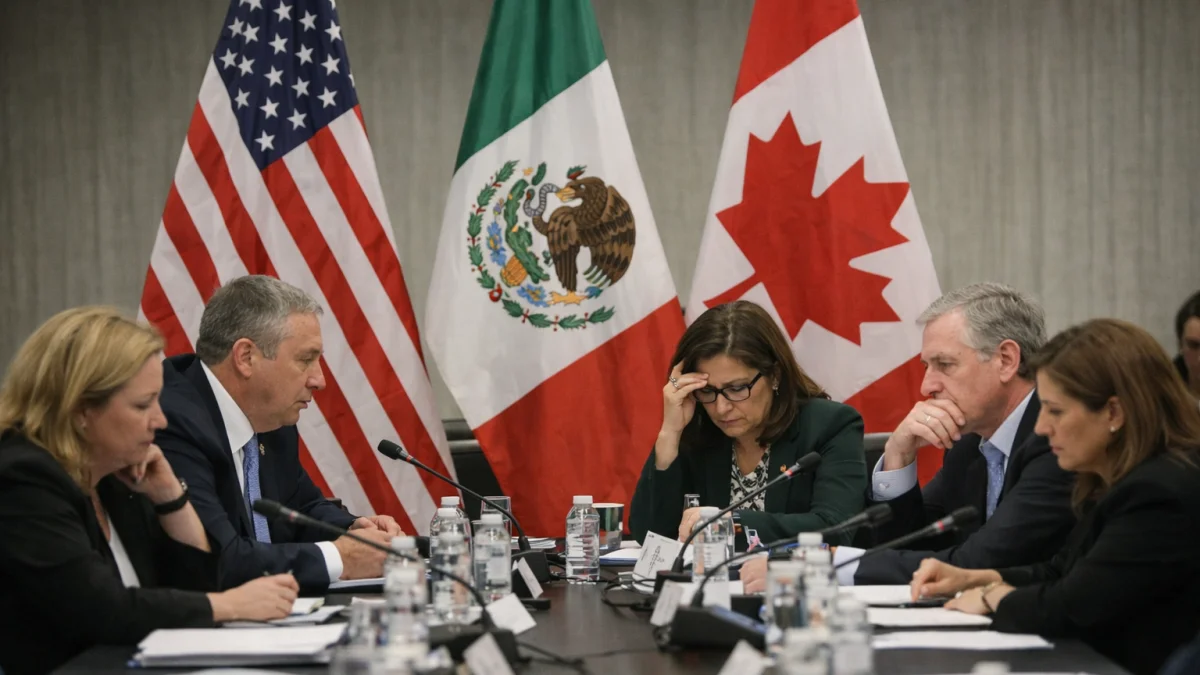
WASHINGTON — Uncertainty over the future of North America's main trade agreement deepened after the deadline to renew the U.S.-Mexico-Canada Agreement (USMCA) passed without a consensus, leaving the pact in force but subject to annual reviews as the United States pursues changes sought by the Trump administration.
The United States declined to extend the agreement in its current form during the treaty's scheduled six-year review, triggering a process under the pact's sunset clause that keeps USMCA in effect until 2036 while requiring yearly reviews unless the three countries agree on a renewed framework.
U.S. Trade Representative Jamieson Greer said the administration would continue negotiations with Canada and Mexico to address what it described as shortcomings in the agreement, including persistent U.S. trade deficits and concerns over manufacturing competitiveness. The administration has said it wants stronger incentives for production within North America and tighter rules governing regional content in key industries such as automotive manufacturing.
Mexico and Canada have both expressed support for preserving the trilateral framework while remaining open to negotiations over revisions. Mexican Economy Minister Marcelo Ebrard has acknowledged U.S. concerns but cautioned against changes that could disrupt Mexico's export-oriented automotive sector. Canadian officials have also indicated they are prepared to continue discussions while seeking greater certainty for businesses operating across North America.
Business groups across the three countries have warned that prolonged uncertainty could discourage investment decisions, even though the agreement itself remains in force. Industry organizations representing manufacturers, farmers and logistics companies have argued that predictable trade rules are critical for long-term planning and integrated North American supply chains.
Local officials in border regions that depend heavily on cross-border commerce have echoed those concerns. Leaders in Laredo, Texas, one of the busiest U.S. trade gateways with Mexico, said uncertainty surrounding the agreement could delay investment in warehouses, logistics facilities and other infrastructure despite continued trade flows.
USMCA entered into force in 2020 after replacing the North American Free Trade Agreement. Under its review mechanism, the three governments were required to decide this year whether to extend the agreement for another 16 years or allow annual reviews to begin.
Negotiations are expected to continue in the coming weeks, with additional talks between U.S. and Mexican officials scheduled later in July, while discussions with Canada are also expected to continue as the three governments seek possible revisions to the agreement.