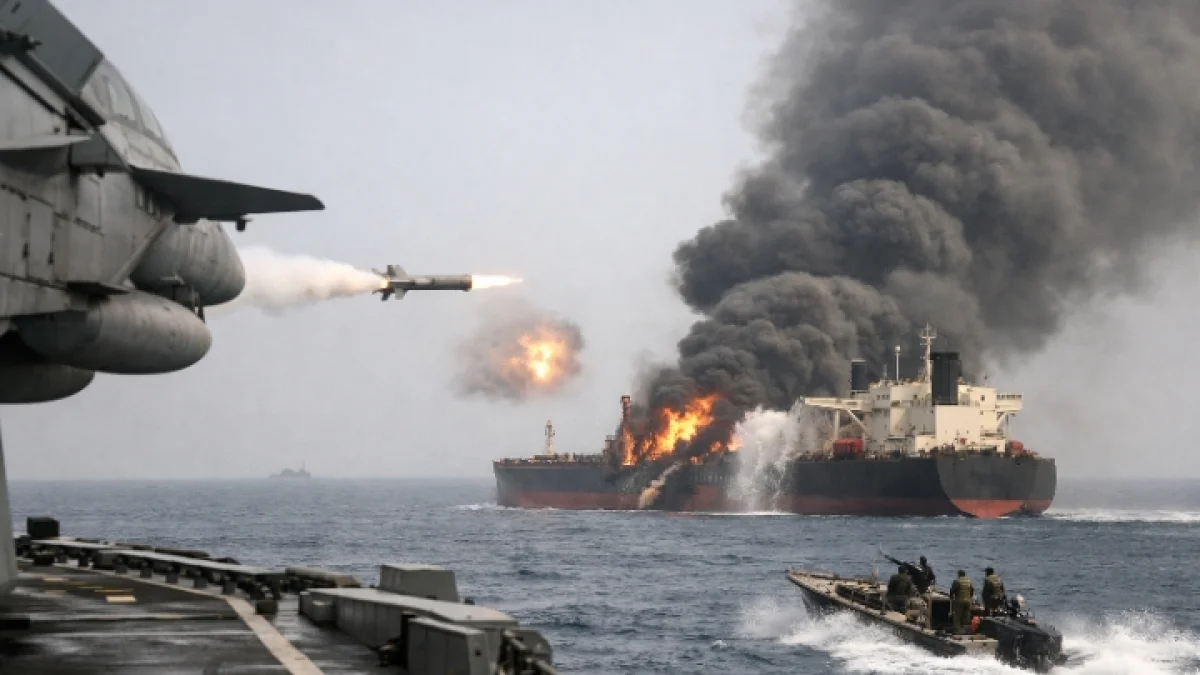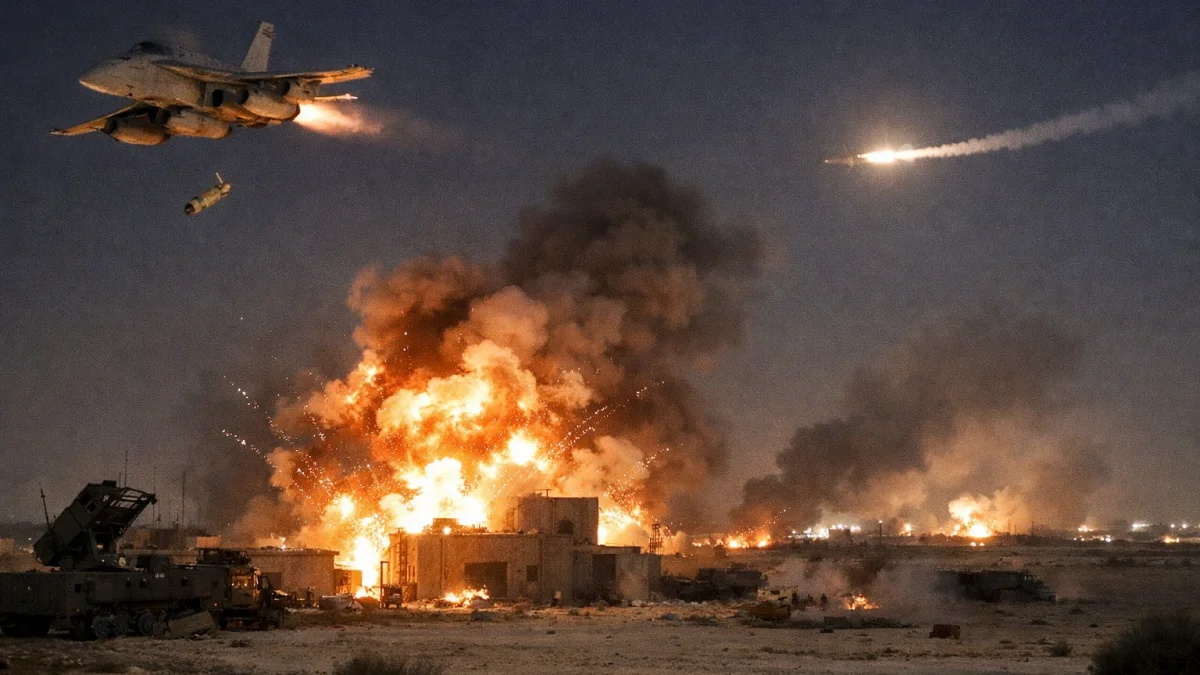
WASHINGTON — The United States launched a new wave of military strikes against Iranian targets on Saturday after Washington said Iran's Islamic Revolutionary Guard Corps attacked a Cyprus-flagged container ship transiting the Strait of Hormuz, sharply escalating tensions in one of the world's most strategically important waterways.
U.S. Central Command (CENTCOM) said the strikes were ordered by President Donald Trump in response to what it described as an attack on the M/V GFS Galaxy that left the vessel with significant engine room damage and an onboard fire. The military said one civilian crew member remained missing following the incident.
In a statement, CENTCOM said the operation was intended to "impose a heavy cost" on Iran by degrading its ability to conduct further attacks against civilian mariners and commercial shipping transiting the Strait of Hormuz. The command did not immediately provide a complete assessment of the damage inflicted during the strikes.
Iran has not acknowledged responsibility for the U.S.-described attack in the terms presented by Washington. Iranian authorities have previously maintained that their military actions in the area were directed at vessels they considered to be violating restrictions announced by Tehran after declaring the strategic waterway closed "until further notice." Those claims could not be independently verified.
The latest exchange follows several days of mounting military confrontation between the United States and Iran, despite earlier diplomatic efforts aimed at preserving a memorandum of understanding intended to reduce hostilities and maintain commercial navigation through the Gulf.
The Strait of Hormuz is one of the world's most important maritime chokepoints, carrying a substantial share of globally traded crude oil and liquefied natural gas. Any prolonged disruption to shipping through the narrow passage has the potential to affect global energy markets and international trade.
Regional governments and international maritime organizations continued to monitor the situation closely as commercial operators assessed navigational risks. Shipping advisories warned of an elevated threat to civilian vessels operating in or near the strait.
As of Saturday, U.S. military operations were continuing, while Iranian officials had not announced any agreement to reopen the Strait of Hormuz or de-escalate the confrontation. No independent confirmation of additional military exchanges beyond those officially acknowledged by the parties was immediately available.