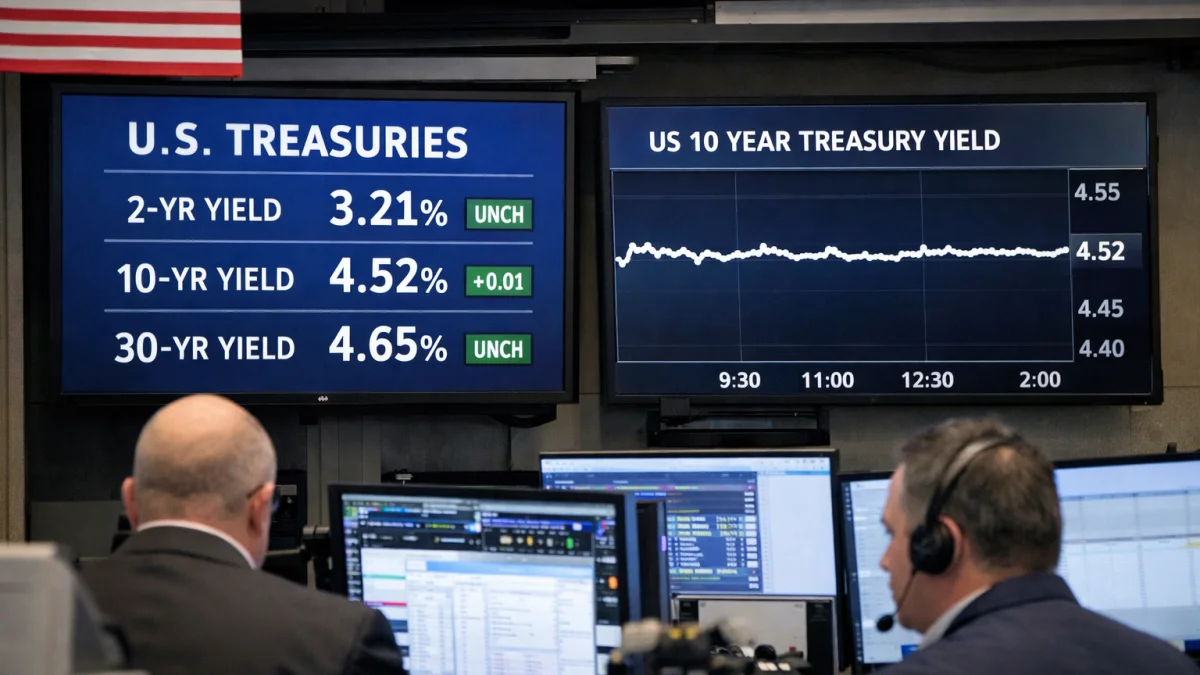
NEW YORK — U.S. Treasury yields held mostly steady on Wednesday after labor market data showed continued resilience in employment conditions, leaving investors focused on the Federal Reserve’s outlook for interest rates and upcoming economic reports.
The benchmark 10-year Treasury yield remained near recent levels after moving higher following the release of the Labor Department’s Job Openings and Labor Turnover Survey (JOLTS), which showed job openings increased to about 7.6 million in May. The report indicated that labor demand remained firm, though hiring activity weakened slightly.
The data provided the latest indication that the U.S. labor market has cooled from earlier strength but has not shown a sharp deterioration. The Bureau of Labor Statistics reported that job openings were little changed at around 7.6 million in May, while hires were about 5.2 million.
Treasury markets have been closely tracking employment indicators as investors assess whether the Federal Reserve may adjust monetary policy later this year. Stronger labor readings can reduce expectations for rate cuts, while signs of weakening employment can increase expectations for policy easing.
Yields had moved higher after the jobs data release, with market participants weighing the report against other economic signals and the Fed’s recent policy stance. The central bank has maintained a focus on inflation and economic conditions as officials evaluate the path for interest rates.
The latest employment figures came as investors awaited additional labor market data, including private-sector employment figures and the government’s monthly payrolls report. Those releases are expected to provide further insight into the pace of hiring and the strength of the economy.
The bond market’s reaction remained measured, reflecting uncertainty over the balance between persistent inflation concerns and signs of moderation in parts of the economy. Analysts have said upcoming data points will be important in determining market expectations for future Federal Reserve decisions.
Treasury yields continue to serve as a key market indicator because they influence borrowing costs across the economy, including mortgages, corporate financing and government debt. Investors are awaiting the next major employment releases for further confirmation of labor market trends.