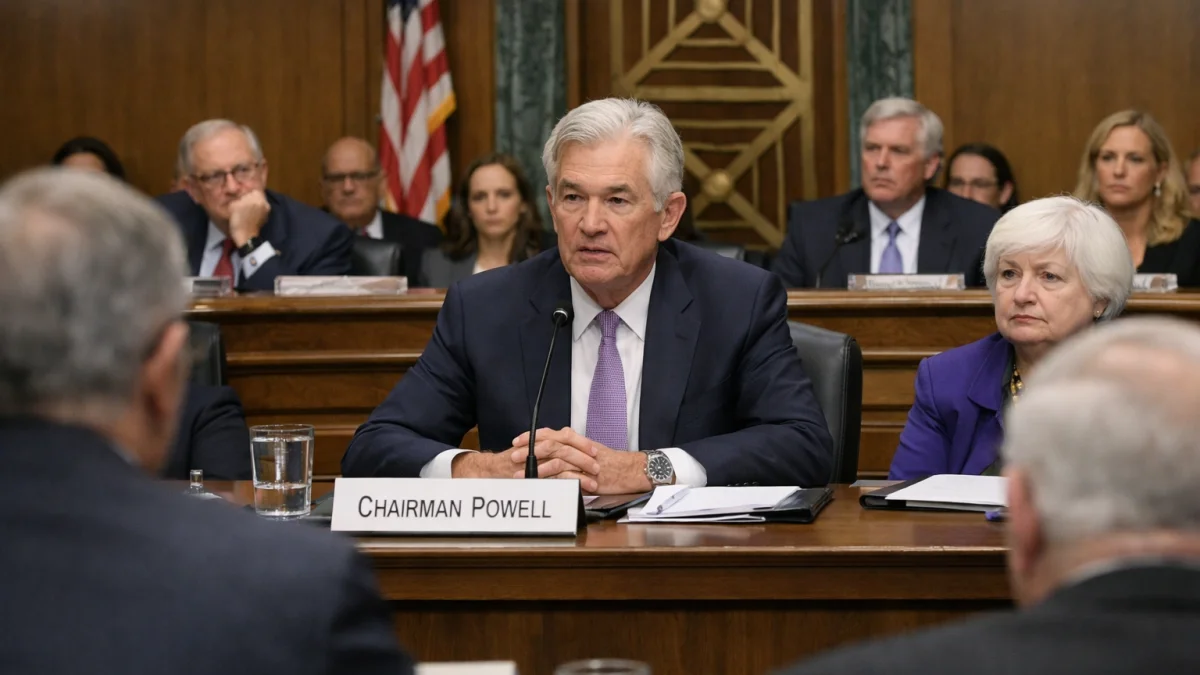
WASHINGTON — The U.S. Supreme Court on Monday preserved a measure of the Federal Reserve’s independence, ruling in a 5-4 decision that President Donald Trump cannot remove Fed Governor Lisa Cook without clear cause. The decision affirms that Fed board members enjoy protections distinct from leaders of most other independent agencies, even as the court expanded presidential firing authority over regulators such as those at the Federal Trade Commission.
The ruling underscores structural limits on executive power over the nation’s central bank. It highlights how the Fed’s unique legal framework and historical precedents constrain presidential influence over monetary policy, despite aggressive challenges from the White House. While the decision provides a short-term victory for the central bank’s autonomy, it leaves open longer-term questions about how sustained political pressure could reshape the institution through appointments and norms.
The case centered on Trump’s attempt to oust Cook, a Biden-appointed governor whose term extends into 2028. The administration cited grounds related to alleged issues in her mortgage application, but courts and the Supreme Court majority viewed the effort as insufficient to meet the “for cause” removal standard under the Federal Reserve Act. Chief Justice John Roberts’ opinion distinguished the Fed from other agencies, citing its critical role in managing the economy and the need to insulate monetary decisions from short-term political pressures.
This outcome stands in contrast to the court’s simultaneous broadening of presidential authority elsewhere. By overturning aspects of the 1935 Humphrey’s Executor precedent in related cases, the justices empowered the executive to dismiss at-will leaders of many independent bodies. The Fed’s carve-out reflects Congress’s long-standing intent, dating to the Federal Reserve Act of 1913 and reinforced by the 1951 Treasury-Fed Accord, to shield interest-rate decisions from direct White House control.
The battle reflects deeper tensions. Presidents have periodically pressured the Fed — from Richard Nixon’s documented efforts to influence policy ahead of the 1972 election to earlier clashes — but Trump’s campaign has been unusually direct and sustained. It included public criticism of Chair Jerome Powell (whose leadership term ended in May 2026), attempts to accelerate board turnover, and appointments like that of Stephen Miran, who has advocated for greater alignment with administration priorities.
Fed independence exists for well-established reasons. Politicians often favor lower rates to stimulate growth before elections, but such actions can fuel inflation over time, eroding purchasing power and economic stability. Studies of past episodes show that political pressure correlates with higher inflation outcomes. The Fed’s dual mandate of maximum employment and price stability benefits from decision-making insulated from immediate electoral cycles. Central bank independence rankings had already placed the Fed lower globally than in previous decades, even before recent challenges.
Economically, the stakes are significant. Markets have monitored the dispute closely, with bond yields and the dollar sensitive to perceived risks to credibility. Sustained erosion of independence could raise long-term borrowing costs as investors demand higher premiums for inflation risk. The Fed has continued to adjust policy based on data — including recent rate decisions — without evident capitulation, but repeated confrontations test institutional resilience.
The ruling does not eliminate all avenues of influence. The president appoints Fed governors and the chair (subject to Senate confirmation), with staggered 14-year terms designed to limit any single administration’s impact. Over time, a determined executive and aligned Congress could reshape the Board of Governors and, indirectly, regional bank leadership. The decision also leaves some ambiguity around the precise boundaries of “cause” for removal, potentially inviting future litigation.
Officials from both parties and across administrations have historically defended the norm of non-interference in monetary policy. Former Fed chairs, including Powell and predecessors like Janet Yellen, have emphasized that undermining credibility harms the economy. The Trump administration has framed its actions as enhancing accountability for an institution wielding enormous power.
As of July 1, 2026, Lisa Cook remains on the Board, and the Fed continues operations under its established framework. The White House has not indicated immediate further firings, but the composition of the Board and the next chair’s approach will be watched closely. Uncertainties persist over potential legislative changes or additional court tests, as well as how markets and the public perceive the central bank’s autonomy amid ongoing political scrutiny. Developments in upcoming FOMC meetings and any new appointments will be closely monitored for signs of shifting dynamics.