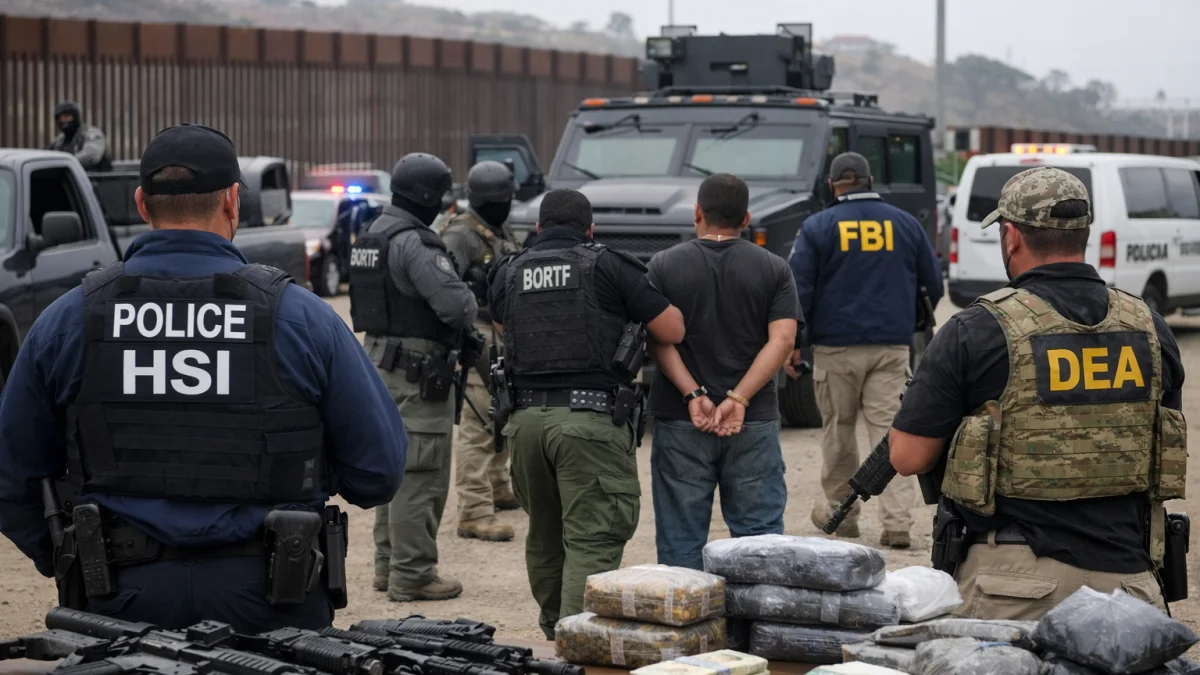
The United States' decision to expand its use of Foreign Terrorist Organization (FTO) designations against transnational criminal groups marks a further evolution in how governments are responding to cross-border organized crime. By adding Mexico's Juárez Cartel and Los Viagras to the FTO list, U.S. authorities have broadened the legal framework available to pursue organizations that officials argue combine traditional organized crime with activities that threaten national security.
The significance of the move extends beyond the addition of two organizations. It reflects an increasingly blurred distinction between counterterrorism and counter-narcotics policy, allowing U.S. authorities to deploy legal authorities traditionally reserved for terrorist organizations against criminal networks involved in drug trafficking, extortion, migrant smuggling and other transnational offenses. Officials argue that these tools better reflect the growing sophistication and international reach of such groups, while critics have questioned how broadly the authorities may be applied and what diplomatic consequences they could produce.
Under U.S. law, an FTO designation expands the government's enforcement options in several important ways. It becomes a federal crime to knowingly provide material support or resources to a designated organization. The designation also strengthens authorities to freeze assets, pursue financial facilitators, restrict travel, and prosecute individuals or companies that knowingly assist the organizations. Financial institutions are required to increase scrutiny of transactions that could involve designated entities or their affiliates, while multinational businesses operating in affected regions often reassess compliance procedures to reduce legal exposure.
The latest designations bring the number of Mexican criminal organizations classified as FTOs by the United States to eight. According to Secretary of State Marco Rubio, the groups satisfy statutory criteria because their activities threaten the security of U.S. nationals and U.S. national security interests. The administration has argued that large criminal organizations increasingly operate as transnational networks whose violence, financial operations and cross-border logistics resemble the scale and complexity traditionally associated with terrorist organizations.
The broader policy trend is evident beyond Mexico. In recent months, the United States has applied terrorism-related sanctions and designations to major criminal organizations elsewhere in Latin America, including Brazilian gangs and Ecuadorian criminal groups, while the Treasury Department has continued targeting financial facilitators linked to organized crime through sanctions aimed at disrupting money laundering and illicit financial networks. Those measures seek to attack criminal organizations' financial infrastructure rather than relying solely on arrests or drug seizures.
Financial enforcement has become an increasingly prominent component of modern counterterrorism and organized crime strategy. Treasury sanctions issued in 2026 have targeted networks accused of laundering proceeds for Brazil's Primeiro Comando da Capital (PCC), while separate actions have focused on terrorist financing linked to ISIS facilitators operating across several regions. Although these actions address different types of organizations, they reflect a common strategy of disrupting financing, logistics and international business relationships that enable illicit networks to operate across borders.
The policy also carries significant international implications. Because many designated organizations operate primarily outside U.S. territory, enforcement frequently depends on cooperation with foreign governments, intelligence sharing and mutual legal assistance. Expanded terrorism authorities can facilitate extradition requests and encourage greater information exchange among law enforcement agencies, but they may also generate diplomatic friction if partner governments view unilateral designations as infringing upon national sovereignty or complicating domestic security strategies. Brazil's government, for example, criticized earlier U.S. terrorism designations affecting Brazilian criminal organizations, arguing that domestic institutions remain responsible for addressing organized crime within Brazilian territory.
The European Union has pursued a somewhat different but related approach. Recent proposals by the European Commission seek to strengthen Europol and Eurojust in responding to increasingly international criminal and terrorist networks, while the Council of the European Union has expanded criteria for terrorism-related sanctions to encompass additional facilitators and associates. Rather than focusing primarily on cartel designations, European reforms emphasize enhanced cross-border judicial cooperation, intelligence sharing and coordinated investigations among member states.
Legal specialists note that expanding terrorism authorities into the organized crime sphere creates new compliance challenges for international companies. Businesses operating in sectors such as logistics, transportation, banking, mining and agriculture may face greater due diligence obligations if they conduct business in regions where designated organizations exert territorial influence. While designation does not prohibit legitimate commercial activity in affected areas, companies must ensure they do not knowingly provide material support or financial benefits to sanctioned entities or their affiliates.
The effectiveness of the expanded approach will likely be assessed over time through its impact on prosecutions, financial disruption and cross-border cooperation. Criminal organizations have historically adapted to law enforcement pressure by fragmenting leadership structures, diversifying revenue sources and shifting operations across jurisdictions. Whether terrorism designations materially constrain those adaptations remains a subject of continuing analysis among legal experts and security specialists.
For now, the confirmed development is that the United States has broadened its use of FTO designations against transnational criminal organizations, extending more powerful legal authorities to investigations involving cross-border criminal networks. Officials continue to monitor enforcement outcomes, international cooperation and any legal or diplomatic challenges arising from the expanded application of counterterrorism authorities to organized crime.