The first sign, Jeanne Henny recalled, was not flames but the sky. Looking outside her home in the Los Pinos area of Spain's Almería province, the 74-year-old British resident initially thought a yellow haze was another Saharan dust episode. Only when a neighbour warned that a wildfire was approaching did she realize smoke had swallowed the hills around her.
Henny gathered a wheelchair-bound friend and their two dogs before driving toward what she hoped would be safety. On the narrow mountain road to the nearby village of Bédar, the fire was already advancing. Flames blocked the route ahead, forcing her to make a three-point turn on a cliffside road before taking a rough track out of danger. "I had an incredible escape," she told reporters after reaching safety.
Her account has become one of the defining survivor stories from one of Spain's deadliest wildfires, a fast-moving blaze that swept through a popular tourist and expatriate region in southern Spain, killing at least 12 people and leaving 23 others missing, according to emergency authorities.
The disaster unfolded with extraordinary speed. Officials said the fire spread roughly 15 kilometres (nine miles) in just two hours after breaking out near Los Gallardos, fuelled by strong winds, parched vegetation and extreme heat. Investigators are examining whether a fallen power cable ignited the blaze, although the utility company has disputed that possibility.
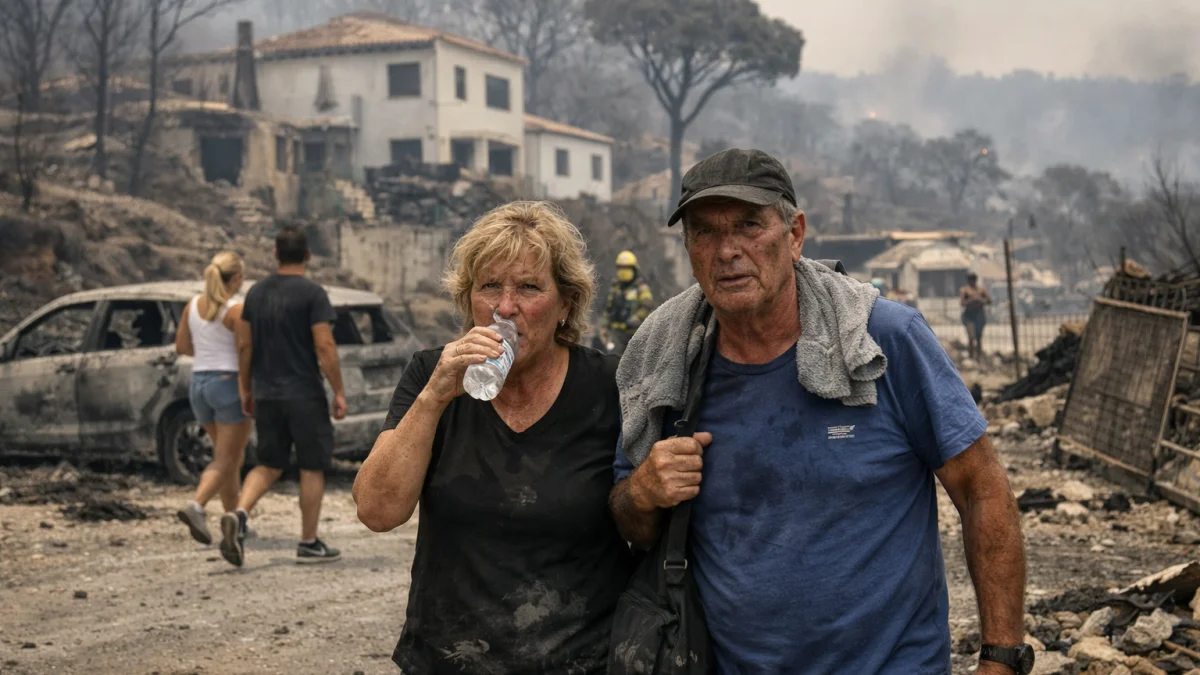
The tragedy has exposed how rapidly wildfire can overwhelm communities where residents and visitors must make life-or-death decisions in minutes. Authorities said many of those who died were foreign nationals who left areas where officials had advised people to shelter in place or use designated evacuation routes. Some became trapped inside vehicles as roads turned into corridors of fire. Others abandoned their cars and tried to escape on foot.
For emergency crews, the days since have been consumed by both firefighting and recovery. DNA testing has been needed to identify several victims because of the severity of the burns. Families from Britain and other countries have turned to social media seeking news of missing relatives as search teams continued their work across the burned landscape.
Bédar, a hillside village with a sizeable British expatriate community, became one of the centres of the emergency response. Local authorities carried out door-to-door evacuations while smoke reduced visibility and changing winds complicated rescue efforts. Mayor Ángel Collado said the loss of life had deeply affected the community, where many foreign residents have chosen to retire or spend part of the year.
Henny's escape also carried quieter losses. She was able to save her friend and dogs but left behind five cats as the fire closed in. In the aftermath, she said she did not know whether either her home or the animals had survived. Her uncertainty reflects the experience of many evacuees who fled with little more than the essentials, unsure what they would find upon returning.
The wildfire has struck at the beginning of what officials fear could become another punishing Mediterranean fire season. Spain has endured repeated heatwaves and prolonged drought in recent years, conditions that experts say create increasingly dangerous environments for large wildfires. This year's blaze erupted as temperatures across parts of southern Europe climbed toward 40 degrees Celsius, while firefighters were also battling fires elsewhere in Spain and neighbouring France.
More than 150 firefighters, supported by military emergency units and aircraft, have worked to contain the fire across steep, dry terrain. Authorities said the blaze had already consumed thousands of hectares of forest and farmland, illustrating how quickly fires can spread through landscapes stressed by prolonged heat and low moisture.
Spanish Prime Minister Pedro Sánchez expressed condolences to the victims' families, describing the destruction with "enormous sadness and devastation." Regional officials have urged residents to follow official emergency guidance during future fires, emphasizing that rapidly changing conditions can render familiar escape routes impassable within minutes.
For survivors, the disaster is measured not only in official casualty figures but also in the moments when ordinary routines gave way to split-second decisions. Henny's mistaken assumption that the strange sky signalled dust rather than smoke, and the narrow turn that carried her away from advancing flames, underscore how little warning many people had before one of Spain's worst wildfire disasters unfolded.
As investigators continue to determine exactly how the blaze began and emergency workers search for those still unaccounted for, communities across the region face the longer task of rebuilding homes, restoring landscapes and absorbing the human cost of a fire season that has only just begun.