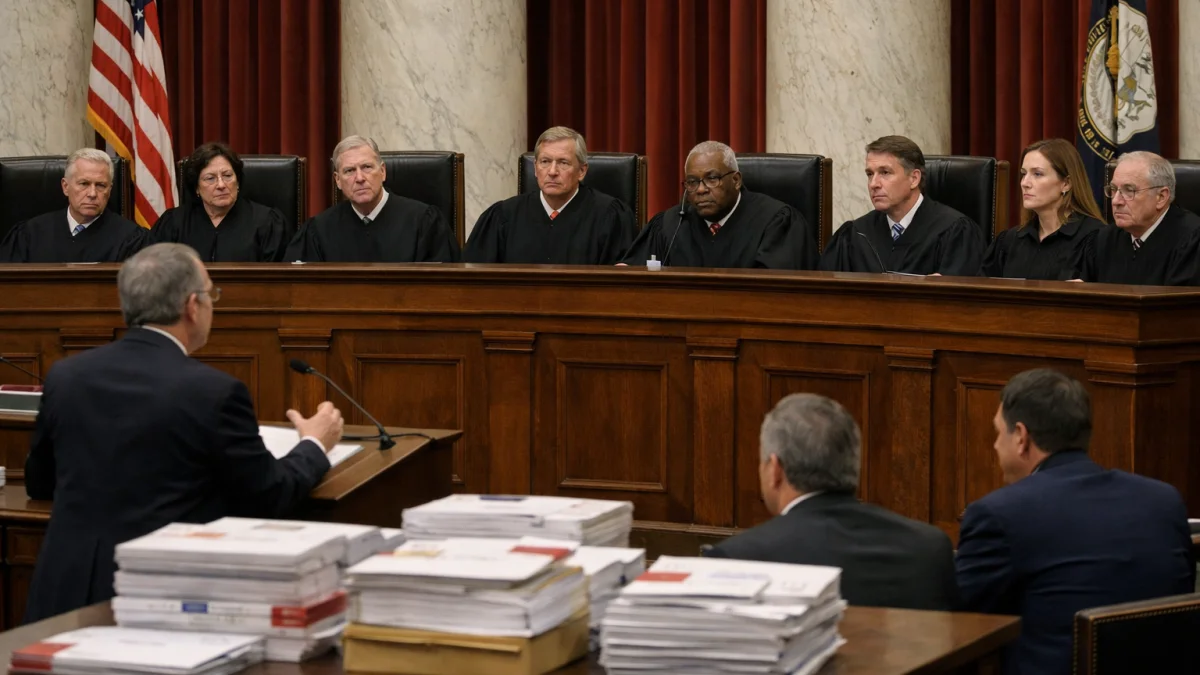
WASHINGTON — The U.S. Supreme Court on Monday upheld state laws allowing mail-in ballots postmarked by Election Day to be counted if received afterward, rejecting a Republican-led challenge to Mississippi’s five-day grace period and preserving similar policies in roughly 30 states.
In a 5-4 decision in Watson v. Republican National Committee, the court ruled that federal election-day statutes do not preempt Mississippi’s law or comparable measures. Justice Amy Coney Barrett wrote the majority opinion, joined by Chief Justice John Roberts and the court’s three liberal justices.
The case centered on Mississippi Code §23-15-637, which permits absentee ballots postmarked on or before Election Day to be received and counted up to five business days later. Mississippi limits absentee voting by mail to certain categories of voters, including those aged 65 and older, people with disabilities and voters away from home.
The Republican National Committee, Mississippi Republican Party and others had argued that federal laws setting Election Day as the first Tuesday after the first Monday in November require ballots both to be cast and received by that date. The 5th U.S. Circuit Court of Appeals agreed, finding the Mississippi law preempted.
The Supreme Court reversed that ruling. Barrett’s opinion held that the federal statutes focus on when ballots are cast — the electorate’s choice of candidates — and do not impose a nationwide receipt deadline. The decision cited the Uniformed and Overseas Citizens Absentee Voting Act, which contemplates state authority over ballot receipt deadlines.
“Mississippi is one of roughly 30 States that count at least some absentee ballots mailed by election day but received afterward,” the court noted.
The ruling comes ahead of the November 2026 midterm elections. President Donald Trump, who has sought to restrict mail-in voting, called the decision a “tremendous loss” and renewed calls for Congress to pass the SAVE America Act.
Senate Democratic Leader Chuck Schumer welcomed the outcome. “As the midterm elections approach, Trump and his allies are working overtime to silence Americans’ votes,” he said.
Voting rights advocates described the decision as affirming that timely mailed ballots should not be discarded due to postal delays. “Voters who follow the rules and mail their ballots on time should not lose their voice due to delays beyond their control,” said Rebekah Caruthers, president and CEO of the Fair Elections Center.
Conservative justices dissented. Justice Samuel Alito wrote the dissent, joined by Justices Clarence Thomas and Neil Gorsuch, and in part by Justice Brett Kavanaugh. They argued the ruling conflicts with the traditional understanding of Election Day.
Fourteen states plus the District of Columbia maintain grace periods for domestic mail ballots, while additional states provide them for military and overseas voters. A Votebeat analysis of 2024 data from 11 such jurisdictions found more than 745,000 ballots arrived after Election Day, representing a small share of total votes.
The Supreme Court’s decision leaves those laws intact unless state legislatures change them, avoiding potential disruptions to election administration for the midterms.
The case was argued in March. Mississippi defended its law as a practical accommodation enacted on a bipartisan basis in 2020 during the COVID-19 pandemic.