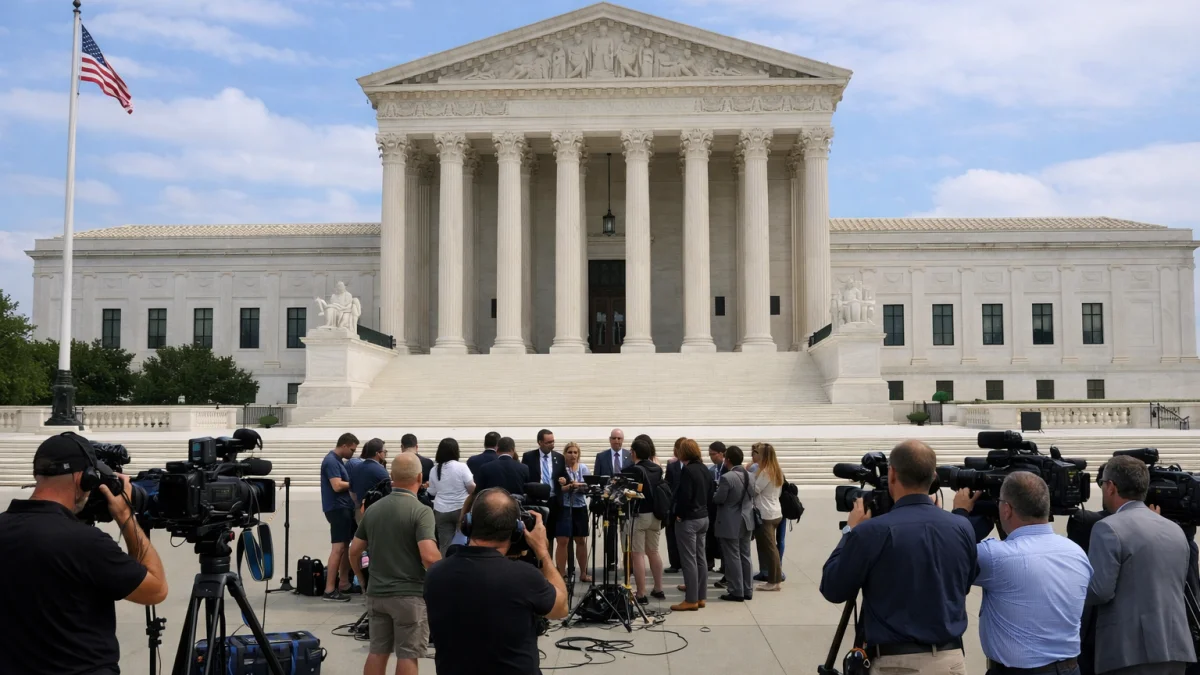
WASHINGTON — The U.S. Supreme Court on Tuesday upheld birthright citizenship under the 14th Amendment, striking down President Donald Trump's executive order that sought to limit automatic citizenship for children born on U.S. soil to undocumented immigrants or those on temporary visas.
In a 6-3 decision, the court ruled that the executive order, issued on Trump's first day in office on Jan. 20, 2025, violates the Constitution's Citizenship Clause. Chief Justice John Roberts wrote for the majority that the 14th Amendment extends citizenship to virtually all children born in the United States, consistent with longstanding precedent including the 1898 Supreme Court ruling in United States v. Wong Kim Ark.
The decision affirms lower court rulings that had blocked the order, which aimed to restrict citizenship to cases where at least one parent is a U.S. citizen or lawful permanent resident. Justices Sonia Sotomayor, Elena Kagan, Amy Coney Barrett and Ketanji Brown Jackson joined Roberts. Justice Brett Kavanaugh concurred separately, while Justice Clarence Thomas dissented.
The ruling comes after the court in 2025 limited the scope of nationwide injunctions in related litigation but did not address the order's constitutionality at that time. Multiple lawsuits, including a class action, challenged the policy as contrary to the 14th Amendment, adopted after the Civil War, and federal immigration law.
White House officials had no immediate comment on the decision. The Department of Justice argued during April oral arguments that the order aligned with the original meaning of the Citizenship Clause, but the majority rejected that interpretation.
The case, Trump v. Barbara, drew significant attention as a test of executive power over immigration and constitutional interpretation. Details on implementation and any potential next steps from the administration were not immediately available.
The story is developing.