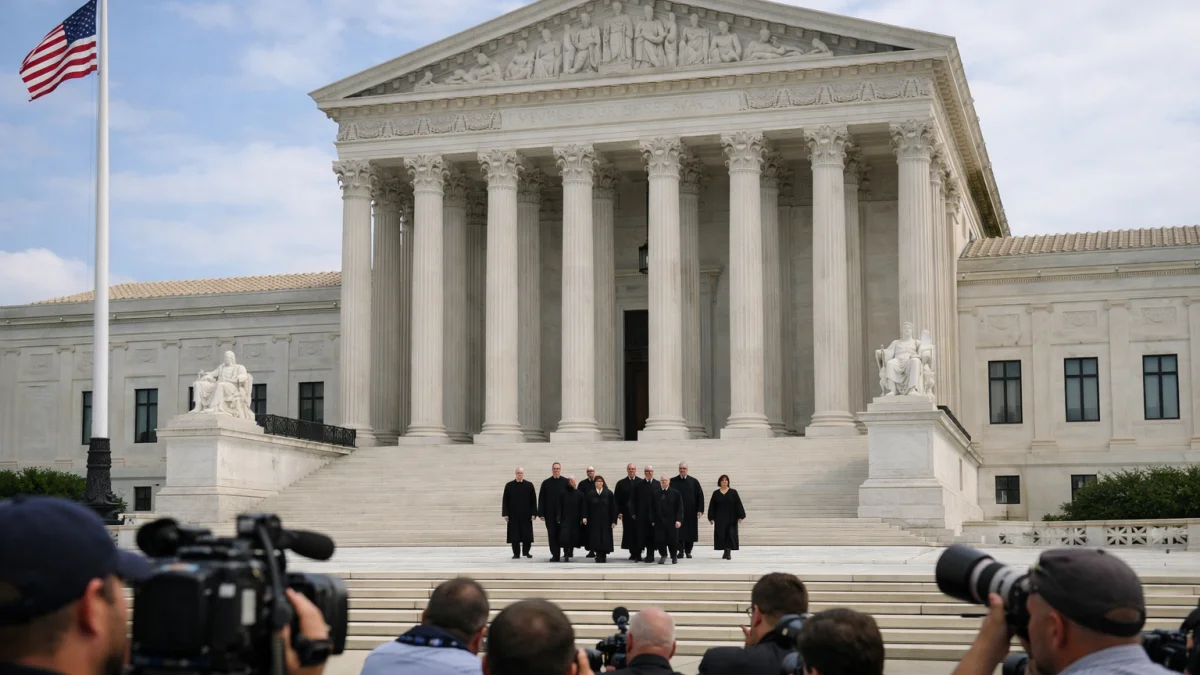
WASHINGTON — The U.S. Supreme Court ruled that President Donald Trump has the constitutional authority to remove leaders of independent federal agencies without cause, overturning a landmark 1935 precedent that had allowed Congress to shield many regulators from at-will dismissal and significantly expanding presidential control over the executive branch.
The court voted 6-3 to uphold Trump's dismissal of Federal Trade Commission Commissioner Rebecca Slaughter, reversing a lower court decision that had reinstated her under statutory protections limiting a president's removal power to cases involving inefficiency, neglect of duty or malfeasance. Chief Justice John Roberts wrote for the majority.
In doing so, the court expressly overturned Humphrey's Executor v. United States, the 1935 decision that had formed the legal foundation for Congress to insulate members of certain independent regulatory commissions from removal based solely on policy disagreements. The majority concluded that officials exercising executive authority must remain subject to presidential control under Article II of the Constitution.
Roberts wrote that the FTC "unquestionably exercises executive power" and therefore must remain accountable to the president. The ruling is expected to affect numerous independent agencies with similar leadership structures, including commissions and boards whose members previously enjoyed statutory tenure protections.
The court's three liberal justices dissented, arguing that the decision dismantles longstanding congressional safeguards designed to preserve the independence of regulators from political influence. Justice Sonia Sotomayor read portions of her dissent from the bench, underscoring the significance she attached to the ruling.
The decision marks the culmination of a series of Supreme Court rulings over recent years that have broadened presidential authority over executive officials. During oral arguments, the Trump administration had urged the justices to discard Humphrey's Executor, arguing that it improperly constrained the president's constitutional responsibilities.
The ruling leaves one notable exception. In a separate 5-4 decision issued the same day, the Supreme Court declined to allow Trump to remove Federal Reserve Governor Lisa Cook while litigation over her dismissal continues, signaling that the court was not extending its reasoning to the central bank at this stage.
The FTC decision is expected to influence pending legal challenges involving other independent agency officials removed by the Trump administration, while establishing a new constitutional framework governing presidential removal authority over much of the federal regulatory apparatus.