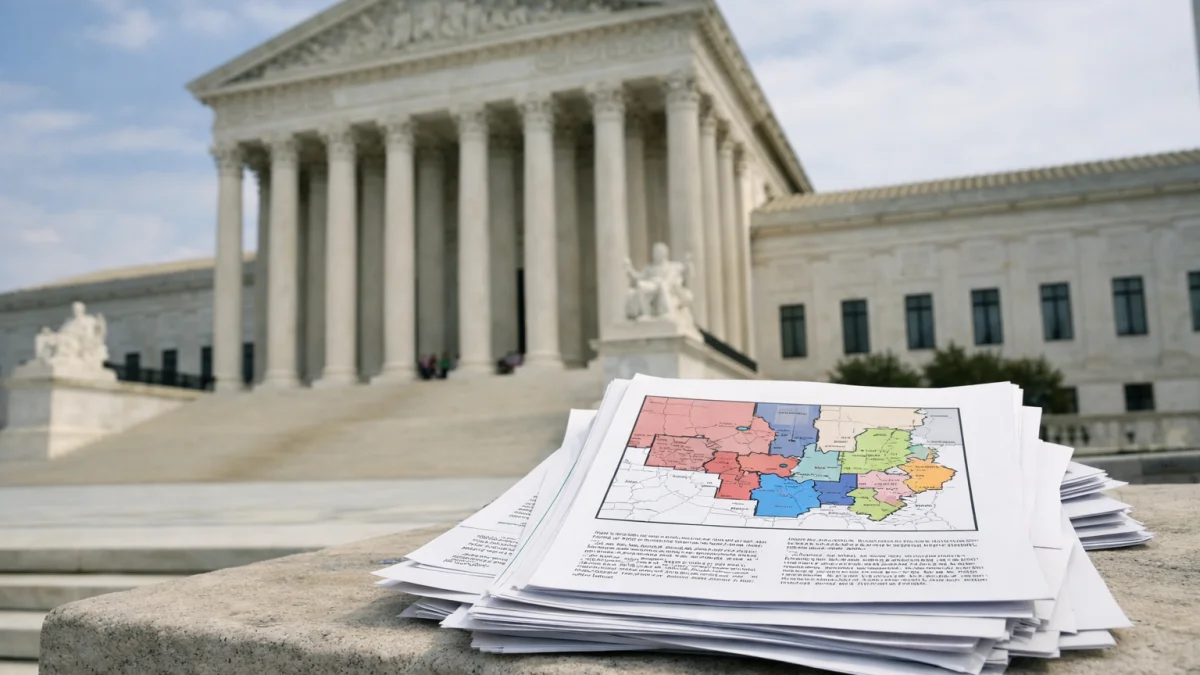
WASHINGTON — The U.S. Supreme Court’s recent redistricting rulings have reshaped the legal landscape surrounding the Voting Rights Act, prompting new congressional maps in several states while narrowing how courts can evaluate claims that district boundaries weaken minority voting power. The changes come as states prepare for future elections and as lawmakers adjust maps following court decisions.
The court’s April 2026 decision in Louisiana v. Callais limited the use of race-based considerations in redistricting disputes, according to summaries of the ruling and statements from state officials. The decision centered on Louisiana’s congressional map and whether Section 2 of the Voting Rights Act required the creation of an additional majority-Black district. The court found that the challengers had not established that Louisiana’s original map violated the law, according to Alabama Attorney General Steve Marshall’s office, which praised the ruling.
The ruling followed years of litigation over Section 2 of the Voting Rights Act, which prohibits voting practices that deny or restrict voting rights on the basis of race or membership in certain minority groups. In 2023, the Supreme Court in Allen v. Milligan rejected an effort to weaken Section 2 and ruled that Alabama’s congressional map likely violated the law by diluting Black voters’ electoral influence.
After the newer ruling, states moved to reassess congressional boundaries. Supporters of the decision, including some Republican officials, argued that the court had reinforced limits on using race in map drawing and required states to rely on race-neutral criteria. Critics, including voting rights advocates, argued that the ruling reduced a longstanding federal safeguard against discriminatory electoral maps and could affect minority representation.
The disputes reflect a broader national debate over redistricting after the 2020 census, with legal battles continuing over whether maps are designed to comply with constitutional requirements or unfairly influence political representation. Courts have generally distinguished between permissible political considerations in drawing districts and unlawful discrimination based on race.
State officials and voting rights groups continue to challenge and defend maps in federal courts, with election authorities preparing for upcoming election cycles under revised boundaries. The latest confirmed status is that states affected by the Supreme Court’s redistricting decisions are implementing or reviewing new maps while additional legal challenges remain possible through the judicial process.