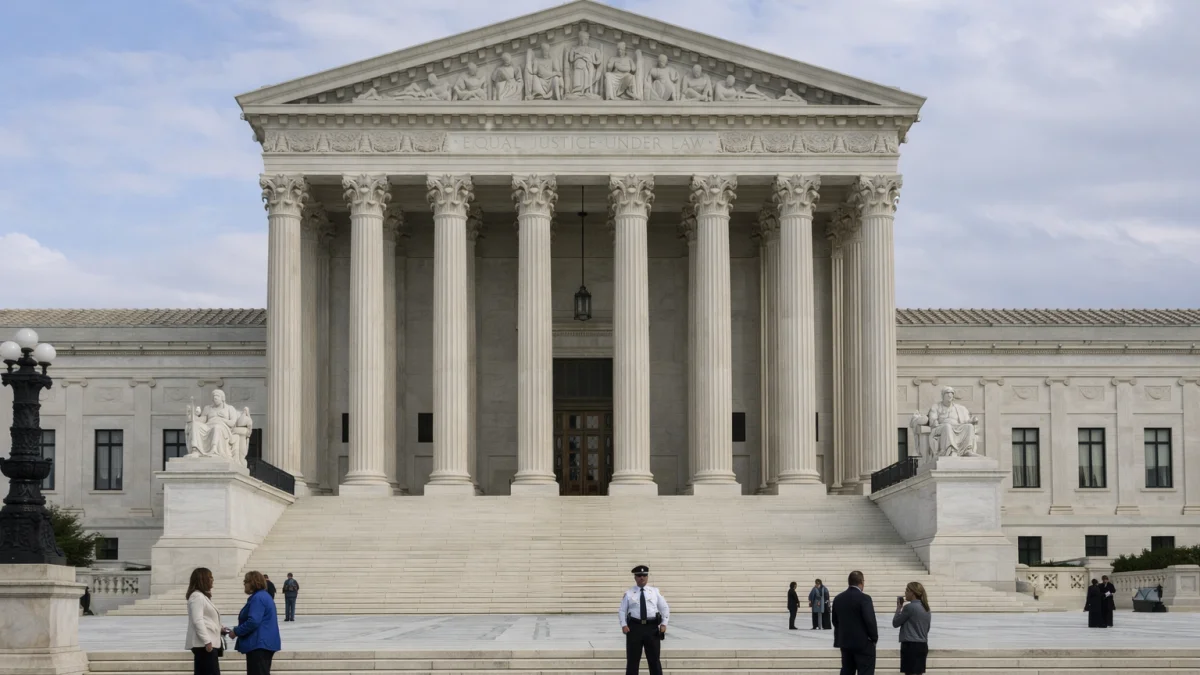
WASHINGTON — The U.S. Supreme Court concluded its 2025-2026 term with a series of decisions that advanced several long-standing conservative legal priorities while delivering a mixed record for President Donald Trump, expanding presidential authority in some areas even as it rejected key elements of his agenda.
The court's 6-3 conservative majority issued landmark rulings over its nine-month term that strengthened executive power, narrowed certain election law protections, upheld state restrictions on transgender athletes' participation in girls' and women's sports, and struck down additional campaign finance limits. At the same time, the justices rejected Trump's efforts to restrict birthright citizenship, blocked his attempt to remove a member of the Federal Reserve Board, and curtailed his use of broad tariff powers.
One of the term's most consequential decisions came when the court overturned the 1935 precedent established in Humphrey's Executor, ruling that the president has broad authority to remove leaders of independent executive agencies. The decision marked a significant expansion of presidential control over the federal bureaucracy and drew sharp dissents from the court's liberal justices, who warned it weakened longstanding institutional safeguards.
On the final day of the term, however, the court dealt Trump a major setback by ruling that the Constitution's 14th Amendment protects birthright citizenship, rejecting his administration's effort to deny automatic citizenship to certain children born in the United States. The ruling reaffirmed longstanding constitutional interpretations while prompting Trump to say he would pursue legislative action instead.
The court also upheld laws in West Virginia and Idaho barring transgender girls from competing on girls' school sports teams, finding that the restrictions did not violate the Equal Protection Clause or Title IX. The decision represented another significant victory for conservative state governments and was criticized by civil rights advocates, who argued it would adversely affect transgender students.
Legal analysts said the term reflected the court's continued willingness to embrace conservative constitutional principles while remaining prepared to limit executive action when it found statutory or constitutional boundaries had been exceeded. Several major rulings were decided along ideological lines, although some high-profile cases produced cross-ideological coalitions led by Chief Justice John Roberts.
The Supreme Court has now recessed for the summer and is scheduled to begin its next term in October, when it is expected to hear additional cases involving firearms regulations, election law and other nationally significant constitutional issues.