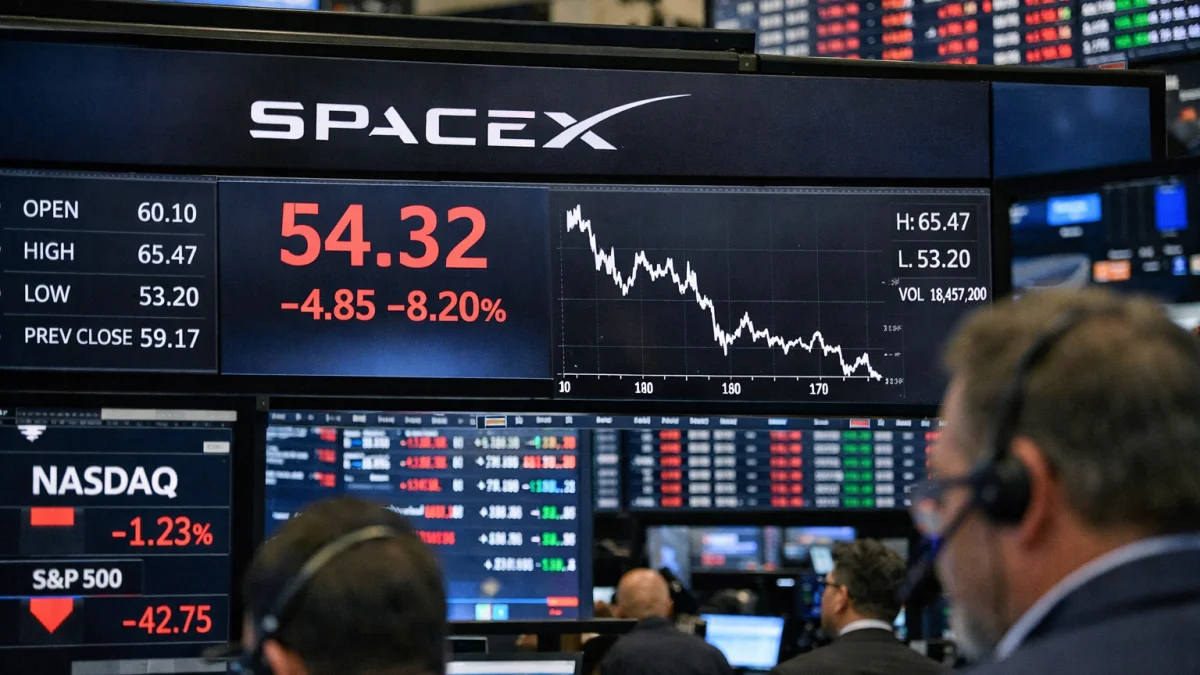
NEW YORK—SpaceX shares continued to experience sharp swings in trading a month after the company's record-breaking stock market debut, underscoring persistent volatility as investors reassess the aerospace and satellite group's valuation following its historic initial public offering.
The stock has retreated substantially from the post-listing highs reached in the days after its June 12 debut, although it remains above its $135 per-share IPO price. Shares closed below the $150 level for the first time on July 7, after falling 6.8% during their first trading session as a member of the Nasdaq-100 index, according to market data and exchange reports.
SpaceX's IPO, the largest in Wall Street history, initially drew intense demand from institutional and retail investors. The shares opened at $150, an 11% premium to the offering price, before ending their first trading session nearly 19% higher.
Recent trading, however, has highlighted the challenges of valuing one of the world's largest newly listed technology companies. Analysts said the addition of SpaceX to the Nasdaq-100 prompted significant buying by index-tracking funds ahead of the inclusion, with some investors subsequently taking profits after the event. Broader weakness across technology stocks also weighed on the shares.
Despite the recent decline, several Wall Street firms have maintained bullish recommendations, citing the company's leadership in reusable launch systems, its Starlink satellite internet business and longer-term growth opportunities tied to space infrastructure. Other analysts have urged caution, pointing to uncertainties surrounding future capital spending, regulatory developments and execution of major projects including the Starship launch system.
Investors are also monitoring the company's balance sheet after SpaceX completed a multi-billion-dollar bond offering following the IPO. Market participants said secondary trading in the debt reflected a degree of caution about future financing needs, even as the company retains investment-grade credit ratings and substantial cash reserves.
Market strategists noted that newly listed companies frequently experience elevated price volatility during their first months of trading as investors adjust positions and the market establishes a longer-term valuation. SpaceX's relatively limited public float has amplified those price movements, making the stock more sensitive to changes in investor sentiment.
Attention is now shifting toward the company's upcoming financial disclosures and operational updates, which investors say will provide the next major test of whether SpaceX's valuation can be supported by its underlying business performance.