Rising U.S. gasoline prices are emerging as one of the clearest domestic economic consequences of renewed tensions around the Strait of Hormuz, underscoring how geopolitical disruptions in a key global energy corridor can rapidly affect households and businesses far beyond the Middle East.
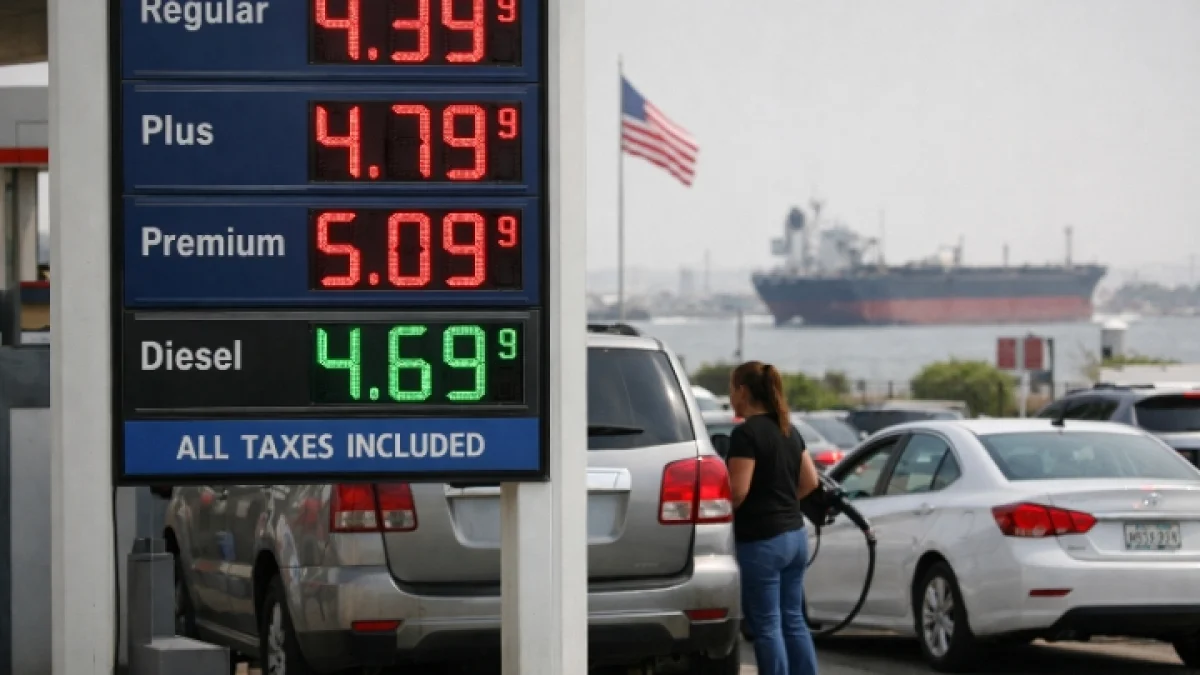
The national average price for regular gasoline has climbed back above $4 per gallon, according to AAA data, reversing the decline that followed the June understanding between the United States and Iran that had briefly eased concerns over oil shipments through the Strait of Hormuz. The renewed escalation in July has pushed crude oil prices higher, increased uncertainty in physical energy markets and prompted traders to reassess the risks surrounding one of the world's most strategically important maritime chokepoints.
The significance extends beyond higher fuel costs. Gasoline prices are among the most visible indicators of inflation for consumers, influencing household spending, business operating costs and inflation expectations. Diesel prices, which affect freight transportation and supply chains, have also risen, increasing the potential for broader price pressures across goods ranging from food to manufactured products.
The Strait of Hormuz carries roughly one-fifth of globally traded oil and a substantial share of liquefied natural gas exports. Even when physical supply interruptions remain limited, the risk of disruption can increase prices because traders incorporate higher shipping costs, insurance premiums and potential delays into crude oil contracts. The latest escalation illustrates that energy markets often react not only to actual supply losses but also to changing assessments of geopolitical risk.
The current market reversal is particularly notable because official U.S. forecasts only weeks earlier anticipated a gradual normalization in energy markets. Following the June reopening of the Strait of Hormuz, the U.S. Energy Information Administration (EIA) raised its forecast for global oil production and projected lower crude oil and gasoline prices during the second half of 2026 as trade flows recovered and inventories rebuilt. Those projections assumed improving market stability that has since been challenged by renewed hostilities.
This divergence highlights the limits of energy forecasting during periods of geopolitical uncertainty. Supply-demand fundamentals remain important, but sudden military developments can rapidly outweigh expectations based on production growth, inventories or seasonal demand. Analysts note that even relatively short disruptions can create outsized price movements when global spare refining capacity is limited and commercial fuel inventories remain below historical averages.
The effects are also uneven across the United States. Retail gasoline prices differ significantly because of regional fuel specifications, transportation infrastructure, taxes and local refining capacity. States on the West Coast and parts of the Northeast traditionally experience larger price increases during periods of international supply stress, while regions closer to major refining centers may see more moderate changes. Nevertheless, the national average serves as an important benchmark for inflation expectations and consumer sentiment.
For policymakers, the timing carries additional economic significance. Fuel prices directly influence headline inflation measures while indirectly affecting transportation, logistics and production costs throughout the economy. If elevated oil prices persist, they could complicate efforts to maintain price stability even if broader inflationary pressures continue to moderate. Economists generally distinguish between temporary energy-driven inflation and more persistent underlying inflation, but sustained increases in fuel costs can eventually spread into other sectors if businesses pass higher transportation and operating expenses on to consumers.
Financial markets are similarly reassessing risk. Crude oil benchmarks have moved sharply higher from levels seen after the June truce, reflecting expectations that disruptions to shipping or further military escalation could tighten global supplies. Some market analysts caution that prices remain highly sensitive to developments in the Gulf and that volatility is likely to continue as traders evaluate both military events and diplomatic efforts.
Historical experience suggests that markets can recover quickly if shipping routes remain open and producers maintain exports, but prolonged uncertainty has often produced lasting increases in freight costs, insurance rates and precautionary stockpiling. Previous periods of tension involving the Strait of Hormuz have demonstrated that perceived threats to maritime security can affect energy prices even without a complete interruption of oil flows, reinforcing the waterway's importance to global energy security.
The current situation remains fluid. Confirmed data show that U.S. gasoline prices have returned above $4 per gallon as renewed tensions surrounding the Strait of Hormuz have pushed oil prices higher and renewed concerns over global supply security. Officials, energy agencies and market participants are continuing to monitor shipping conditions through the strait, commercial oil inventories, refinery operations, diplomatic developments and the durability of global energy supply chains to determine whether the latest price increases prove temporary or become a more sustained feature of the energy market.