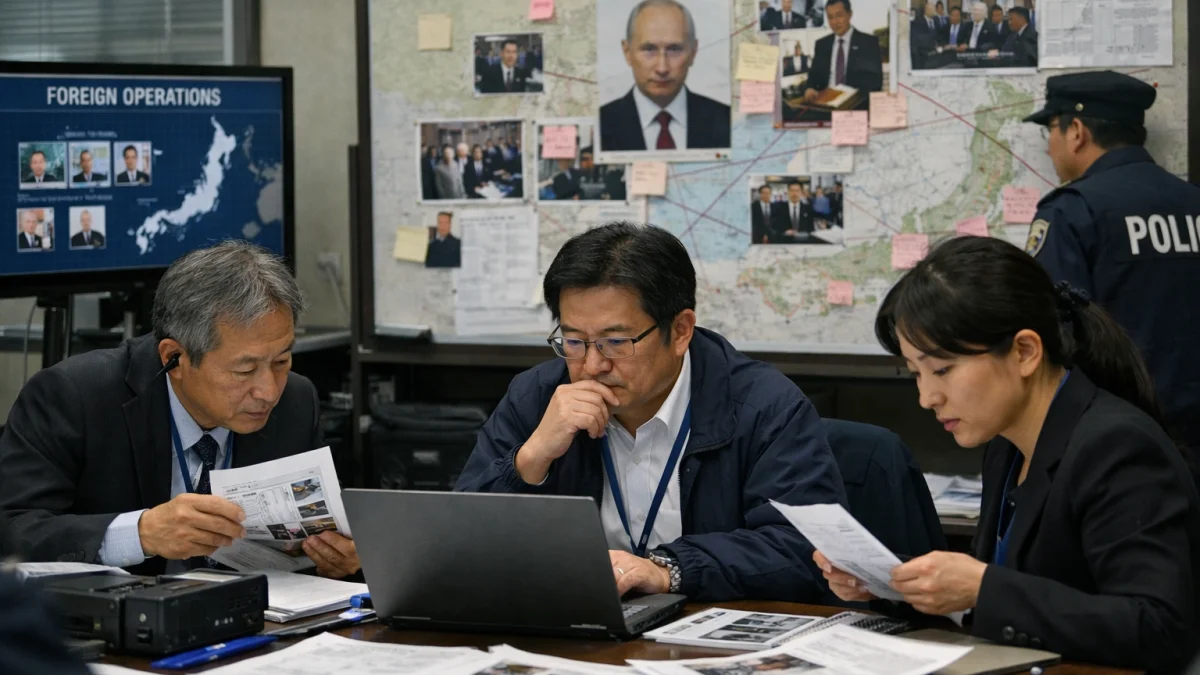
TOKYO — Russian influence operations targeting Japan have expanded in recent years, according to Japanese researchers and international security experts, as analysts warn that Moscow is adapting long-established intelligence and information tactics to influence public debate and gather strategic intelligence in the Indo-Pacific.
Researchers say the activities span online disinformation campaigns, state-backed media outreach and covert influence efforts rather than traditional espionage alone. While officials have publicly acknowledged growing concerns, they have not accused Russia of directing specific intelligence networks inside Japan without supporting evidence.
A study published this year by intelligence scholar Sanshiro Hosaka examined Soviet-era KGB operations in Japan using newly available historical materials, concluding that Moscow's use of deep-cover operatives and clandestine methods offers insight into how Russian intelligence services have evolved. The research argues that historical practices continue to inform contemporary Russian intelligence doctrine, although it does not claim that identical operations are currently underway.
Japanese specialists have separately reported an increase in Russian information operations aimed at domestic audiences. According to researchers cited by academic institutions, Russian state-affiliated media have expanded Japanese-language messaging on social media, including the dissemination of false or misleading narratives related to the war in Ukraine and broader geopolitical issues. Analysts say such campaigns seek to shape public opinion and exploit politically sensitive topics rather than rely solely on covert espionage.
Japan has responded by strengthening cooperation with international partners on countering foreign information manipulation. In June, Japan and the European Union held their first formal dialogue on Foreign Information Manipulation and Interference, bringing together officials from Japan's foreign ministry, intelligence organizations, cybersecurity authorities and the EU to exchange assessments and coordinate responses to disinformation threats.
Security experts say Russia's broader strategy increasingly combines cyber activity, influence operations and intelligence collection, reflecting trends observed across Europe since Moscow's invasion of Ukraine. Independent analysts have argued that pro-Russian influence networks have become more sophisticated, using online ecosystems and locally tailored messaging to reach foreign audiences.
Russia has consistently rejected Western allegations that it conducts unlawful interference campaigns abroad, while officials in Moscow have accused Western governments of pursuing information warfare against Russia.
Japanese authorities continue to monitor foreign influence activities as part of wider efforts to bolster national security, with officials emphasizing closer coordination among intelligence, cybersecurity and diplomatic agencies and with international partners.