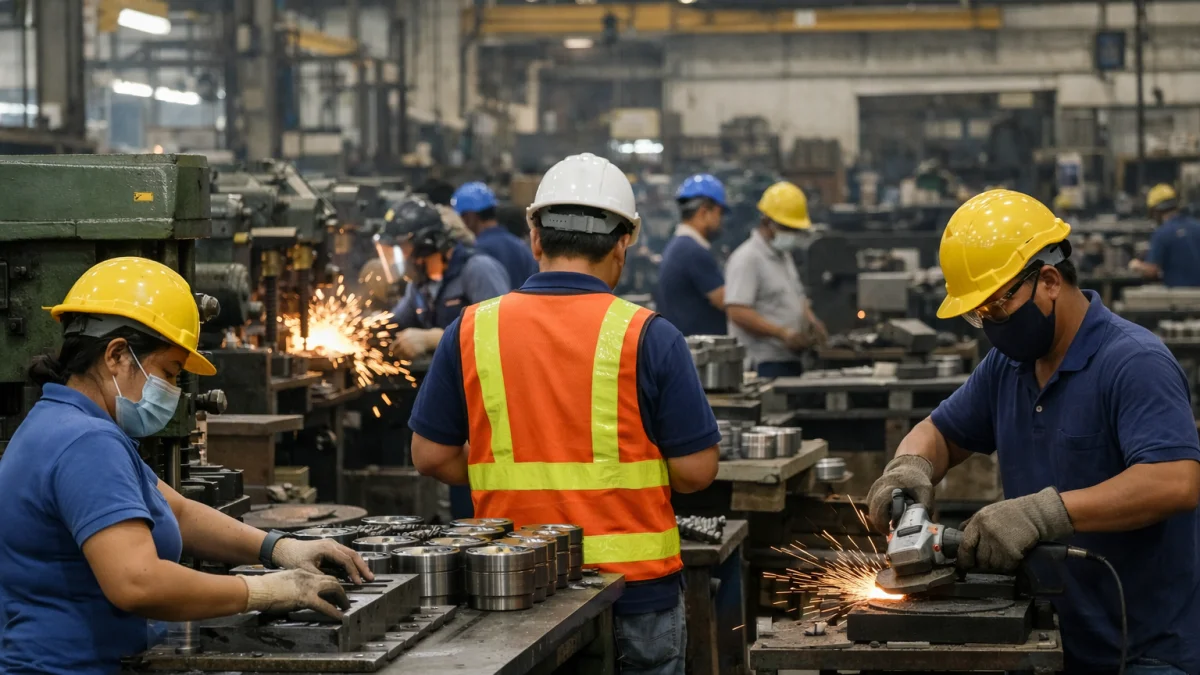
MANILA—Philippine manufacturing activity expanded at a slightly faster pace in June, supported by stronger output and new orders, although firms continued to face elevated cost pressures and remained cautious about hiring, according to a closely watched private-sector survey released on Wednesday.
The S&P Global Philippines Manufacturing Purchasing Managers' Index (PMI) edged higher in June from the previous month, remaining above the 50-point threshold that separates expansion from contraction and signalling a modest improvement in operating conditions across the factory sector.
The survey indicated that manufacturers recorded further gains in production as demand improved, with new business continuing to increase. Companies attributed higher order volumes largely to stronger domestic demand, although growth remained moderate compared with historical trends.
Despite the improvement in activity, firms continued to report rising input costs. Survey respondents cited higher prices for raw materials, transportation and other operating expenses, prompting many manufacturers to raise selling prices in an effort to protect profit margins.
Employment conditions remained subdued, with businesses showing restraint in expanding payrolls despite higher workloads. Some manufacturers instead relied on existing capacity while monitoring demand prospects and cost developments.
Business confidence stayed positive, with companies expressing optimism that output would continue to grow over the coming year, supported by expectations of stronger customer demand and planned business expansion. However, respondents also highlighted persistent inflationary pressures and uncertainty over the broader economic environment as risks to the outlook.
The June reading was broadly consistent with manufacturing trends across much of Asia, where factory activity generally remained in expansion territory despite continued pressure from higher input costs linked to earlier disruptions in energy and supply chains. Regional surveys showed resilient production growth, although momentum varied across economies.
The PMI is compiled by S&P Global from responses collected from purchasing managers at around 400 manufacturing companies. A reading above 50 indicates an improvement in business conditions from the previous month, while a figure below 50 signals deterioration.
Wednesday's survey suggests the Philippine manufacturing sector ended the second quarter on firmer footing, with output and demand continuing to expand even as producers navigated persistent cost pressures and cautious employment conditions.