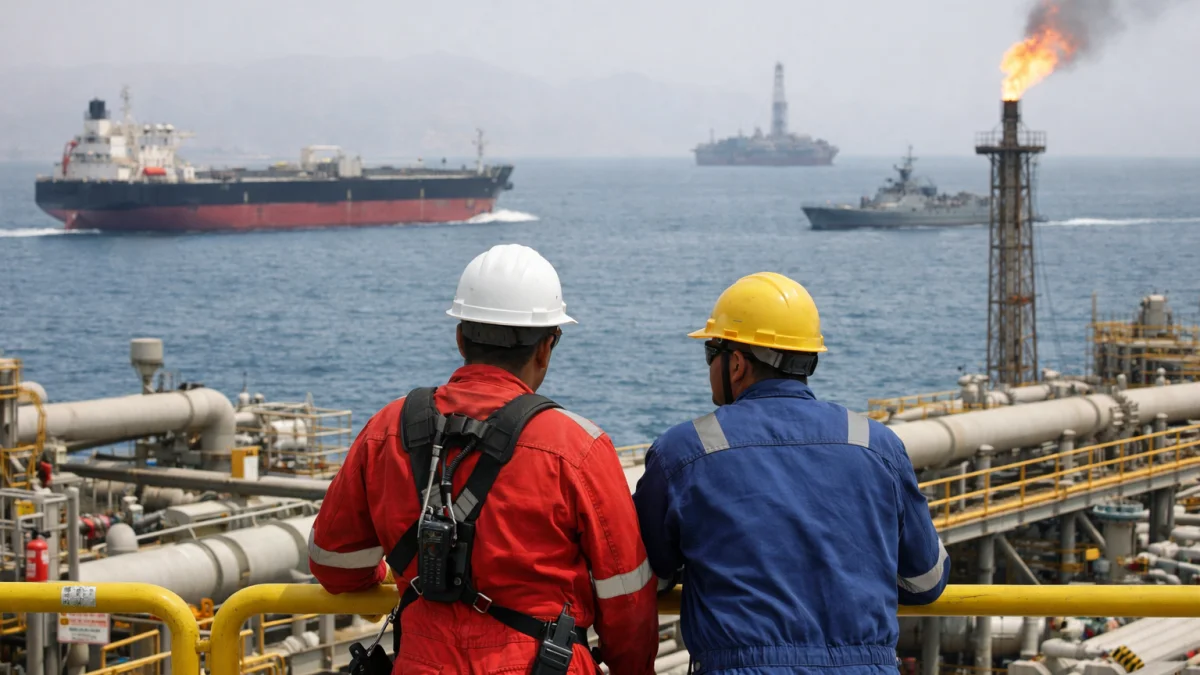
DUBAI — Oil producers and shipping operators in the Persian Gulf are reviewing operational risks as renewed tensions in the region raise concerns over crude exports, tanker movements and the security of critical energy infrastructure.
Companies operating across the Gulf have been monitoring developments around the Strait of Hormuz, a key transit route for global oil shipments, after Iran said the waterway had been closed amid escalating hostilities with the United States. U.S. President Donald Trump said the strait remained open to commercial traffic, creating conflicting claims over the status of one of the world’s most important oil chokepoints.
Oil markets reacted sharply to the uncertainty, with Brent crude rising more than 3% on Monday as traders assessed potential disruptions to supply flows. Gulf equity markets also declined, including a fall in Saudi Arabia’s index and a decline in shares of oil giant Saudi Aramco.
Producers in the region have not announced broad shutdowns, but industry participants have increased scrutiny of vessel movements, insurance costs and contingency planning, according to market developments. The International Energy Agency said Gulf supply flows had partially recovered earlier in 2026 following a period of disruption, but warned renewed hostilities could affect the outlook for production and exports.
The Strait of Hormuz remains a central concern for energy companies because a significant share of Persian Gulf oil exports traditionally passes through the narrow waterway. Producers have sought to reduce exposure through alternative export routes, including pipelines that bypass the strait, although those systems cannot fully replace maritime shipments.
OPEC+ members in the region have continued to monitor market conditions. Saudi Arabia, Iraq, Kuwait and Oman were among producers that agreed earlier in July to adjust output as part of efforts to support oil market stability, while maintaining flexibility to respond to changing conditions.
Energy companies and traders are also watching tanker traffic and security conditions closely. Analysts have said that even without a prolonged interruption to physical supply, increased uncertainty can raise freight and insurance costs and contribute to price volatility.
The latest assessments come as governments and industry groups await further clarification on maritime access through the Strait of Hormuz and any additional official measures affecting regional energy operations.