LONDON — Oil prices climbed sharply on Friday and were set for strong weekly gains as renewed disruptions to shipping through the Strait of Hormuz intensified concerns over global energy supplies, prompting traders to add a geopolitical risk premium to crude markets.
Brent crude futures rose about 0.8% to trade near $77 a barrel during the session, while U.S. West Texas Intermediate crude gained roughly 0.6% to above $72 a barrel. Both benchmarks were on course for weekly advances of around 6% to 7%, according to market data.
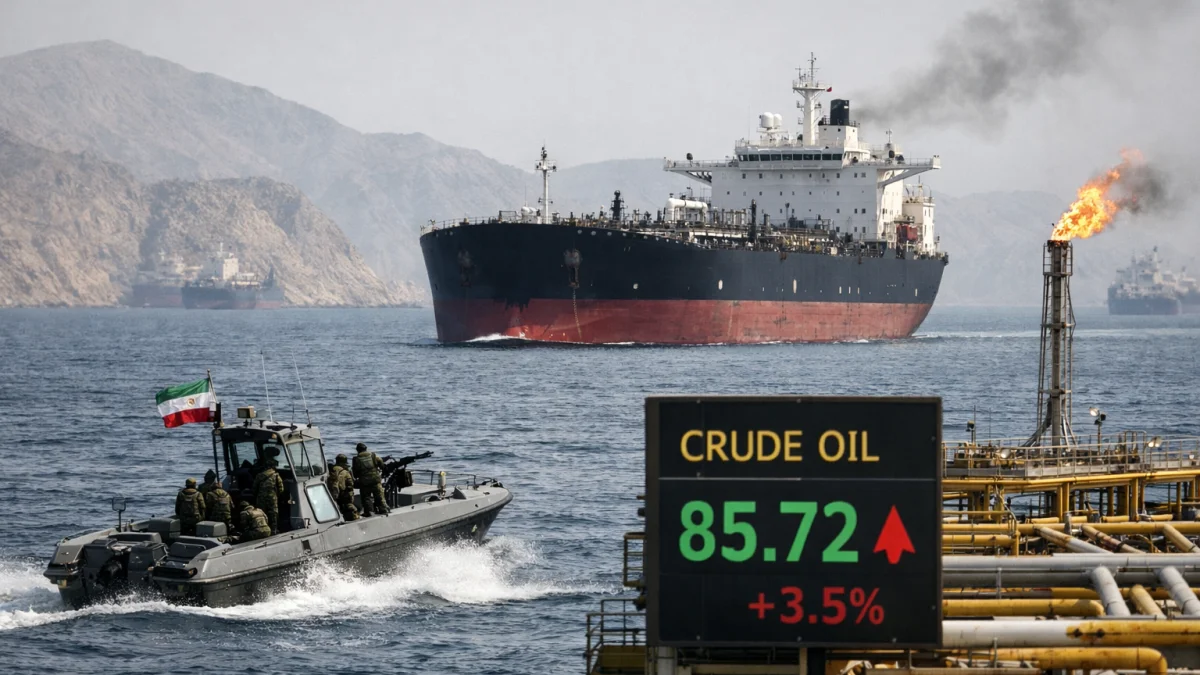
The gains followed renewed military exchanges involving the United States and Iran that slowed commercial traffic through the Strait of Hormuz, a strategic waterway that normally carries about one-fifth of the world's seaborne oil and liquefied natural gas shipments. Shipping activity has continued but at reduced levels as security concerns persist, according to shipping and market analysts.
Analysts said the market was responding less to immediate physical supply losses than to the heightened risk that prolonged disruption could tighten exports from major Gulf producers.
"The overriding theme is uncertainty over oil flows through the Strait of Hormuz," Tim Waterer, chief market analyst at KCM Trade, said in comments reported by Reuters, noting that traders were closely monitoring whether the situation would escalate further.
The International Energy Agency said renewed tensions threatened to undermine its earlier outlook for improving global oil balances. While some tanker traffic has continued and oil production remains relatively resilient, the agency warned that prolonged shipping disruptions could constrain exports from Gulf producers and tighten refined fuel markets.
Market participants also cited additional supply risks stemming from attacks on Russian energy infrastructure, which have affected expectations for Russian oil output. Those concerns, combined with uncertainty surrounding Middle East shipping, have offset expectations that increased production from OPEC+ members could ease market tightness.
Despite the latest rally, analysts said prices remained below the peaks reached earlier in the year, when broader conflict in the region briefly pushed crude above $100 a barrel before easing as some shipping resumed.
Governments and industry groups have continued to monitor vessel movements through the Strait of Hormuz, while energy traders remain focused on whether diplomatic efforts can reduce tensions and allow maritime traffic to return to normal levels. Until then, analysts said geopolitical developments are likely to remain the dominant driver of oil prices.