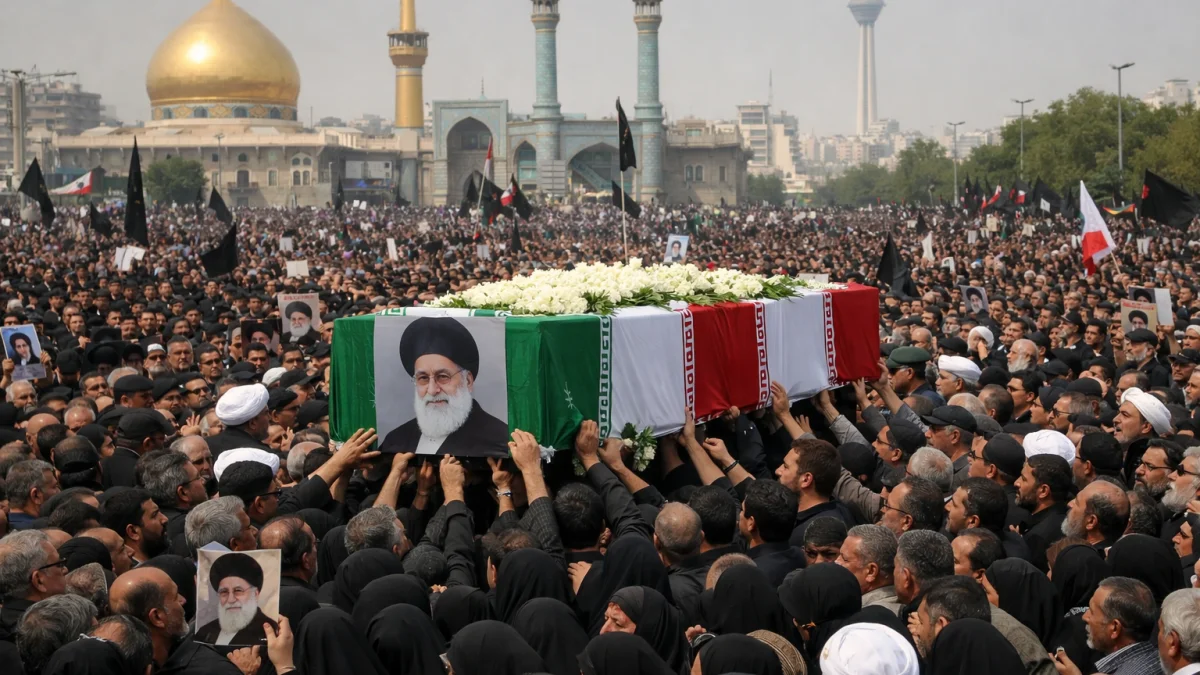
TEHRAN — Hundreds of thousands of mourners gathered in Tehran on Sunday for mass funeral prayers for Iran's slain Supreme Leader Ayatollah Ali Khamenei, as the Islamic Republic continued days-long state funeral ceremonies intended to honor the country's longest-serving leader and demonstrate political continuity following his death earlier this year.
Crowds dressed largely in black filled the Imam Khomeini Grand Mosalla prayer complex from the early morning, according to Iranian state media, with President Masoud Pezeshkian, senior military commanders, religious figures and other top officials attending the ceremony. Ayatollah Jafar Sobhani led the funeral prayers.
Iranian authorities have said millions of people are expected to participate in funeral events taking place across several cities over six days. The ceremonies began in Tehran on July 4 and are scheduled to continue with processions in Qom, Iraq's Shiite holy cities of Najaf and Karbala, before Khamenei's burial at the Imam Reza shrine in his hometown of Mashhad on July 9.
Khamenei, who led Iran since 1989, was killed on Feb. 28 during U.S. and Israeli airstrikes that marked the opening of a broader regional conflict, according to Iranian authorities. Washington and Israel have previously acknowledged military operations against Iran during the conflict.
State television broadcast images of mourners carrying Iranian flags and chanting religious slogans as Khamenei's coffin, draped in symbolic funeral coverings, was displayed before being prepared for the next stage of the procession. Iranian officials have portrayed the turnout as evidence of national unity and resilience following months of conflict.
Three of Khamenei's sons — Mostafa, Masoud and Meysam — appeared alongside senior officials during the ceremonies. Mojtaba Khamenei, who Iranian media have identified as the country's new supreme leader, did not appear publicly. Iranian state media attributed his absence to security concerns, although officials have provided no further details.
Foreign delegations from several countries have attended official mourning events since the funeral began. China's foreign ministry previously announced that senior lawmaker He Wei would represent Beijing at the ceremonies, while Iranian officials have said delegations from numerous regional partners are also participating.
The funeral procession is scheduled to continue in Tehran before moving to Qom and then onward to Iraq and Mashhad, where Iranian authorities have said the final burial ceremony will conclude the national period of mourning on July 9.