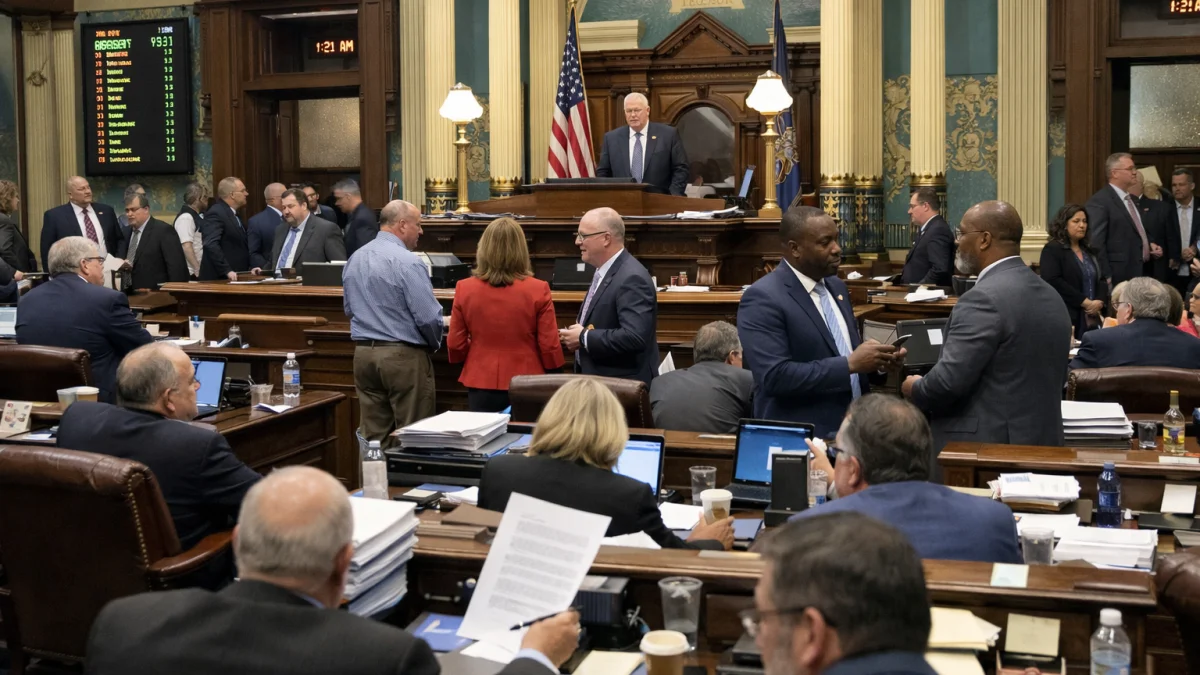
LANSING — Michigan lawmakers approved a new state budget after an extended overnight legislative session that stretched beyond the state's statutory July 1 deadline, sending a bipartisan spending package to Governor Gretchen Whitmer for consideration after days of negotiations between Republican and Democratic leaders.
The Legislature completed final votes early on July 3 after meeting through the night, concluding months of budget talks that had stalled as lawmakers worked to bridge differences over spending priorities. The delay marked the second consecutive year lawmakers missed the statutory deadline, which carries no legal penalty but left school districts, public universities, community colleges and many local governments without finalized state funding as their new fiscal year began.
Governor Gretchen Whitmer said the enacted budget totals about $75.2 billion, including roughly $19.8 billion for school aid and about $14.1 billion from the state's general fund. In a statement issued after passage, Whitmer described the plan as a balanced bipartisan budget that invests in education, housing, health care, road repairs and measures intended to reduce costs for residents.
Republican House Speaker Matt Hall defended the delayed timetable, saying negotiations produced a better outcome than meeting the statutory deadline. Hall also said the agreement avoided tax increases, protected the state's Budget Stabilization Fund, commonly known as the rainy day fund, and kept overall spending below the previous year's level.
Democratic leaders likewise welcomed the agreement while emphasizing different priorities. Senate Appropriations Committee Chair Sarah Anthony said the budget focuses on lowering costs, expanding economic opportunity and supporting essential public services through investments approved by both chambers.
According to Michigan Public Radio Network, lawmakers approved separate appropriations bills covering general government operations and education spending, including K-12 schools, community colleges and public universities. The education budget includes additional assistance for districts experiencing enrollment declines and increased support for students with special needs.
The prolonged negotiations followed weeks of discussions after legislative leaders announced they had reached a framework for a compromise shortly before the July 1 target date. Lawmakers continued voting through the night before giving final approval to the spending measures.
The budget now moves through the remaining formal steps in the enactment process, with the spending plan approved by both legislative chambers and forwarded to Whitmer's desk.