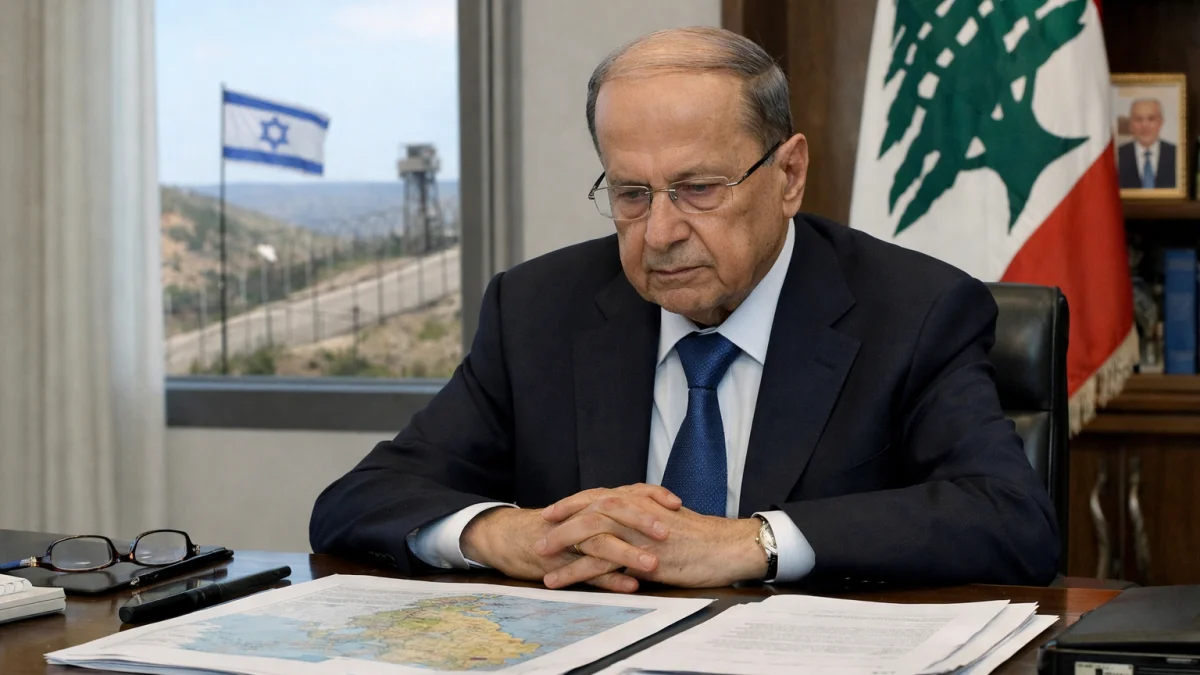
BEIRUT — Lebanon's President Joseph Aoun defended the U.S.-brokered framework agreement with Israel on Wednesday after the accord came under mounting political and public scrutiny, saying it safeguards Lebanon's sovereign rights and should not be viewed as a concession or capitulation.
Speaking at the presidential palace in Baabda during meetings with delegations from the Beirut and North Lebanon bar associations, Aoun said the agreement reached through negotiations in Washington "is neither a capitulation nor a concession" and preserves Lebanon's rights "legally and operationally," according to a statement from the presidency.
The president said Lebanon had chosen negotiations because they represented the best available option after years of conflict, adding that the country negotiates independently as a sovereign state and acts solely in its national interest. He said the framework reflects "the logic of the state" and is intended to protect Lebanon's legal position while creating a path toward restoring full state authority.
The comments followed criticism from political opponents and Hezbollah, which has rejected the agreement and questioned its legitimacy. Hezbollah has argued the framework undermines Lebanon's sovereignty and has said it does not recognize the accord. Other political figures, including Parliament Speaker Nabih Berri, have also voiced objections, saying the agreement requires changes before it could gain broader domestic acceptance.
The framework agreement was signed in Washington on June 26 after U.S.-mediated negotiations involving Israel and Lebanon. U.S. Secretary of State Marco Rubio said the accord establishes a process aimed at restoring Lebanon's sovereignty through the disarmament of Hezbollah and the dismantling of its military infrastructure, while setting conditions for Israel to withdraw to its internationally recognized border once security threats are addressed. The agreement also provides for a U.S.-facilitated Military Coordination Group to oversee implementation.
Lebanese officials have described the framework as an initial step rather than a final peace agreement, emphasizing that its objective is to restore state authority across Lebanese territory and secure the withdrawal of Israeli forces through a phased process. Israeli officials have similarly portrayed the accord as a foundation for improved security arrangements, although implementation remains dependent on conditions outlined in the agreement.
The agreement remains the subject of intense debate inside Lebanon, with supporters presenting it as an opportunity to strengthen state institutions and critics warning it could reshape the country's security and political landscape. No changes to the framework had been officially announced as of Wednesday.