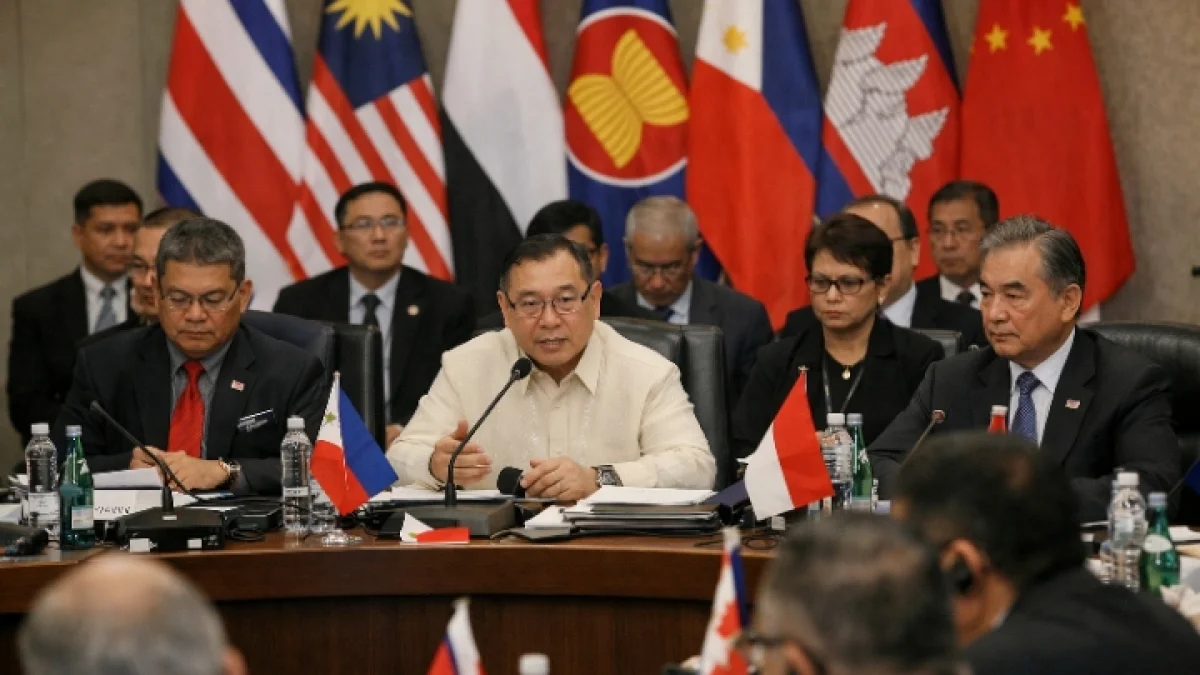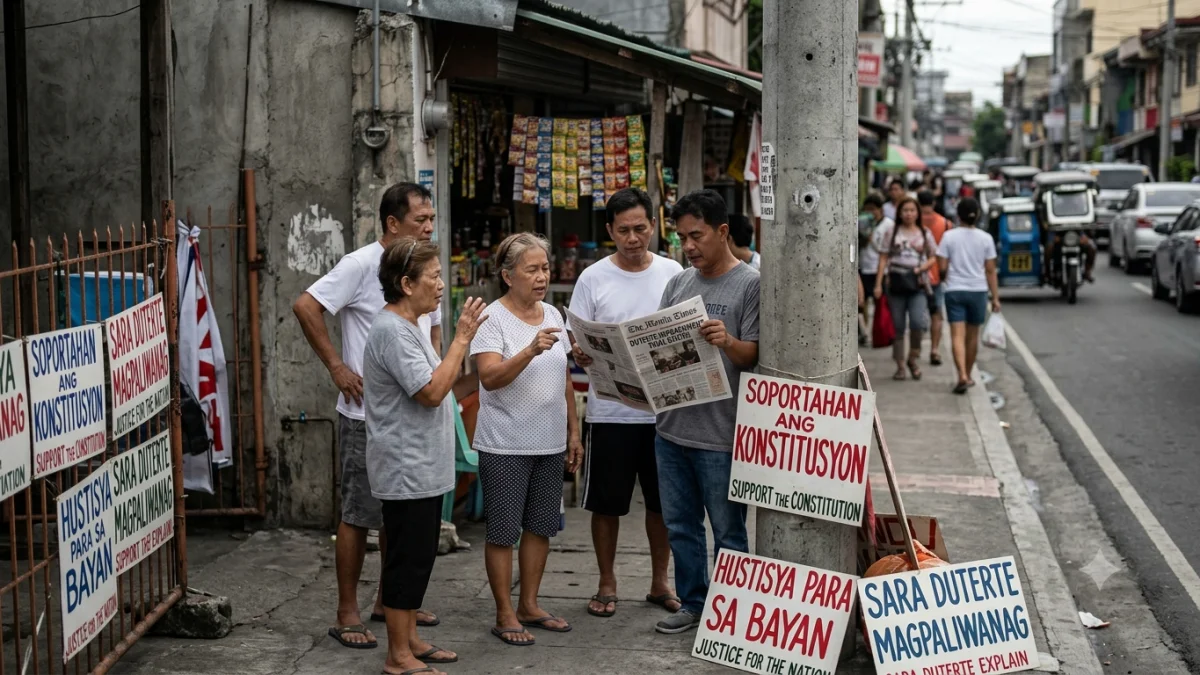
As proceedings in the Philippine Senate continue to scrutinize Vice President Sara Duterte, the most visible signs of the country's political divide are not confined to the chamber where senators sit as judges. They also appear in church halls where neighbors gather around livestreams, in barangay community centers hosting public viewings, and in households where families with differing political loyalties carefully avoid arguments over dinner.
The impeachment trial, which began in early July, has become the first against a sitting Philippine vice president. Prosecutors argue the case is a test of constitutional accountability, while Duterte's lawyers maintain the charges are politically motivated and designed to derail her political future. The outcome could determine whether one of the country's most prominent political figures remains eligible to seek the presidency in 2028.
For many Filipinos, however, the proceedings are experienced less as a legal spectacle than as another chapter in years of political polarization that has reached communities, workplaces and extended families.
One illustration has emerged through citizen-led public viewings organized by Bantay Senado, a non-partisan civic monitoring network. In Quezon City and other communities, residents have gathered to watch the Senate hearings together, reflecting an effort by civic organizations to encourage public understanding of the constitutional process rather than rely on fragmented social media narratives. Organizers have said the initiative is intended to promote transparency and informed discussion.
Participants at one parish-hosted viewing told local media they wanted to better understand the evidence being presented instead of relying solely on online commentary. The gatherings have brought together church members, students and residents with differing political opinions, highlighting both the intensity of public interest and the challenges of maintaining civil discussion during a politically charged moment.
The impeachment follows the collapse of the political alliance that helped carry President Ferdinand Marcos Jr. and Sara Duterte to victory in the 2022 national elections. Once presented as partners leading two of the country's most influential political families, the Marcos and Duterte camps have become increasingly adversarial, with disputes over policy, governance and political succession spilling into public view.
The charges against Duterte include allegations of unexplained wealth, bribery, corruption and threats against President Marcos, First Lady Liza Araneta-Marcos and a former House speaker. Duterte has consistently denied wrongdoing and has described the impeachment as political persecution. Her legal team has challenged both the evidence and aspects of the proceedings.
Inside the Senate, the hearings have often focused on procedural questions alongside witness testimony and documentary evidence. The impeachment court recently approved subpoenas for financial records belonging to Duterte, her husband and several associated entities after prosecutors argued the documents were necessary to establish a financial baseline relevant to the allegations. The court also approved requests relating to tax records, although confidentiality laws may affect their release.
Outside the courtroom, many Filipinos are navigating the political tension with caution.
Political analysts have long observed that support for the Duterte family remains particularly strong across parts of Mindanao, while Marcos retains significant backing elsewhere. Yet local loyalties often overlap with family relationships, employment and community life, making political disagreements difficult to separate from everyday interactions.
That dynamic has become increasingly apparent online, where competing narratives about the trial circulate rapidly. Community organizations encouraging residents to watch the proceedings directly have argued that firsthand observation provides a more reliable basis for discussion than edited clips or unverified claims shared across social media.
The trial itself has drawn extraordinary public attention. Thousands of police officers were deployed around the Senate when proceedings opened amid demonstrations by both Duterte supporters and critics. Prosecutors described the case as a test of accountability and public trust, while the defense argued it represented an attempt to overturn the will of millions of voters who elected Duterte as vice president.
Under Philippine law, conviction requires the votes of at least two-thirds of the 24-member Senate. If convicted, Duterte could be removed from office and permanently barred from holding public office, a result that would reshape the country's political landscape ahead of the next presidential election.
For residents following each day's testimony, however, the constitutional questions often coexist with more immediate concerns. Conversations in neighborhoods frequently return to inflation, employment, education and public services even as political developments dominate national headlines.
Civic groups say those discussions illustrate why the impeachment matters beyond Manila's political institutions. Regardless of where citizens stand on Duterte's innocence or guilt, they argue the proceedings represent a significant test of constitutional mechanisms designed to resolve disputes through legal institutions rather than political confrontation alone.
As senators continue hearing witnesses and examining evidence, community halls, churches and living rooms across the Philippines remain quiet extensions of the impeachment court. There, residents continue to watch, debate and interpret the proceedings, not only as supporters or opponents of a political figure, but as citizens observing a constitutional process whose consequences will extend well beyond the Senate chamber.