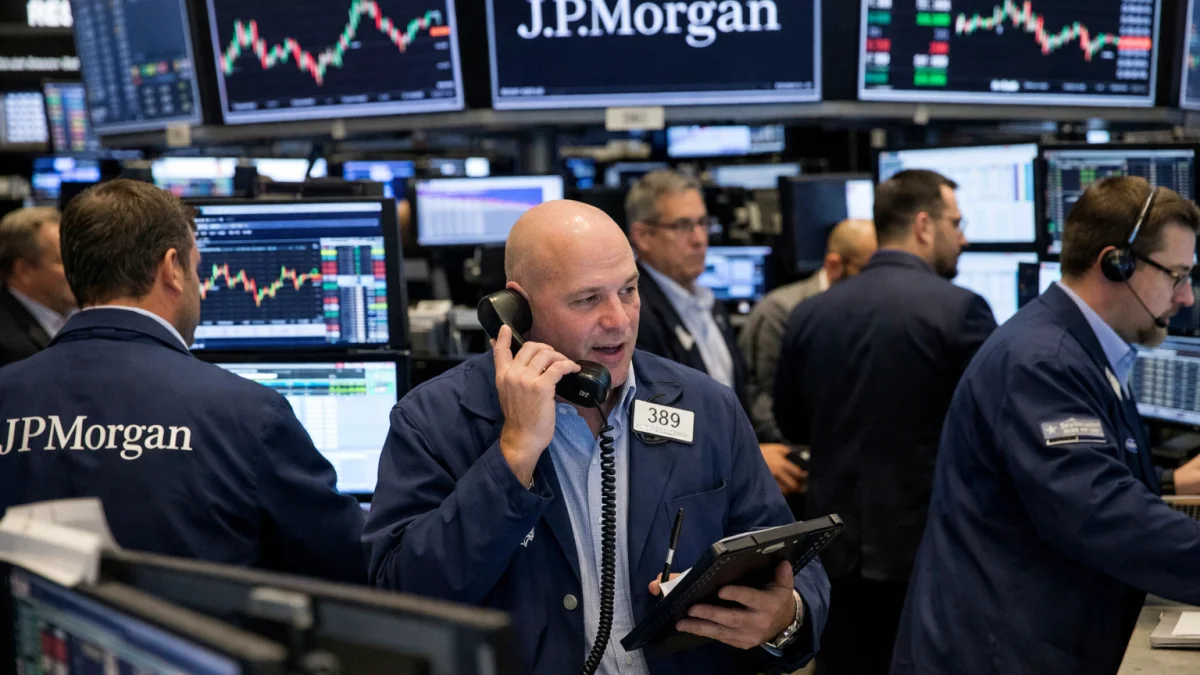
NEW YORK—JPMorgan Chase and its Wall Street peers capped a strong second-quarter earnings season with robust trading results, reinforcing investor confidence in the industry's ability to capitalize on volatile markets and a rebound in dealmaking despite continued warnings about economic uncertainty.
The largest U.S. banks reported profits that exceeded Wall Street expectations, driven by a surge in trading revenue and a recovery in investment banking activity as initial public offerings and mergers accelerated during the quarter. Analysts said the results underscored the strength of diversified banking franchises that benefited from elevated client activity across equities and fixed-income markets.
JPMorgan, the biggest U.S. lender by assets, posted a record quarterly profit earlier this week after investment banking fees climbed sharply and markets revenue jumped as traders took advantage of heightened market volatility. The bank also recorded revenue growth across all major business lines, supported by a revival in capital markets activity and resilient consumer lending.
Goldman Sachs, Morgan Stanley, Bank of America and Citigroup also reported stronger-than-expected performances, with trading desks benefiting from heavy client demand to hedge risk and reposition portfolios during swings in equity, bond and commodity markets. Morgan Stanley additionally cited strong mergers-and-acquisitions activity as a major contributor to its quarterly results.
Investment banking revenue across the industry reached its highest first-half level since 2021, helped by a resurgence in large equity offerings and acquisitions. The landmark SpaceX initial public offering, one of the year's biggest transactions, generated substantial underwriting fees for several Wall Street banks involved in the deal, according to industry data.
The earnings reinforced the dominant position of major U.S. banks in global capital markets. JPMorgan remained the industry's standout performer, while Goldman Sachs and Morgan Stanley also reported strong gains from advisory work and institutional trading businesses.
Despite the upbeat results, bank executives continued to urge caution about the outlook. JPMorgan Chief Executive Jamie Dimon said favorable conditions had been supported by several tailwinds, including artificial intelligence-related investment, fiscal stimulus and a more accommodating regulatory environment, while emphasizing that uncertainty surrounding the broader economy and financial markets remained.
Analysts said investors will now focus on whether elevated trading volumes, renewed dealmaking and improving capital markets activity can be sustained through the remainder of 2026 as banks navigate shifting monetary policy, geopolitical risks and changing market conditions.