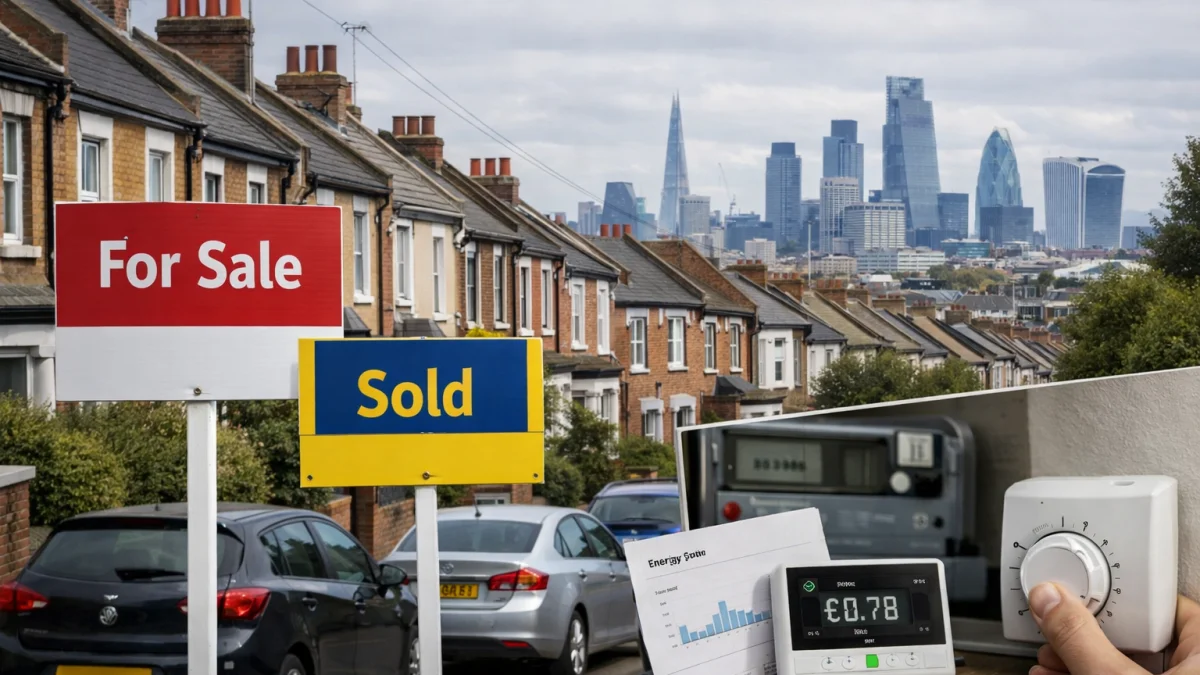
LONDON — Annual house price inflation in the United Kingdom accelerated in June even as monthly prices were unchanged, with easing energy costs helping to reduce expectations of further increases in borrowing costs and improving the outlook for the housing market, according to data released on Wednesday.
Figures from Nationwide Building Society showed house prices were 2.2% higher than a year earlier in June, up from annual growth of 1.7% in May. On a seasonally adjusted monthly basis, prices were flat, leaving the average home valued at £277,484.
The lender said the housing market had softened in recent months after conflict in the Middle East pushed up energy prices and market interest rates, weighing on consumer confidence and mortgage demand. However, the recent decline in oil prices has eased pressure on inflation expectations, improving prospects for mortgage borrowers.
Robert Gardner, Nationwide's chief economist, said the recent weakness in the market reflected uncertainty created by geopolitical developments that had raised energy costs and borrowing rates. He added that if lower mortgage rates are sustained, house price growth could strengthen later in the year.
Financial markets have moderated expectations for further tightening by the Bank of England as energy prices retreated following an easing of tensions in the Middle East. Lower market interest rates typically feed through to fixed-rate mortgage pricing, improving affordability for prospective homebuyers.
Despite the improvement in annual price growth, housing activity remains subdued. Nationwide noted that mortgage approvals fell noticeably in May as higher financing costs and weaker housing sentiment discouraged some buyers.
Regional performance remained uneven but positive across the country. Northern Ireland continued to record the strongest annual house price growth, while Scotland and Wales also posted gains. London remained the weakest-performing region, although prices there were still higher than a year earlier.
Economists said the near-term outlook remained uncertain. Ashley Webb, senior UK economist at Capital Economics, said previous increases in mortgage rates were likely to keep house prices broadly flat over the coming months, but added that sustained declines in swap rates and mortgage costs could support a stronger recovery later in 2026.
The latest figures come as investors continue to assess the path of UK inflation and future Bank of England policy, with borrowing costs expected to remain a key driver of housing demand during the second half of the year.