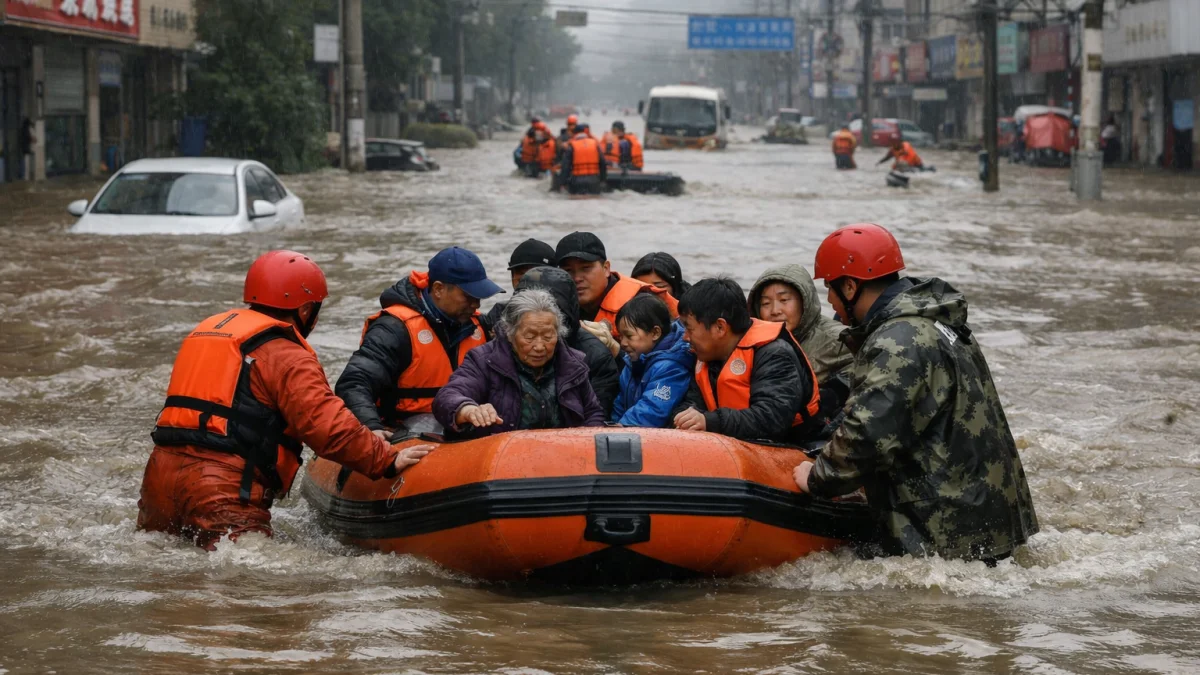
BEIJING — Typhoon Bavi triggered widespread flooding, transport disruptions and mass evacuations across eastern China after making landfall in Zhejiang province, with authorities warning that heavy rain and the risk of landslides and urban flooding would continue as the storm moved inland.
Bavi, the strongest typhoon to strike mainland China so far in 2026, made landfall late on Saturday along the Zhejiang coast before weakening to a tropical storm on Sunday, according to China's meteorological authorities. Officials said the system continued to generate torrential rainfall and strong winds across several eastern provinces as it tracked northwest.
Chinese authorities evacuated nearly 2 million people from vulnerable coastal and low-lying areas before the storm's arrival, while emergency teams were deployed to clear debris, restore transport links and respond to localized flooding. Zhejiang province accounted for the majority of the evacuations, with additional relocations carried out in Shanghai and neighboring provinces as precautionary measures.
In Yueqing, one of the hardest-hit cities in Zhejiang, authorities reported more than 1,300 trees had been toppled and floodwaters inundated streets after intense rainfall. Swollen rivers and localized landslides complicated rescue and recovery efforts, while emergency crews used heavy equipment to remove fallen trees and clear blocked roads.
The storm disrupted transportation across eastern China. Hundreds of flights were canceled at Shanghai's Pudong and Hongqiao airports, while rail services in Shanghai, Hangzhou and other cities were suspended or reduced because of severe weather. Authorities also closed schools, halted construction work and suspended some ferry services in areas under the highest weather alerts.
China's National Meteorological Center maintained typhoon and rainstorm warnings, cautioning that Bavi could continue to produce heavy rainfall capable of triggering flash floods, mountain torrents and geological disasters as it weakened over inland provinces. The Ministry of Emergency Management activated emergency response measures in multiple regions and dispatched working groups to support local disaster prevention and relief operations.
Before reaching mainland China, Bavi passed near Taiwan, where authorities reported more than 130 people were injured, mostly in weather-related accidents, and widespread transport disruptions occurred. The storm also affected Japan's southwestern islands before moving toward the Chinese coast.
As of Sunday, there were no immediate official reports of fatalities in mainland China directly linked to Bavi. Authorities said emergency response operations would continue while forecasters monitored the storm's weakening path and the threat of further flooding in inland areas.