Record-breaking heat associated with a prolonged heat dome across large parts of the United States has become more than a short-term weather emergency, exposing persistent weaknesses in the country's cooling infrastructure as millions of residents face dangerous temperatures and utilities, local governments and health systems struggle to meet surging demand. Federal forecasters warned that the event would bring days of extreme heat across much of the eastern half of the country, while several states reported heat-related deaths and widespread emergency responses.
The episode underscores a broader shift in how extreme heat is affecting the United States. Historically treated as a seasonal hazard, prolonged heat waves are increasingly testing infrastructure that was designed for less frequent and less intense extremes. The latest event illustrates that cooling has become a critical component of public infrastructure, linking electricity reliability, housing quality, public health preparedness and urban planning rather than remaining solely an individual household concern.
Meteorologists attribute the current conditions to a strong, slow-moving high-pressure system that traps hot air and suppresses cloud formation, allowing temperatures and humidity to build over several days. The U.S. National Weather Service issued widespread excessive heat warnings and advisories affecting millions of people, emphasizing that unusually warm overnight temperatures reduce the body's opportunity to recover from daytime heat exposure. Such prolonged nighttime warmth has become an increasingly important indicator of health risk during major heat events.
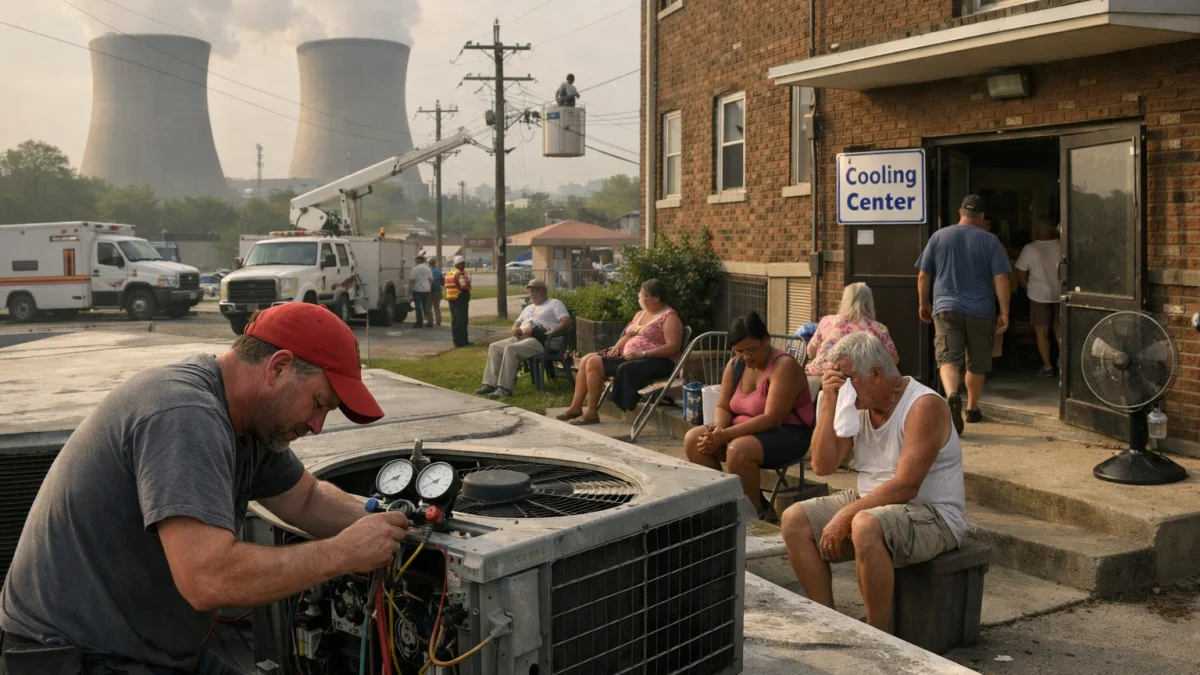
The pressure on electricity systems has become one of the clearest indicators of infrastructure vulnerability. Air-conditioning demand pushed electricity consumption toward record levels across several regional grids. Grid operators implemented emergency measures, including rerouting power flows and dispatching additional generation to maintain reliability, while utilities urged customers to conserve electricity during peak periods. Although widespread blackouts were largely avoided, the operational measures highlighted the narrowing margin between available supply and rapidly growing demand during extreme weather.
The challenge extends beyond electricity generation. Public health experts have long identified access to cooling as one of the strongest determinants of survival during extreme heat. Recent deaths reported across multiple states included older adults and individuals without reliable access to air-conditioned environments, reinforcing findings from previous research that heat disproportionately affects vulnerable populations, including elderly residents, low-income households, outdoor workers and people with chronic medical conditions. Local governments responded by expanding cooling centers, extending public facility hours and increasing emergency medical staffing, but those measures primarily address immediate risks rather than underlying infrastructure gaps.
Housing design represents another structural limitation. Much of the U.S. housing stock increasingly depends on mechanical cooling, leaving buildings vulnerable when electricity supplies are interrupted. Building researchers note that many modern homes prioritize air-conditioning over passive cooling features such as reflective roofs, effective insulation, natural ventilation, shading and tree cover. Analysts argue that buildings capable of remaining habitable during power outages could reduce both electricity demand and heat-related mortality during prolonged extreme weather.
Urban development patterns also contribute to growing cooling challenges. Dense concentrations of pavement, buildings and limited vegetation create urban heat islands that retain heat long after sunset. These conditions increase nighttime temperatures and reduce natural cooling, placing additional strain on electricity systems while increasing health risks. Municipal responses, including expanded tree planting, reflective surfaces and heat action plans, have grown in recent years, but implementation varies significantly among cities and often depends on local funding and planning priorities.
The current heat dome also reflects broader climate trends identified by scientific organizations. Climate researchers have concluded that human-driven climate change has increased the likelihood and intensity of many extreme heat events. Independent scientific assessments examining this episode found that climate change substantially increased the probability of the prolonged heat affecting large portions of the eastern United States. While no single weather event can be attributed solely to climate change, researchers report that rising global temperatures are increasing the frequency, duration and severity of heat waves that challenge infrastructure built for historical climate conditions.
Economic pressures further complicate the response. Rising electricity demand is occurring alongside expanding consumption from data centers, electrification and population growth in several regions. Grid operators increasingly face the task of balancing long-term investment in transmission, generation and storage against more immediate operational responses during periods of exceptional demand. The latest heat wave demonstrated that resilience depends not only on generating sufficient electricity but also on maintaining reliable delivery, protecting vulnerable consumers and ensuring that critical facilities remain operational during sustained periods of extreme heat.
As temperatures begin easing in some regions while remaining elevated elsewhere, officials continue monitoring heat-related illnesses, electricity demand and weather forecasts. The immediate public health response remains focused on preventing additional fatalities and maintaining grid reliability. Longer-term questions—including how quickly utilities, governments and building standards can adapt to increasingly frequent episodes of extreme heat—remain under active examination by policymakers, infrastructure planners and climate researchers, with no single nationwide strategy yet in place.