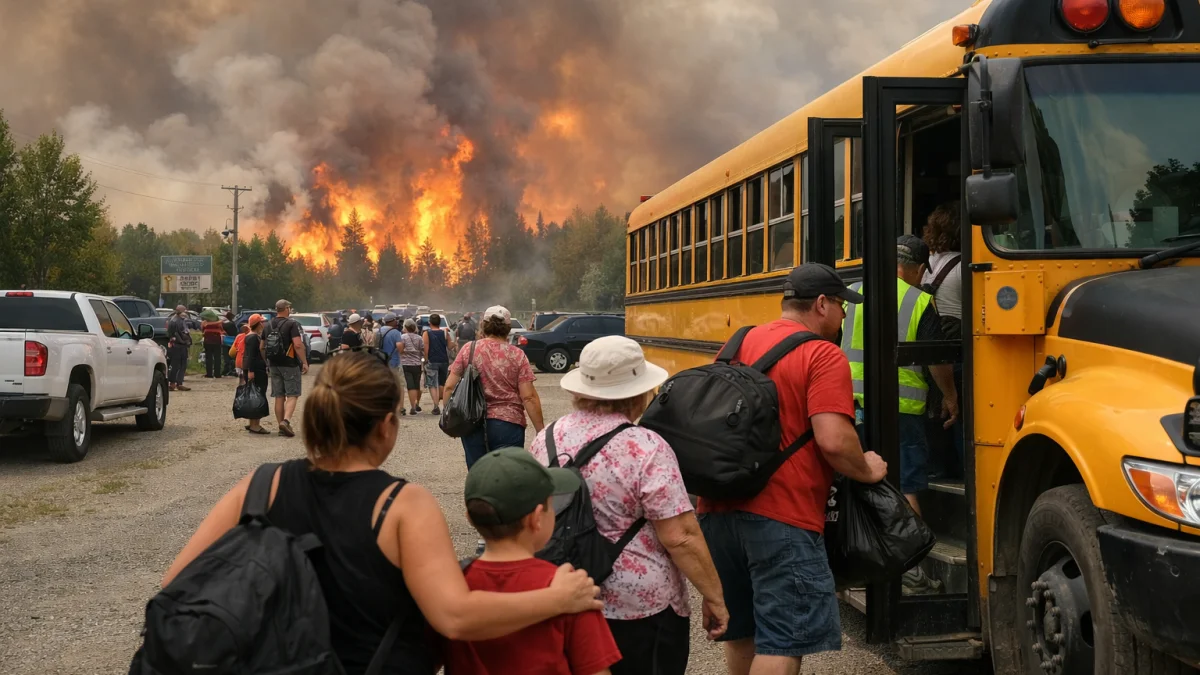
Smoke drifted far beyond the fire line, turning midday skies over parts of Ontario a muted grey as residents checked air-quality alerts and emergency updates. Hundreds of kilometres away from the largest blazes, the effects of northwestern Ontario's wildfire emergency reached city streets, while in remote communities, evacuation orders forced families to leave homes with little certainty about when they could return.
The evacuations unfolded as an intense heat wave settled over much of the province, creating conditions that firefighters and emergency officials said were fuelling fast-moving fires across northern Ontario. By mid-July, Ontario Provincial Police and Emergency Management Ontario had ordered residents from several communities, including Armstrong, Collins First Nation, Whitesand First Nation and Lac des Mille Lacs First Nation, to evacuate. Other communities were warned to prepare in case the fires spread further.
For many evacuees, the journey south meant leaving behind homes, belongings and familiar routines while relying on emergency shelters and temporary accommodations. Officials directed evacuees toward Thunder Bay where possible, although local Indigenous leaders said available accommodation quickly became strained, requiring some residents to be moved elsewhere and separating families during an already difficult evacuation.
The wildfire emergency was not confined to a single community. Ontario's forest fire service reported scores of active fires across the northwest, many of them not under control. Extreme heat warnings issued by Environment Canada brought daytime temperatures into the mid-30s Celsius, with humidex values making conditions feel close to 40 C or higher in some locations. Those temperatures dried vegetation further while creating physically demanding conditions for firefighters working on the front lines.
The combination of fire and heat transformed daily life well beyond evacuation zones. In Toronto, smoke carried from northwestern Ontario pushed air pollution to hazardous levels. Environment Canada warned residents, particularly children, older adults and people with respiratory conditions, to limit outdoor activity. Public events were disrupted as one of Canada's largest cities confronted air quality ranked among the worst in the world by monitoring firm IQAir.
Images from across the province illustrated the breadth of the emergency. Toronto's skyline disappeared behind smoke. In Burlington, parks remained open beneath hazy skies as residents adjusted outdoor activities. Farther north, dramatic video from a Canadian National Railway crew showed flames surrounding a freight train near Armstrong, highlighting how rapidly conditions had deteriorated. All crew members escaped safely, but the footage underscored the hazards facing workers operating in fire zones.
Indigenous communities again found themselves among those most heavily affected. Many First Nations in northwestern Ontario are accessible only by air or seasonal roads, making evacuations complex and resource-intensive. Earlier in the wildfire season, Kasabonika Lake First Nation had already evacuated hundreds of residents, including elders, children, expectant mothers and people with medical conditions, illustrating how repeated fire seasons increasingly disrupt remote communities.
Scientists have warned that Canada's wildfire seasons are becoming longer and more severe as climate change increases the likelihood of hot, dry conditions conducive to large fires. While no single wildfire can be attributed solely to climate change, researchers say rising temperatures and more frequent heat extremes are increasing the conditions under which fires can ignite, spread rapidly and generate smoke affecting communities far from the flames.
The effects extend beyond immediate evacuation orders. Smoke exposure has become an increasingly familiar feature of Canadian summers, with public health officials urging residents to monitor air-quality advisories, reduce strenuous outdoor activity during smoke events and seek cleaner indoor air when conditions worsen. For businesses, schools, transportation operators and local governments, wildfire smoke has become another emergency requiring rapid adaptation alongside the fires themselves.
Emergency crews continued to battle the blazes as weather conditions remained challenging. Officials warned that changing winds and persistent heat could alter fire behaviour with little notice, requiring evacuation plans to remain flexible. Communities under warning were urged to prepare essential belongings and be ready to leave if conditions changed.
For evacuees waiting in temporary accommodation, the uncertainty extended beyond the immediate emergency. Returning home depends not only on extinguishing flames but also on assessing damage, restoring essential services and ensuring communities are safe. As smoke continued to spread across Ontario and into parts of the United States, the fires served as a reminder that a disaster beginning in remote forests can quickly reshape daily life across an entire region.