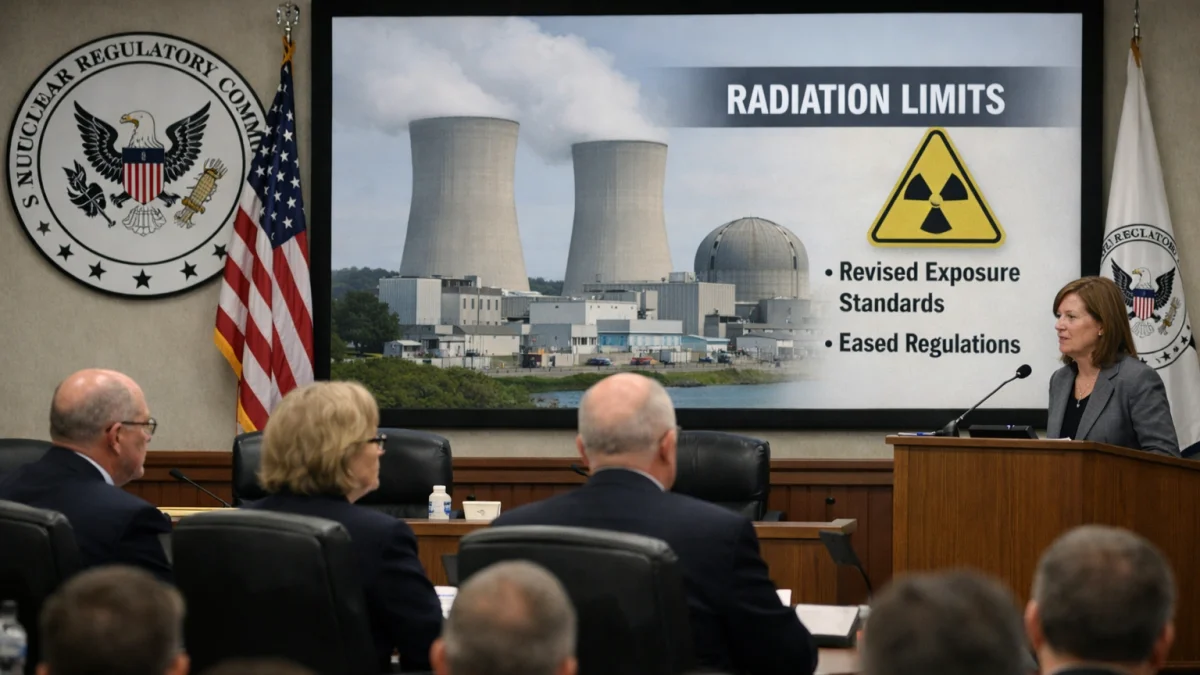
WASHINGTON — The U.S. Nuclear Regulatory Commission has proposed sweeping changes to its radiation protection regulations that would replace a decades-old safety principle with what the agency described as clearer, objective requirements, marking the latest step in the Trump administration's broader effort to streamline nuclear regulation and accelerate reactor development.
The proposal, announced on July 1, would eliminate the longstanding "As Low as Reasonably Achievable" (ALARA) principle from NRC regulations while maintaining existing radiation dose limits for workers and the public. Instead, the agency said it would rely on compliance with established regulatory limits and updated risk-based approaches that it said better reflect current scientific understanding and decades of operating experience.
NRC Chairman Ho Nieh said the proposed rule is intended to improve regulatory clarity rather than weaken safety protections. According to the commission, existing dose limits would remain well below levels associated with known adverse health effects, and removing ALARA as a separate regulatory expectation would reduce regulatory complexity and costs without diminishing public or worker safety.
The proposal follows executive orders issued by President Donald Trump in 2025 directing federal agencies to accelerate nuclear power development, overhaul NRC regulations and expand U.S. nuclear generating capacity to help meet rising electricity demand from sectors including data centers, electric vehicles and cryptocurrency mining.
The proposed changes have drawn criticism from some nuclear safety advocates, who argue that eliminating the ALARA principle could reduce incentives for operators to minimize radiation exposure beyond legal limits. Edwin Lyman, director of nuclear power safety at the Union of Concerned Scientists, told Reuters that removing the standard could increase radiation risks for workers and the public while primarily benefiting the industry through lower compliance costs.
Industry groups have long argued that the ALARA requirement creates uncertainty and unnecessary expense because it requires operators to demonstrate that radiation exposures are kept as low as reasonably achievable even when they remain well below regulatory limits. The NRC said its proposed framework would provide a more objective standard while preserving existing dose protections.
The radiation proposal is one of several regulatory initiatives unveiled by the commission in recent weeks, alongside proposed reforms covering reactor licensing, nuclear security and radioactive waste disposal as part of a broader modernization effort.
The NRC said the proposed radiation rule will be open for public comment for 45 days before the commission considers whether to adopt a final regulation.