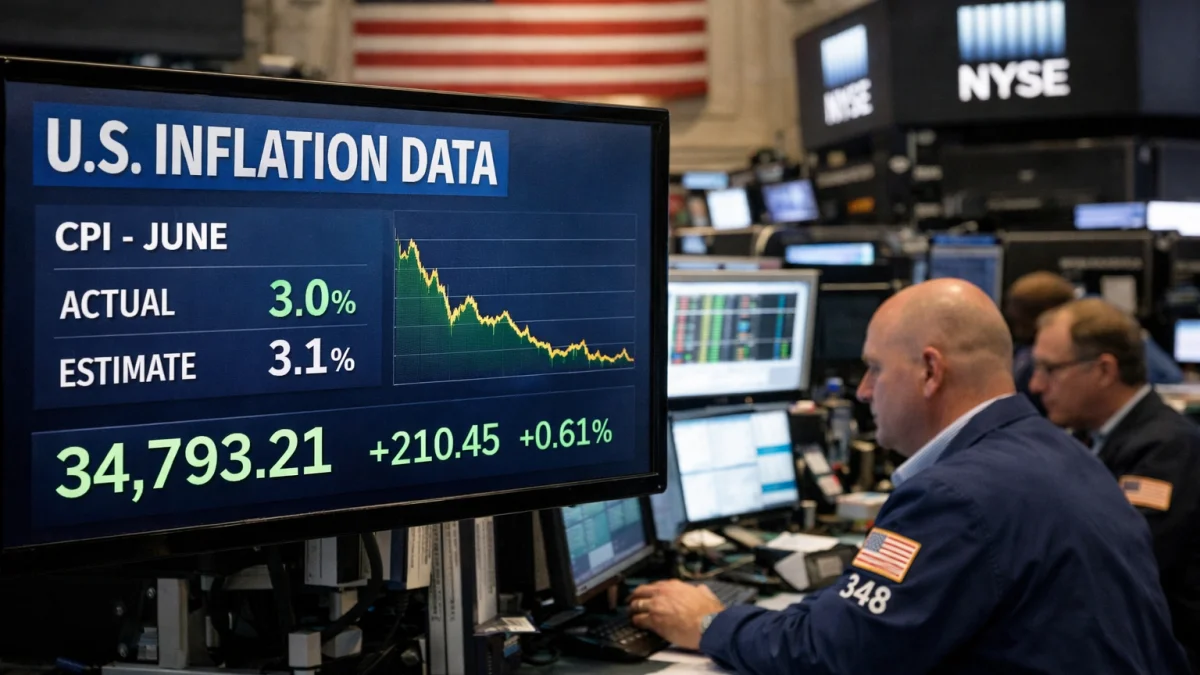
WASHINGTON — U.S. consumer inflation slowed more than economists had expected in June, offering temporary relief after several months of stronger price pressures, though Federal Reserve policymakers and economists cautioned that inflation risks remain elevated amid uncertainty over energy markets.
Data released by the Labor Department's Bureau of Labor Statistics showed the Consumer Price Index (CPI) fell 0.4% on a seasonally adjusted monthly basis in June after rising 0.5% in May. Compared with a year earlier, consumer prices increased 3.5%, down from 4.2% in May and below economists' expectations for a 3.8% annual increase.
The monthly decline was driven largely by a sharp drop in energy prices. The energy index fell 5.7% during the month, led by a 9.7% decline in gasoline prices, more than offsetting continued increases in food and shelter costs, according to the Bureau of Labor Statistics.
Core inflation, which excludes the often-volatile food and energy categories and is closely watched by Federal Reserve officials, was unchanged from the previous month. On an annual basis, core CPI slowed to 2.6% from 2.9% in May, also coming in below economists' expectations.
The softer inflation reading prompted investors to scale back expectations of an immediate interest-rate increase by the Federal Reserve. Treasury yields declined while equity markets advanced as traders reassessed the outlook for monetary policy following the report.
Despite the encouraging data, economists warned that a single month's improvement does not guarantee a sustained decline in inflation. While falling fuel prices helped cool June's figures, renewed geopolitical tensions affecting global energy supplies could place upward pressure on prices in the coming months.
The Bureau of Labor Statistics said food prices rose 0.2% during the month, while the shelter index continued to increase, though more modestly than in previous months. Several categories, including motor vehicle insurance, communication services, apparel, medical care and used vehicles, posted declines that also contributed to the subdued core reading.
The June CPI report follows several months of elevated inflation that had fueled expectations the Federal Reserve might need to tighten monetary policy further. While the latest figures suggest price pressures eased more quickly than anticipated, inflation remains above the U.S. central bank's 2% target.
The Bureau of Labor Statistics said it will release July consumer inflation data on Aug. 12.