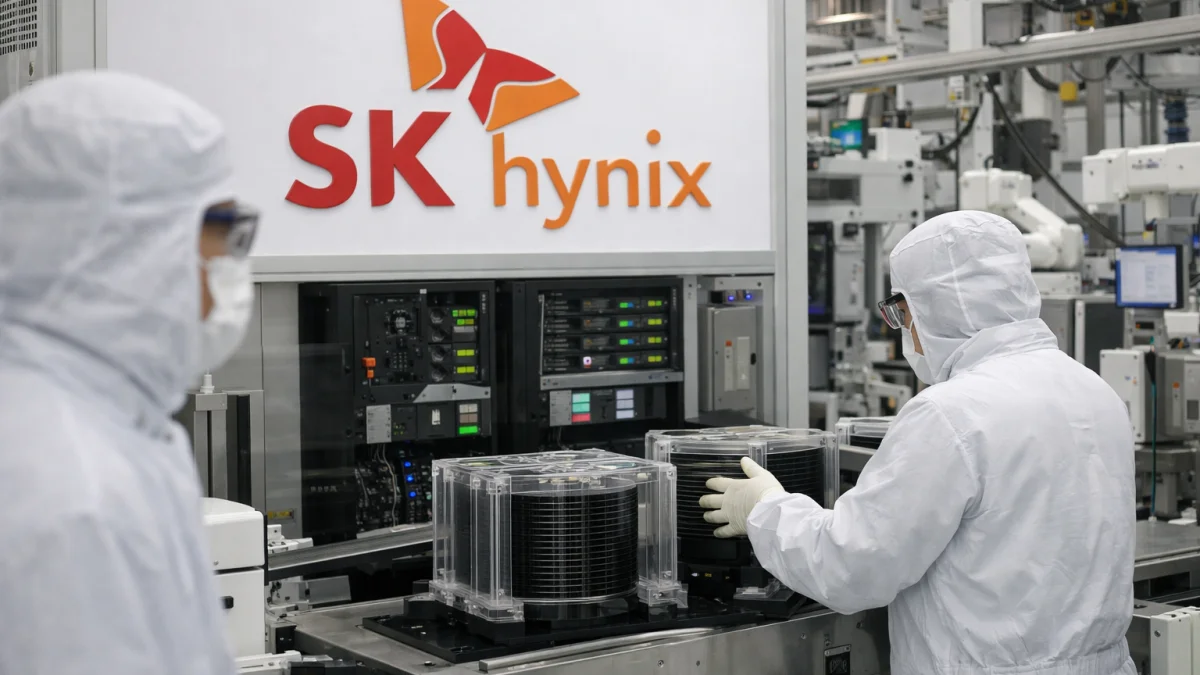
SEOUL — South Korea's SK Hynix reported another sharp jump in revenue as booming demand for artificial intelligence memory chips continued to drive growth, reinforcing the company's position as one of the semiconductor industry's biggest beneficiaries of the global AI investment cycle.
The memory chipmaker said demand for high-bandwidth memory (HBM), a critical component used alongside AI accelerators, remained robust as major cloud computing providers and technology companies expanded spending on AI infrastructure. Revenue growth was supported by higher shipments of premium memory products and stronger average selling prices, according to the company.
SK Hynix, a key supplier of HBM chips for AI processors, has repeatedly said customer demand continues to exceed available manufacturing capacity despite aggressive expansion plans. During its latest earnings outlook, the company said requests for HBM supply over the coming years remain above its current production capability, highlighting persistent supply constraints across the AI memory market.
The company's performance comes as the global semiconductor industry benefits from sustained investment in generative AI systems, which require substantially larger amounts of advanced memory than traditional computing workloads. Analysts expect tight supply conditions for premium DRAM and NAND products to continue supporting pricing across the sector into next year.
SK Hynix has accelerated investments to expand manufacturing capacity, including new production facilities in South Korea, while also pursuing additional funding through a planned U.S. listing of American Depositary Receipts.
On Monday, the company launched a roughly $28 billion ADR offering on Nasdaq, one of the largest equity offerings in recent years. SK Hynix said proceeds would help finance new semiconductor fabrication facilities and purchases of advanced chipmaking equipment as it seeks to meet rising global AI demand.
Investor interest in AI-related semiconductor companies has helped propel SK Hynix shares sharply higher this year despite periodic volatility tied to broader concerns over technology valuations and future AI spending.
The company's strong performance also reflects wider strength across the memory industry. Rival Samsung Electronics is expected to report another record quarterly operating profit, with analysts attributing the gains to continued shortages of AI memory chips and firm pricing across the market.
Industry executives and analysts continue to caution that while AI demand remains exceptionally strong, future earnings will depend on sustained investment by hyperscale cloud providers and enterprise customers. For now, however, demand for advanced memory continues to outpace supply, supporting elevated prices and encouraging manufacturers to expand production capacity.