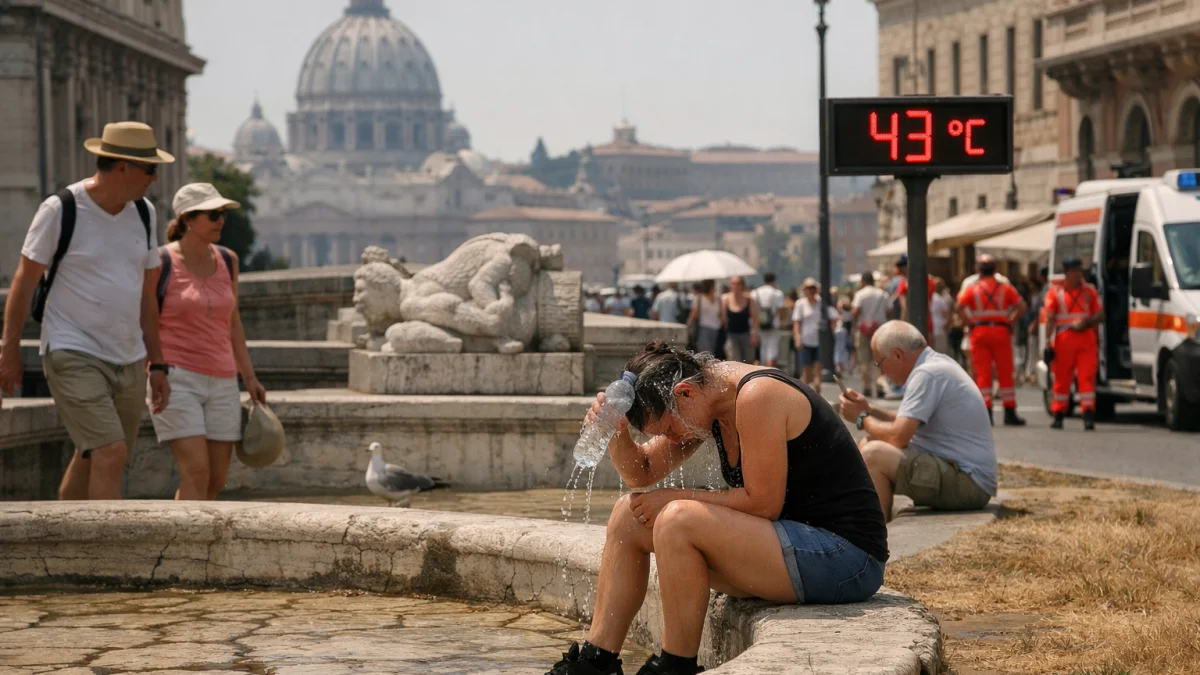
Europe's latest heatwave has reinforced scientific assessments that extreme heat is becoming both more frequent and more intense across the continent as climate change raises baseline temperatures and amplifies the conditions that allow prolonged hot spells to develop. A late-June 2026 heatwave shattered temperature records across multiple countries, strained healthcare systems, disrupted transport and electricity networks, and prompted emergency responses from governments as temperatures exceeded 40 degrees Celsius in many areas. The World Meteorological Organization (WMO) and national meteorological agencies have linked the event to long-term warming trends, while attribution scientists concluded that human-induced climate change made the episode substantially more likely and more severe.
The significance extends beyond a single extreme weather event. Europe is warming faster than any other continent, according to the WMO and the Copernicus Climate Change Service, meaning that heatwaves now develop from a significantly warmer climatic baseline than they did only a few decades ago. As average temperatures rise, weather patterns that previously produced severe heat increasingly generate record-breaking conditions instead. Scientists emphasize that natural atmospheric variability still determines when and where individual heatwaves occur, but climate change has shifted the probability toward hotter, longer and more damaging events.
Meteorologists attributed the immediate trigger for the June 2026 event to a persistent high-pressure system, often described as an Omega blocking pattern, which trapped hot air over western and central Europe for several days. Such blocking systems are a longstanding feature of European weather, but researchers say warmer background temperatures, drier soils and altered land-atmosphere interactions can intensify their impacts. Recent scientific research also indicates that persistent atmospheric circulation patterns, together with depleted soil moisture during summer, help sustain exceptional heat once such events become established.
The consequences increasingly extend well beyond daily temperature records. During the latest heatwave, governments reported rising heat-related illnesses, excess mortality, infrastructure failures, reduced agricultural productivity and disruptions to energy generation. High river temperatures limited cooling capacity at some power facilities, while rail services, roads and electricity systems came under strain in several countries. Public health authorities have repeatedly warned that prolonged periods of high daytime and nighttime temperatures prevent the human body from recovering, increasing risks for elderly people, outdoor workers and those with pre-existing medical conditions.
Urban areas remain particularly vulnerable. Dense construction, limited vegetation and extensive paved surfaces create urban heat islands that trap heat after sunset, reducing overnight cooling. Copernicus notes that urbanization amplifies heatwave impacts even as climate change raises regional temperatures. Many European cities were designed for historically moderate summers rather than repeated episodes above 40 degrees Celsius, leaving housing, hospitals, transport systems and public spaces increasingly exposed during prolonged heat events.
Scientific evidence suggests the current pattern reflects a broader trend rather than an isolated anomaly. Copernicus reports that most of Europe's most severe heatwaves since 1950 have occurred during the twenty-first century. The European State of the Climate 2025 report documented above-average temperatures across at least 95% of the continent, record marine heat, widespread drought conditions in many regions and expanding wildfire risk extending from the Mediterranean into northern Europe. These developments illustrate how rising temperatures interact with water shortages, ecosystem stress and changing weather extremes.
Climate attribution studies have become an increasingly important tool for distinguishing long-term climate influences from natural variability. Following the June 2026 event, researchers from the World Weather Attribution initiative concluded that the heatwave would have been extremely unlikely without human-caused climate change. Such studies compare climate model simulations representing today's greenhouse gas concentrations with simulations of a world without human-induced warming. While attribution analyses do not claim that climate change "caused" a particular weather system, they estimate how much it increased the likelihood or intensity of an event.
Governments and European institutions have expanded heat-health action plans, early warning systems and public cooling measures following successive extreme summers. The WMO has stressed that improved forecasting, public health coordination and preparedness can reduce mortality even as climate risks increase. Officials also continue to emphasize adaptation measures, including urban greening, improved building resilience and infrastructure capable of operating under higher temperatures.
The latest heatwave therefore represents both an immediate public safety challenge and further evidence of a longer-term climatic shift documented across multiple scientific assessments. Current observations support a growing consensus that Europe's heatwaves are becoming more frequent, more intense and more disruptive as the continent continues to warm. Researchers and public authorities are continuing to monitor the evolution of summer weather patterns, drought conditions, wildfire risk, health impacts and additional attribution studies as more data from the 2026 heatwave become available.