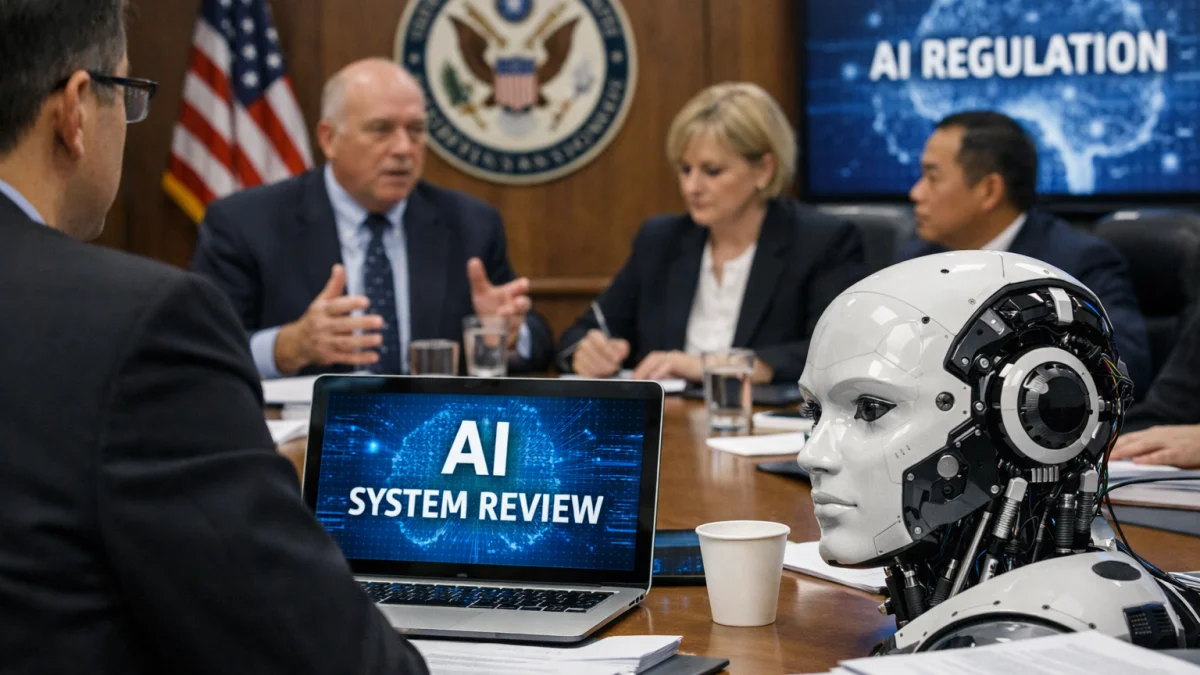
WASHINGTON — Critics say a new U.S. government framework for reviewing advanced artificial intelligence models before their release has effectively created a de facto licensing regime for frontier AI development, despite explicit disclaimers in a recent executive order that it imposes no mandatory requirements.
President Donald Trump signed the executive order titled "Promoting Advanced Artificial Intelligence Innovation and Security" on June 2, directing agencies including the National Security Agency and the Cybersecurity and Infrastructure Security Agency to establish a voluntary process for AI developers to submit "covered frontier models" — those with advanced cyber capabilities — for government assessment up to 30 days before broader release to trusted partners.
The order requires agencies to develop classified benchmarks within 60 days to identify such models and explicitly states that nothing in the framework authorizes a mandatory licensing, preclearance or permitting regime for AI model development or distribution.
Industry participation in the voluntary process has grown amid concerns over national security and procurement implications. OpenAI confirmed compliance with related government expectations for model reviews, according to reports.
Critics, including policy analysts and legal experts, argue that the combination of government benchmarking, pre-release access requests and the federal government's role as a major customer and regulator effectively pressures companies to seek approvals to avoid losing contracts or facing informal restrictions.
"Voluntary looks different when your customer is the federal government," one analysis noted, highlighting how procurement policies and responsibility determinations can turn participation into a practical requirement for market access.
Recent incidents, including reported government communications with companies like OpenAI and Anthropic regarding specific model rollouts, have fueled concerns about an informal oversight system operating without formal statutory authority or transparent criteria.
The administration maintains the framework promotes secure innovation without stifling competition, particularly in the race against international rivals like China. Supporters point to the shortened 30-day review window as a compromise following industry lobbying against an earlier, longer proposal.
The order also directs agencies to strengthen federal cybersecurity against AI-enabled threats and prioritizes criminal enforcement against AI-facilitated cyberattacks.
As agencies work to implement the benchmarking and engagement processes by early August, AI developers are evaluating participation amid ongoing debates over its long-term impact on innovation and intellectual property.
No formal legal challenges to the framework have been reported as of Tuesday, though analysts expect continued scrutiny as the voluntary system takes shape.