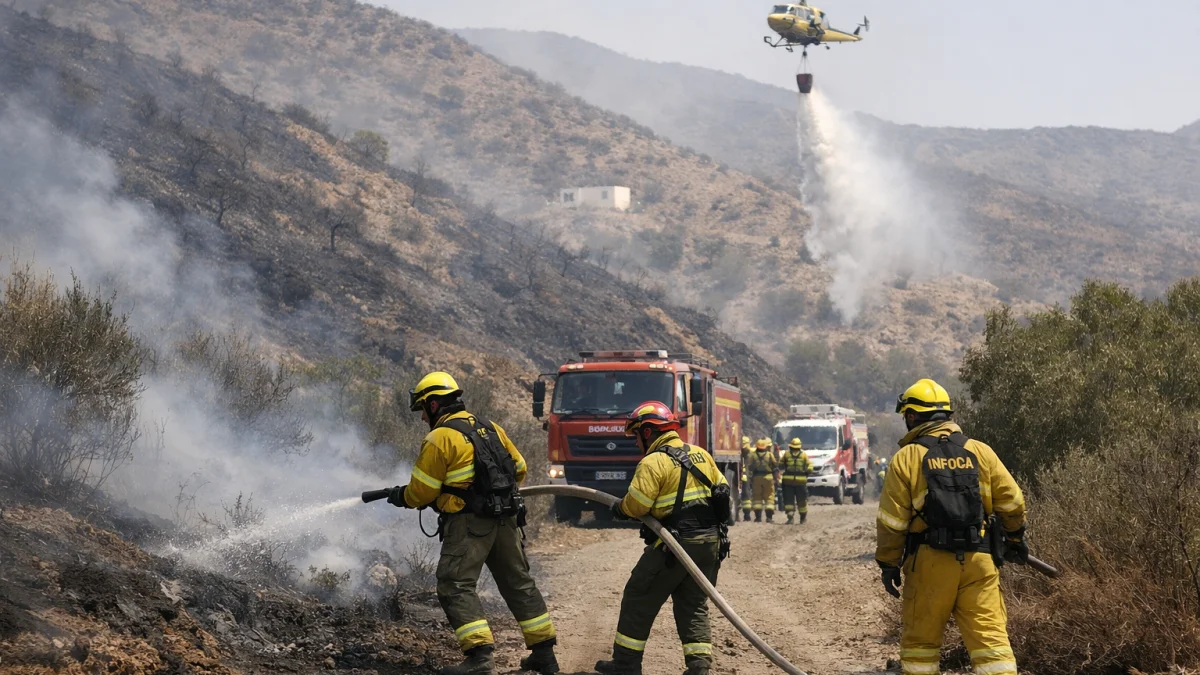
ALMERÍA, Spain — Firefighters strengthened their control over the deadly wildfire in Spain's southeastern province of Almería on Monday, with authorities reporting no further growth in the blaze's perimeter as crews focused on extinguishing remaining hotspots after one of the country's worst fire disasters in recent years.
The Andalusian regional government said favorable overnight weather conditions, including light winds and rising humidity, allowed emergency teams to consolidate containment lines and suppress isolated pockets of fire. Antonio Sanz, the Andalusian government's first vice president and director of the Infoca wildfire response plan, said the fire's perimeter remained stable at around 7,000 hectares and showed "very little activity" following its stabilization a day earlier.
Authorities said specialist crews, water tankers and other firefighting resources remained deployed to extinguish hotspots and monitor the burn area until the fire is fully under control. Officials cautioned that surveillance would continue despite the improved conditions to guard against any renewed flare-ups.
The wildfire, which erupted last week near Los Gallardos and spread rapidly through mountainous terrain around Bédar, has killed 13 people, according to regional authorities, after a hospitalized burn victim died over the weekend. The fire has become one of Spain's deadliest wildfires in decades.
The stabilization of the blaze enabled the reopening of roads and the return of approximately 1,600 evacuated residents to their homes, officials said. Emergency authorities nevertheless urged residents to remain alert while firefighting operations continue in affected areas.
Spanish forensic specialists are continuing to identify victims, many of whom were foreign nationals, using DNA analysis. Authorities have not yet released all identities publicly. Investigators are also continuing to examine the cause of the wildfire, although officials have not announced any final conclusions.
Prime Minister Pedro Sánchez and opposition leader Alberto Núñez Feijóo were expected to visit the affected area on Monday as recovery efforts gathered pace. Regional officials said attention was shifting gradually from emergency response to damage assessment while maintaining a significant firefighting presence until the blaze is declared fully under control.
The disaster unfolded during another period of intense summer heat across southern Europe, where prolonged dry conditions and high temperatures have increased wildfire risks. Authorities said firefighting teams will remain on site until the remaining hotspots are extinguished and the fire can be officially declared under control.