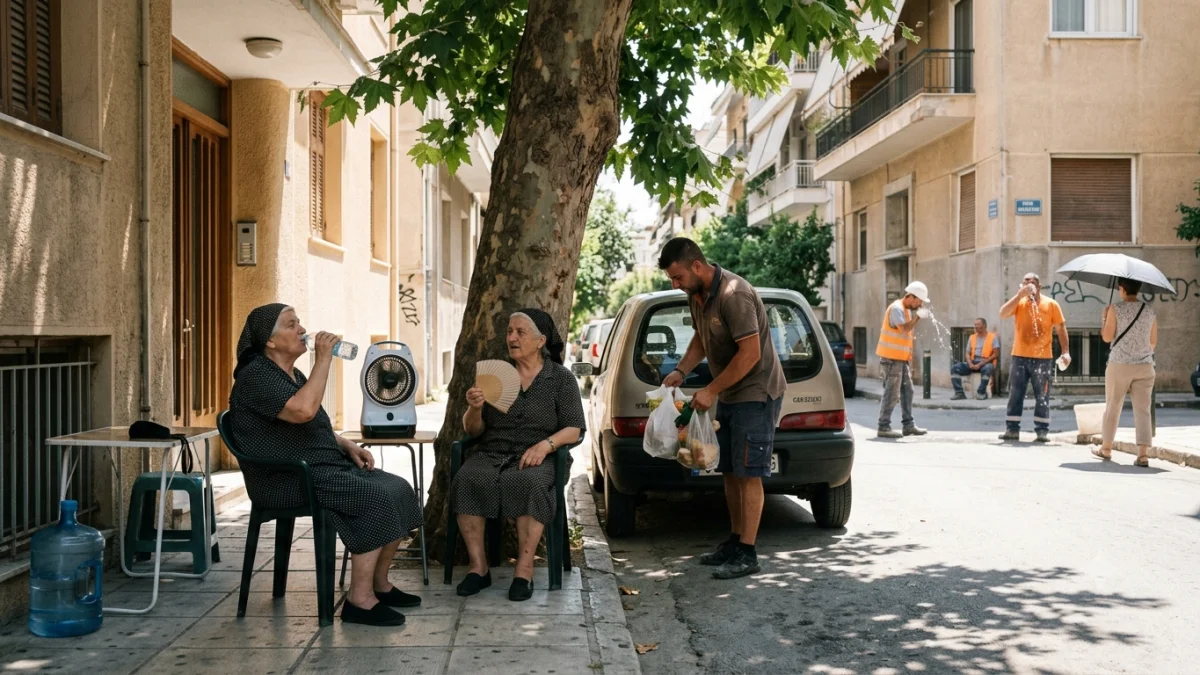
The first signs appear before midday. In many European cities, construction crews shift their schedules to the early morning, market vendors pack away produce sooner than usual, and elderly residents seek shaded parks, cooling centres or air-conditioned public buildings as temperatures climb toward levels once associated with the height of summer.
Across Europe, such adjustments have become an increasingly familiar response to extreme heat that scientists say is becoming more frequent and more intense as the climate warms. What was once considered exceptional is reshaping daily routines, work patterns and public services across a continent that the World Meteorological Organization says is warming faster than the global average.
The latest succession of heatwaves during the summer of 2026 has tested communities from the Iberian Peninsula to Central Europe. Public health authorities expanded heat alerts, municipalities opened cooling shelters, employers altered working hours, and schools in some regions shortened classes or temporarily closed as temperatures reached record or near-record levels. Transport networks, electricity systems and emergency services also faced growing pressure.
The changes are visible not only in official responses but also in everyday decisions made by millions of residents.
Outdoor workers increasingly begin before sunrise to avoid the most dangerous afternoon temperatures. Farmers adjust irrigation schedules as prolonged dry conditions affect crops. Families postpone outdoor activities until evening, while tourists crowd fountains, shaded streets and museums offering respite from the heat.
Health officials say these adaptations reflect an urgent reality rather than temporary inconvenience.
Data published by EuroMOMO, the European mortality monitoring network, showed more than 10,000 excess deaths during the late-June heatwave, with the overwhelming majority occurring among people aged 65 and older. Researchers said no comparable public health event explained the increase, pointing instead to the prolonged period of exceptional temperatures affecting much of Western Europe.
The World Health Organization's Regional Office for Europe has urged governments to strengthen heat-health action plans, warning that additional periods of dangerous heat remain likely during the summer. WHO Regional Director Hans Kluge said countries with established response plans were generally able to protect vulnerable populations more effectively during recent heatwaves.
Many cities have expanded those plans in recent years.
Local authorities have increased public drinking-water stations, extended opening hours at libraries and community centres serving as cooling spaces, and issued targeted advice for older adults, people with chronic illnesses and families with young children. Emergency services have also intensified welfare checks on vulnerable residents during periods of prolonged heat.
The economic consequences are also becoming more apparent.
Along Germany's Rhine River, low water levels have disrupted commercial shipping while vineyards across several wine-growing regions face lower yields after repeated episodes of drought and extreme heat. Businesses dependent on outdoor labour report declining productivity during prolonged high temperatures, while tourism patterns are gradually shifting as travellers seek cooler destinations or alter holiday schedules.
Scientists say Europe faces particular challenges because many buildings, transport systems and urban neighbourhoods were designed for a cooler climate.
Only a relatively small share of European homes have air conditioning compared with countries that have historically experienced hotter summers. That has renewed debate over how cities should adapt through improved building design, additional urban green space, better insulation and expanded emergency planning while balancing energy demand and climate goals.
Research is also beginning to document how residents change their behaviour during extreme heat.
A recent study using anonymized telecommunications data across German cities found that sustained hot weather reduced overall urban activity while increasing visits to leisure areas and places offering relief from high temperatures. Researchers said understanding these shifts could help local governments better target future adaptation measures.
The summer has also demonstrated how heat increasingly interacts with other hazards.
Following prolonged hot and dry conditions, wildfires spread across parts of France, Spain and the United Kingdom, prompting evacuations, transport disruptions and large firefighting operations. In some regions, intense thunderstorms followed the heat, bringing flooding and damaging hail as weather patterns shifted abruptly.
Climate researchers caution that no single heatwave can be attributed solely to climate change. However, attribution studies consistently show that human-driven warming has made extreme heat events significantly more likely and more severe than they would have been otherwise. Experts say Europe, warming at roughly twice the global average, is particularly exposed to these risks.
For many Europeans, adaptation is becoming part of ordinary life rather than an emergency response.
Summer calendars increasingly account for afternoon heat, employers revise workplace safety practices, and local governments invest in longer-term measures aimed at protecting residents from temperatures that were once rare but are now occurring with greater frequency.
The routines may appear modest—a changed work shift, an opened community hall, a shaded public square—but together they illustrate how communities across Europe are gradually adjusting to a climate in which extreme heat is no longer an isolated event but an increasingly regular feature of summer.