Volatility across global semiconductor stocks has intensified following SK Hynix's landmark U.S. market debut, underscoring the tension between sustained investor confidence in artificial intelligence infrastructure and growing concern that valuations have moved ahead of near-term fundamentals. The South Korean memory-chip maker's record American depositary receipt (ADR) offering initially reinforced demand for AI-linked companies, but the sharp swings that followed have rippled through technology markets from Seoul to New York.
The development matters because SK Hynix occupies a central position in the AI hardware supply chain. As one of the world's leading producers of high-bandwidth memory (HBM), its chips are critical components in AI accelerators used by major technology companies building increasingly powerful data centers. Investor reaction to the company's listing therefore extends beyond one stock, serving as a broader test of confidence in the durability of the multiyear AI infrastructure investment cycle.
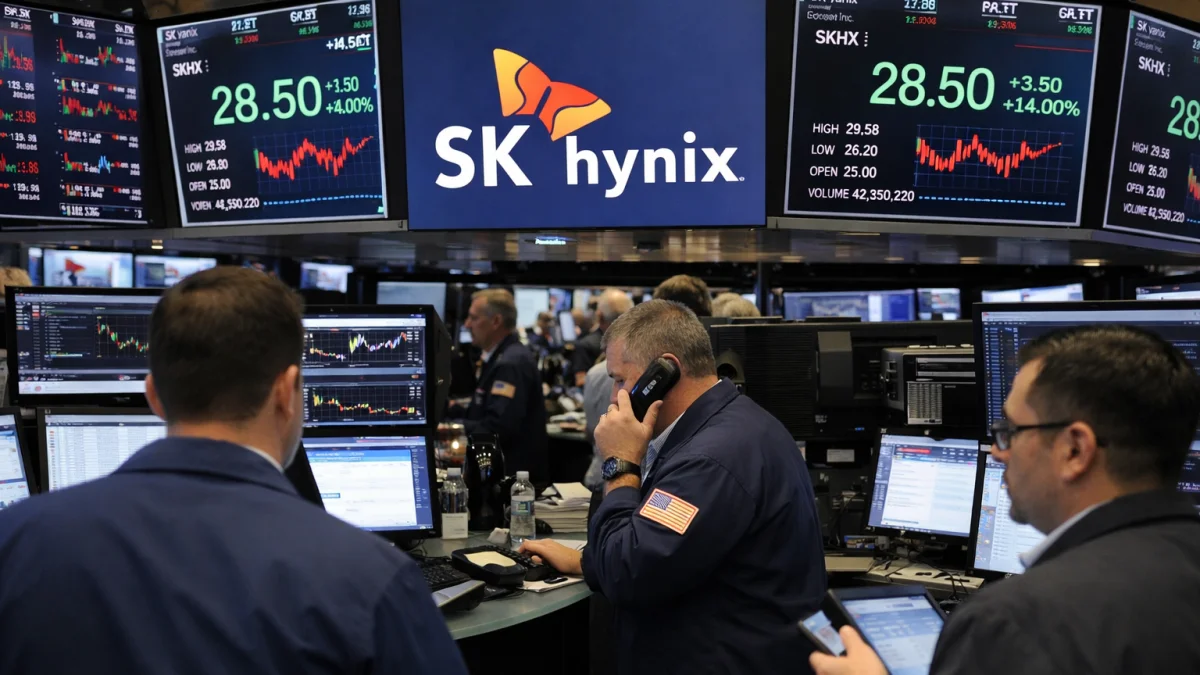
SK Hynix raised approximately $26.5 billion through its U.S. listing, making it the largest public offering by a foreign company in U.S. market history. Shares rose strongly during their Nasdaq debut, reflecting continued investor appetite despite a recent correction in semiconductor stocks. Company executives have argued that the AI era has fundamentally altered the traditional boom-and-bust dynamics of the memory-chip industry, citing persistent demand for advanced memory products and increasing customer interest in long-term supply agreements.
However, the market response in the days after the listing demonstrated that enthusiasm for AI remains accompanied by heightened volatility. SK Hynix shares fell sharply in Seoul after the U.S. debut as investors locked in profits following an extraordinary rally over the past year. The decline contributed to wider weakness in South Korea's equity market and highlighted how rapidly sentiment can shift in sectors where valuations depend heavily on expectations for future AI spending rather than current earnings alone.
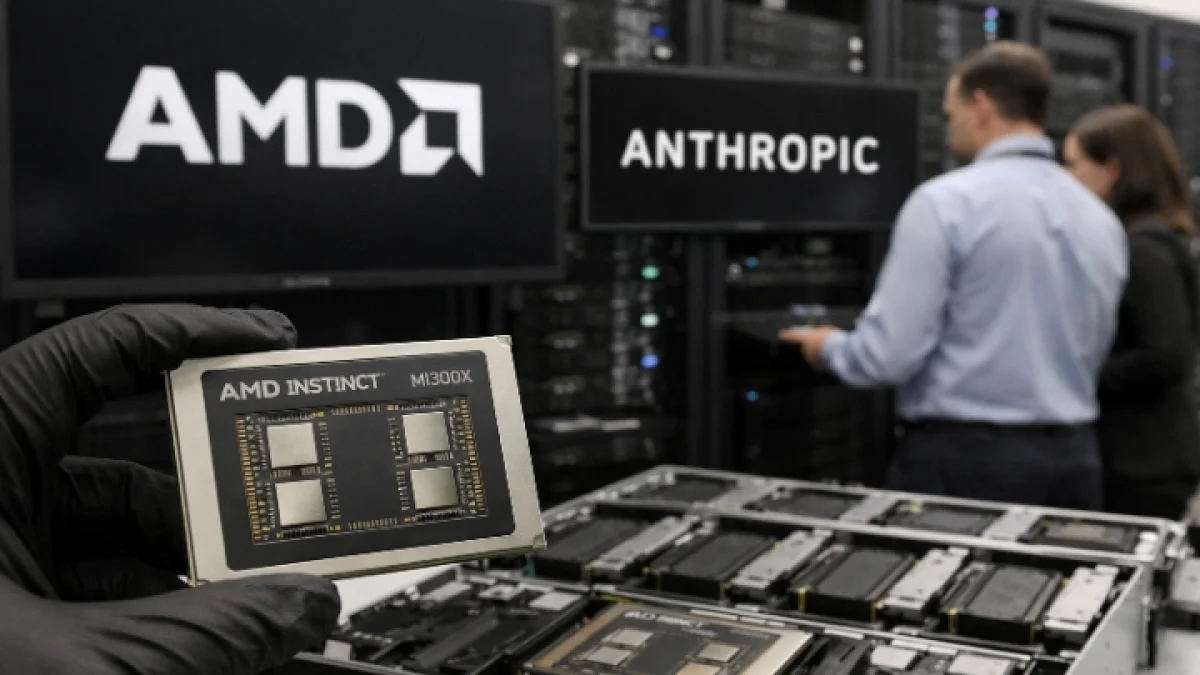
The volatility quickly spread beyond South Korea. Shares of major semiconductor companies, including Micron Technology, Nvidia, AMD, Broadcom and Intel, also came under pressure as investors reassessed valuations across the AI hardware sector. Analysts attributed part of the selloff to growing integration between Asian and U.S. semiconductor markets, where developments affecting one major supplier increasingly influence expectations for the broader industry.
The episode illustrates how the AI investment boom has transformed semiconductor markets. During previous technology cycles, memory manufacturers were primarily exposed to demand for personal computers, smartphones and conventional servers, industries characterized by recurring oversupply. The rapid expansion of generative AI has changed that equation by creating sustained demand for specialized memory capable of supporting increasingly sophisticated AI processors. Major cloud providers and technology companies continue to invest hundreds of billions of dollars in AI infrastructure, supporting demand for advanced chips even as investors debate the pace of future growth.
Even so, analysts remain divided on whether the current cycle represents a structural shift or an unusually strong phase within a historically cyclical industry. Supporters of the bullish case argue that AI computing requires substantially greater memory capacity than previous workloads, creating a longer-lasting demand profile for HBM products. More cautious analysts note that semiconductor stocks have appreciated dramatically over the past year, leaving little room for disappointment if AI infrastructure spending moderates or supply expands more rapidly than expected.
Market dynamics in South Korea further illustrate the risks associated with concentrated enthusiasm. According to Reuters reporting, semiconductor companies have become an increasingly dominant component of the country's equity market, while heavy participation by retail investors and leveraged investment products has amplified price movements. Regulators and the Bank of Korea are monitoring the situation as sharp fluctuations in major technology shares influence broader financial conditions.
Another factor shaping investor behavior is the increasingly global nature of semiconductor financing. The U.S. listing gives international investors more direct access to one of the world's most strategically important chip manufacturers, potentially expanding the shareholder base while also exposing the stock to broader swings in U.S. technology sentiment. Differences between the pricing of the ADRs and the Seoul-listed shares have also reflected varying expectations among investor groups, adding another source of volatility during the initial trading period.
For the semiconductor industry, the underlying strategic questions remain unchanged despite recent market turbulence. Companies continue to expand manufacturing capacity for advanced memory while balancing the risk that additional supply could eventually outpace demand. Customers are simultaneously accelerating investment in AI data centers, but investors continue to evaluate whether current spending levels can be sustained over several years. Those competing forces are likely to remain central to valuations across the sector.
The confirmed picture is therefore one of strong underlying demand for AI infrastructure accompanied by increasingly volatile financial markets. SK Hynix's record U.S. debut demonstrated continuing investor willingness to finance AI-related expansion, while the subsequent market swings underscored growing sensitivity to valuation, earnings expectations and global risk sentiment. Investors, regulators and industry participants are now closely monitoring upcoming corporate earnings, AI infrastructure spending plans and memory-market conditions for evidence of whether the current investment cycle continues to justify elevated semiconductor valuations.