The smell of smoke greeted Toronto residents before many of them could see the haze.
When Paula Oreskovich stepped onto her terrace on a July morning, she said the change was unmistakable. “You can definitely smell it,” she told Reuters. “As soon as I woke up in the morning and went outside on my terrace, you could definitely smell the smoke in the air and it's very hazy out.” Nearby on the waterfront, resident Alex Laz said air purifiers were running continuously in his home as he coped with smoke-related allergies, describing a problem that no longer felt exceptional but increasingly familiar.
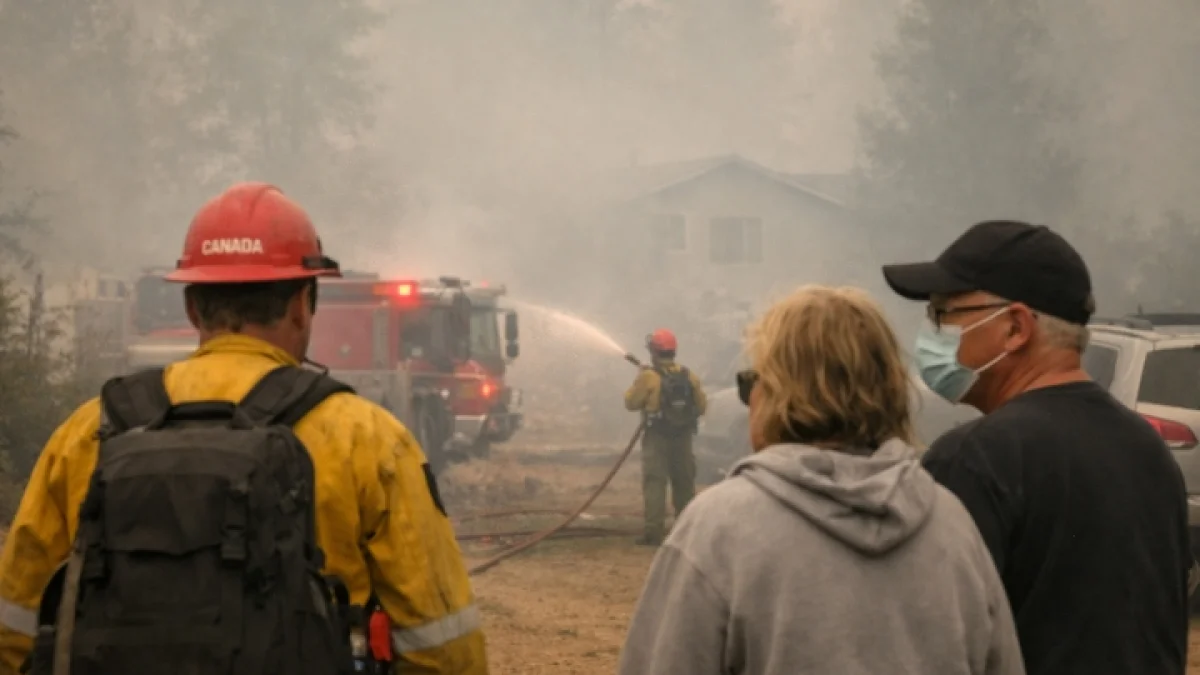
For Canadians, another wildfire season has become defined not only by flames advancing through forests but by smoke reaching communities hundreds or even thousands of kilometres away. Firefighters continue to battle blazes across several provinces while residents adapt to days when outdoor activities are curtailed, public health advisories urge people indoors, and clear summer skies can disappear behind a persistent orange haze.
The experience has become one of the defining features of Canada's recent summers. Although evacuations, property losses and active fire fronts command immediate attention, the smoke itself has emerged as a nationwide public health concern, affecting people far beyond communities directly threatened by advancing wildfires.
According to Canadian officials, thousands of firefighters have been deployed during the 2026 season as governments rely on aircraft, thermal imaging and other technologies to detect and contain fires. Prime Minister Mark Carney has said more than 5,300 firefighters were engaged in suppression efforts while millions of acres had already burned this season.
Many of those firefighters spend weeks in difficult terrain where dense smoke becomes an occupational hazard alongside extreme heat, shifting winds and physically demanding work. Crews rotate between active fire lines, remote camps and communities under evacuation orders, often assisted by personnel from other provinces and international partners during periods of heightened activity. Provincial wildfire agencies have repeatedly emphasized the importance of respiratory protection, fatigue management and careful monitoring of changing fire behaviour as smoke conditions worsen.
For residents, however, smoke often arrives without the visible threat of nearby flames. Air quality warnings have become increasingly common across Ontario and other regions, prompting schools, employers and local governments to reconsider outdoor activities. People with asthma, allergies or other respiratory conditions frequently face the greatest health risks, while health authorities advise limiting strenuous outdoor exercise when pollution levels rise.
The effects have extended beyond Canada. During one week in July, smoke drifting south blanketed large sections of the U.S. Midwest and Northeast. Federal monitoring showed hazardous conditions stretching from Minnesota into Ontario and farther east, while Detroit briefly recorded the world's worst air quality according to monitoring company IQAir. Authorities across multiple states advised residents to remain indoors whenever possible and reduce exposure to unhealthy air.
The cross-border impacts have drawn political attention as well. U.S. President Donald Trump said he had urged Canada to do more to control Ontario wildfires after smoke spread across parts of the United States, while Canadian officials pointed to the scale of the emergency and the growing influence of climate change on wildfire behaviour. Scientists have consistently linked rising global temperatures to conditions that increase the likelihood and severity of wildfire seasons in many parts of Canada.
Communities closest to active fires continue to face the greatest disruption. Canadian authorities have prepared military-assisted evacuations for some remote northern communities as advancing fires threatened homes and infrastructure. Families have had to leave with little notice, uncertain when they might return, while emergency shelters receive evacuees displaced by rapidly changing fire conditions.
Even where evacuation orders are unnecessary, many Canadians describe adjusting everyday routines around air quality forecasts. Windows remain closed despite summer heat. Air filtration systems run for extended periods. Outdoor recreation, one of the hallmarks of the short Canadian summer, is postponed or cancelled when smoke concentrations rise.
Oreskovich acknowledged those trade-offs while speaking to Reuters. “I think you have to be silly if you're not going to be concerned about climate change,” she said. “It's definitely here, it's definitely happening.” Yet she also described the practical choices many Canadians continue to make, saying people must decide whether to remain indoors or “get out there and embrace” the season as best they can.
Others expressed concern less about any single smoky day than about the pattern itself. Laz said similar conditions had occurred before and now appeared to be returning with increasing frequency. Another Toronto resident, Nafis Anjum, said he hoped the smoky conditions “doesn't prolong for too long,” reflecting a sentiment shared by many watching another wildfire season unfold.
As firefighters continue working on active fronts and emergency officials monitor new outbreaks, smoke has become an enduring reminder that Canada's wildfire seasons are measured not only by the number of fires or hectares burned, but by the people adapting to their consequences. Whether on the fire line, in evacuated communities or in cities hundreds of kilometres away beneath hazy skies, another Canadian summer is being shaped by the same persistent reality: living with wildfire smoke has become part of daily life for millions.