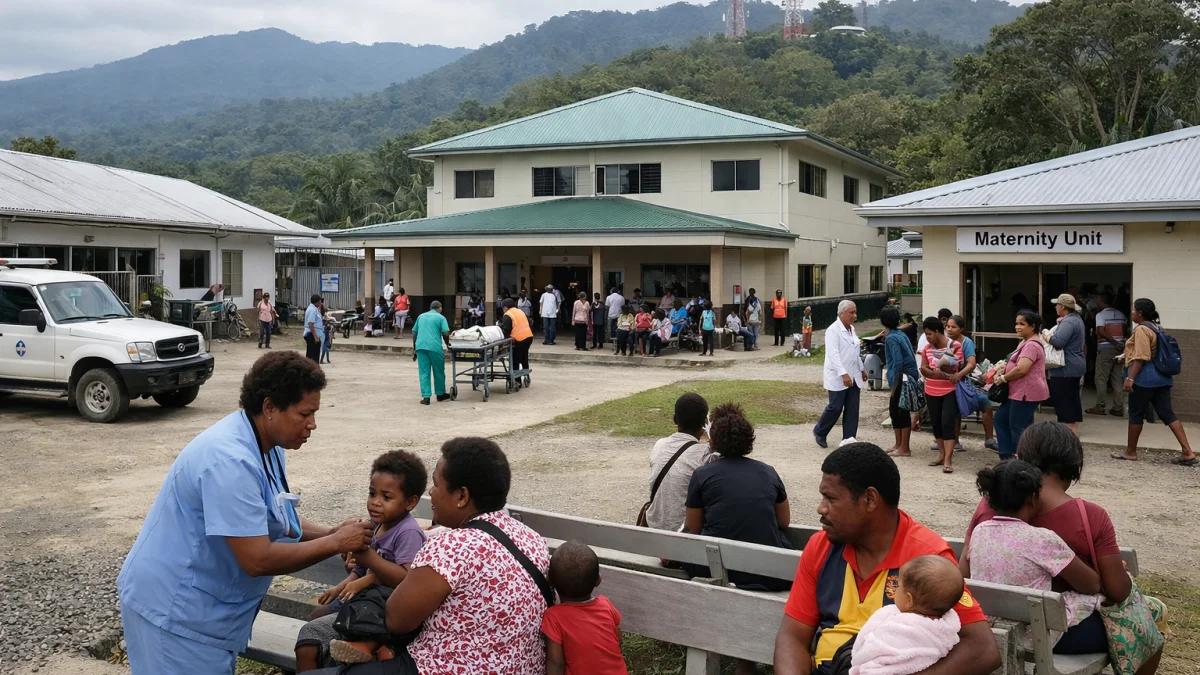
The journey from Vanimo in Papua New Guinea's West Sepik Province to Jayapura in Indonesia has long been familiar to families living near the international border. For many, crossing into neighboring Papua has often meant seeking medical care that was unavailable closer to home, especially when serious illness or specialist treatment was involved. Now, health officials on both sides of the border say a planned expansion of cross-border hospital cooperation could make those journeys more predictable and improve access to treatment for communities that have historically faced limited healthcare options.
The effort centers on Jayapura Regional General Hospital, which Indonesian authorities say is preparing to serve as a referral hospital for patients from Papua New Guinea under a proposed cross-border healthcare partnership. The initiative follows visits by senior Papua New Guinea health officials and hospital leaders to Jayapura to assess facilities and discuss referral arrangements for border communities.
For residents scattered across remote settlements in northern Papua New Guinea, geography has long shaped access to healthcare. Dense rainforest, rugged mountains and limited transport infrastructure can make travel to major hospitals within Papua New Guinea difficult, expensive and time-consuming. In some cases, Jayapura is geographically closer than larger domestic referral centers.
According to Andreas Pekey, acting director of Jayapura Regional General Hospital, the hospital has specialist doctors, trained health workers and facilities capable of providing more comprehensive care than many patients can access near the border. He said the proposed partnership aims to serve people requiring referral treatment while strengthening cooperation between Indonesia and Papua New Guinea.
"The visit is the first step in establishing healthcare service collaboration, especially for communities in border areas who require referral medical services with more comprehensive facilities," Pekey said following a visit by officials from Papua New Guinea's Department of Health and Vanimo Hospital. He added that implementation would depend on agreements between the two national governments covering referrals, financing and administrative procedures.
The discussions reflect broader efforts by both countries to translate long-standing diplomatic cooperation into practical health services for border populations. During a five-day visit to Jayapura earlier this year, senior officials from Papua New Guinea's National Department of Health and the West Sepik Provincial Health Authority toured hospitals, specialist facilities and mental health services to evaluate clinical standards and infrastructure.
Ambrose Kwaramb, executive manager for health standards and compliance at Papua New Guinea's National Department of Health, said the visit was intended to move existing bilateral agreements toward implementation. The delegation also included Stanley Masi, chief executive officer of the West Sepik Provincial Health Authority, underscoring the importance of improving referral pathways for patients living close to the border.
The proposed referral system comes as Papua New Guinea continues investing in hospital infrastructure across the country while confronting significant healthcare challenges. New facilities, upgraded maternity wards and specialist departments are being developed in several provinces to reduce pressure on major referral hospitals and improve access for rural communities.
In Lae, construction has begun on a regional medicines hub at Angau General Hospital through the Australia–Papua New Guinea Partnership, designed to improve the storage and distribution of essential medicines across multiple regions. National health leaders have also recommended expanding Angau's role as a higher-level referral and teaching hospital, citing growing demand for specialist services.
Elsewhere, a new maternity ward at Kwikila Interim Hospital has already begun serving mothers in Central Province, reducing the need for lengthy travel to Port Moresby for routine deliveries. Health Minister Elias Kapavore said bringing services closer to communities would lessen both financial and logistical burdens on families.
Even as new projects move forward, healthcare access remains uneven. International medical organizations working in Papua New Guinea continue to point to the country's difficult terrain, limited infrastructure and shortages of specialist services, particularly for people living in remote areas. Those challenges often delay diagnosis and treatment for serious illnesses, requiring patients to travel long distances for care.
For border communities, cross-border cooperation offers one possible way of narrowing those gaps while complementing investments within Papua New Guinea's own health system.
Jayapura's location makes it uniquely positioned for such a role. Sitting only a short distance from the international boundary, the city has increasingly developed advanced medical services intended to serve eastern Indonesia. Hospital leaders say continued investment in equipment, specialist care and staff training has expanded its capacity to receive more complex cases.
Officials also see benefits extending beyond patient referrals. Pekey said collaboration could encourage exchanges of medical knowledge, professional training and experience between health workers from both countries, helping strengthen services on each side of the border.
Exactly when the referral partnership will become operational remains dependent on formal agreements between Indonesia and Papua New Guinea. Authorities must still finalize procedures governing patient eligibility, funding arrangements, documentation and administrative responsibilities before regular referrals can begin.
For families living near the border, however, the discussions represent more than a diplomatic initiative. They reflect the possibility that specialist medical care may become easier to reach without navigating the longer and often more complicated journeys that have characterized healthcare in one of the Pacific's most geographically challenging regions.
As health officials continue negotiations, the visits between Jayapura and Vanimo have become a visible sign of a broader effort: using cooperation across an international border to expand healthcare access for communities whose greatest challenge has often been distance itself.