Big Tech companies are pressing ahead with record capital expenditures on artificial intelligence infrastructure, but investors have grown markedly more skeptical about the returns, triggering sharp selloffs in major technology stocks in recent months.
The shift marks a notable change in market sentiment toward the AI buildout that has driven much of the equity rally in recent years. While companies such as Microsoft, Alphabet, Amazon and Meta continue to project hundreds of billions of dollars in annual spending on data centers, chips and related infrastructure—with aggregate estimates for the four reaching roughly $650 billion to $725 billion in 2026—share prices have reflected growing doubts about near-term monetization and the sustainability of elevated valuations.
This reckoning follows years of accelerating investment. Goldman Sachs and other analysts have projected trillions in cumulative spending through 2030 or 2031, with hyperscalers ramping up capital expenditures far beyond previous forecasts. In the first quarter of 2026 alone, the four major players reported more than $130 billion in combined capex, a record that was more than triple the year-earlier figure. Individual guidance has been aggressive: Amazon toward $200 billion, Microsoft around $190 billion, Alphabet $175-185 billion, and Meta $115-135 billion for the year, according to various reports and company updates.
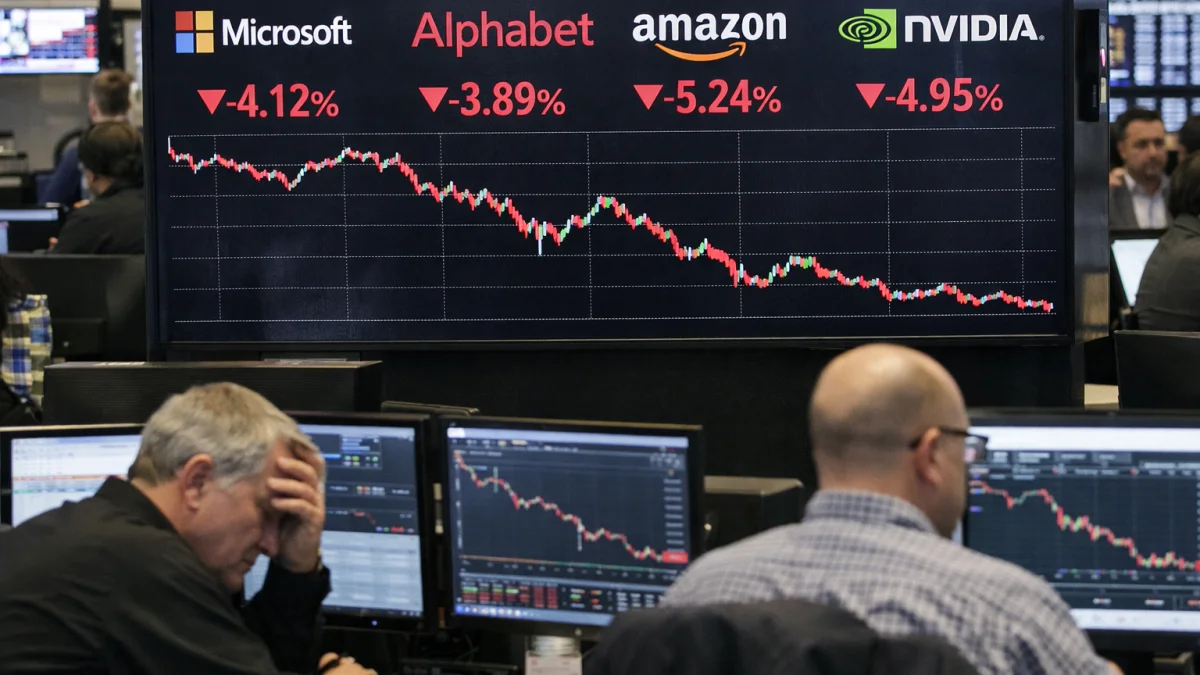
The significance lies less in the scale of spending—which executives frame as essential to maintain competitive positioning in cloud services, AI models and applications—than in the market’s demand for clearer evidence of returns. Early signs of monetization exist: some cloud revenue growth has been attributed to AI features, and companies like Meta have pointed to advertising improvements driven by AI tools. Yet investor reactions to earnings have been mixed or negative when spending guidance rose sharply without commensurate near-term profit visibility. Amazon and Microsoft shares fell notably after announcements highlighting elevated outlays, while broader tech indices experienced selloffs amid bubble concerns.
This dynamic echoes historical patterns of infrastructure booms, where heavy upfront investment precedes measurable productivity gains or revenue inflection. Comparisons to the late-1990s dot-com era have proliferated, though with distinctions: today’s leaders generate substantial cash flows and profits even as they invest, unlike many earlier speculative ventures. Still, analysts note that capital intensity is rising, with AI-related spending consuming a large and growing share of operating cash flows.
Competing interpretations are evident. Company leaders emphasize long-term strategic necessity and early positive signals in cloud and AI-driven products. Some analysts, including those at Goldman Sachs, view the spending as the early stage of a multi-year cycle likely to deliver eventual payoffs, particularly as AI adoption scales. Others, and a record share of fund managers surveyed by Bank of America, express concern over potential overinvestment if demand or economics fall short of expectations.
Stock performance has diverged accordingly. While some AI infrastructure plays have faced pressure, companies demonstrating nearer-term returns have fared better at times. Market capitalization losses for major tech names have run into the hundreds of billions during periods of heightened scrutiny, underscoring the sensitivity of valuations built on future AI growth assumptions.
Broader context includes rising energy and infrastructure demands, potential bond issuance tied to financing needs, and regulatory or competitive factors such as U.S. export controls on advanced chips. Executives have generally defended the pace, arguing that hesitation risks ceding ground in a transformative technology.
As of early July 2026, Big Tech continues to execute on ambitious AI capital expenditure plans amid ongoing investor pressure for demonstrable returns. Uncertainties remain around the pace of enterprise and consumer adoption, the realization of productivity gains sufficient to justify costs, and the competitive landscape. Markets and analysts are closely monitoring quarterly results for further evidence of AI monetization and any adjustments to spending trajectories or guidance.