NEW YORK — Senior U.S. banking executives said they remain optimistic about the strength of the U.S. economy despite growing expectations that the Federal Reserve could keep interest rates elevated or raise them further if inflation remains persistent.
The assessments come as financial markets reassess the outlook for monetary policy following recent comments from Federal Reserve officials, who have emphasized that future interest-rate decisions will depend on incoming economic data rather than predetermined guidance.
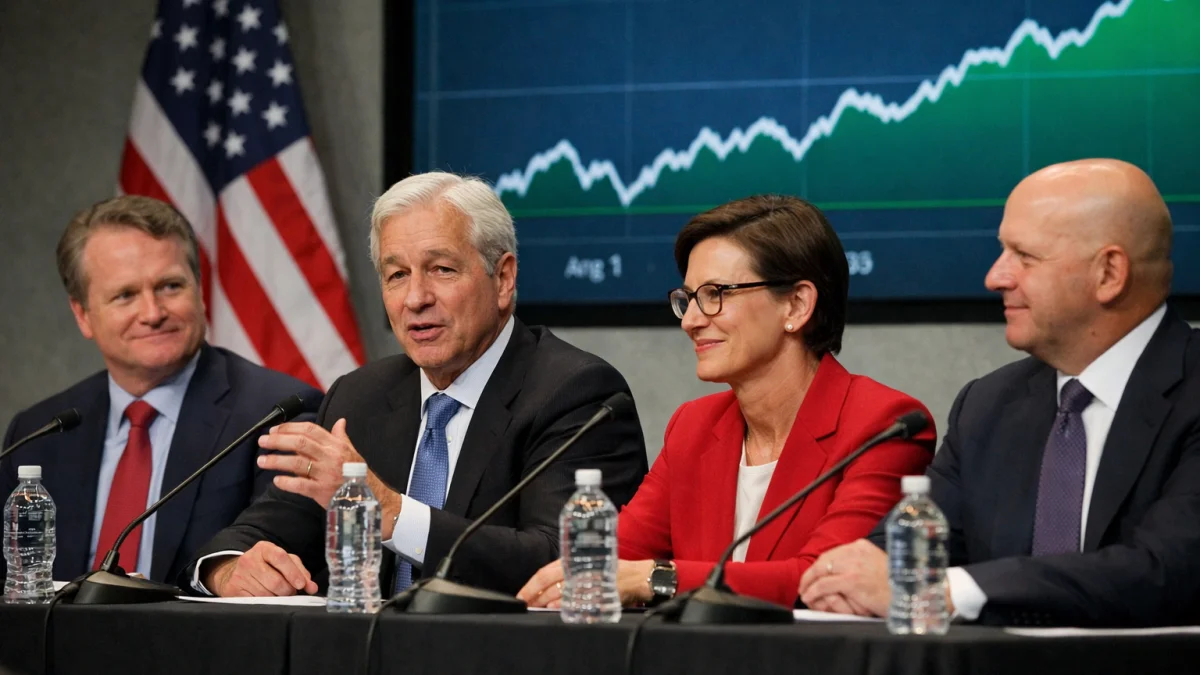
Bank of America Chief Executive Brian Moynihan said the prospect of higher borrowing costs does not necessarily signal economic weakness, arguing that continued resilience in consumer spending and business activity supports a constructive outlook for growth. Speaking this week, Moynihan said the bank continues to expect the U.S. economy to expand in 2026 even as policymakers maintain their focus on containing inflation.
Executives across the banking industry have echoed similar views in recent weeks, pointing to healthy consumer balance sheets, sustained commercial lending demand, corporate investment and continued spending on artificial intelligence as factors supporting economic activity. Participants at the Morgan Stanley U.S. Financials Conference said businesses continue to pursue expansion plans despite geopolitical uncertainty and higher financing costs.
The outlook contrasts with concerns in financial markets that prolonged restrictive monetary policy could eventually slow hiring, investment and consumer demand.
San Francisco Federal Reserve President Mary Daly said this week that U.S. monetary policy is "slightly restrictive" but that conflicting economic signals make the central bank's next move uncertain. She cited robust investment in AI-related technology and a stable labor market while warning that inflation could remain persistent or growth could soften depending on future developments.
Federal Reserve Chair Kevin Warsh has also declined to signal the direction of future policy, saying officials will rely on incoming economic data rather than forward guidance before making interest-rate decisions. Markets broadly expect the central bank to leave rates unchanged at its next meeting while monitoring inflation and labor-market conditions.
Economists at the American Bankers Association likewise forecast continued U.S. economic expansion through 2026 and 2027, although they expect inflation to remain above the Federal Reserve's 2% target for some time. The group's latest projections cite solid consumer spending, business investment and improving government expenditures as key drivers of growth while acknowledging continued risks from geopolitical tensions and price pressures.
The differing perspectives underscore the balance facing policymakers as they seek to bring inflation under control without undermining an economy that many banking executives say continues to demonstrate resilience.