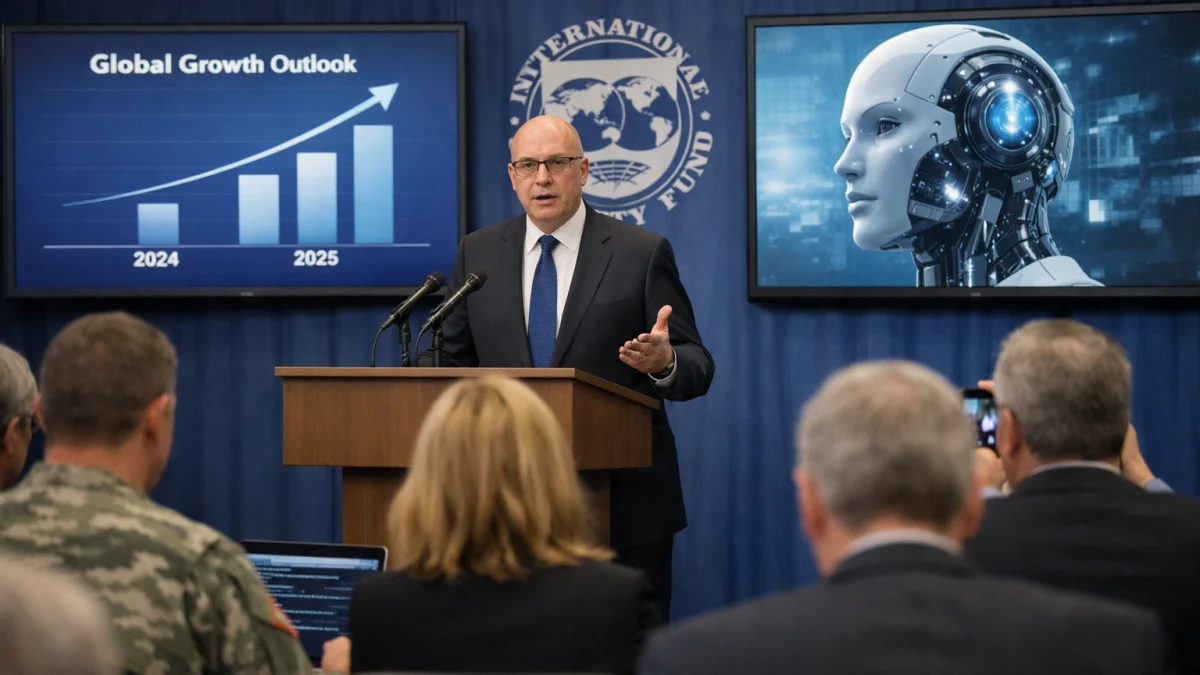
The International Monetary Fund's latest World Economic Outlook update suggests that the global economy is proving more resilient than expected despite the economic disruption caused by the war in the Middle East, with accelerating investment in artificial intelligence emerging as a significant counterweight to geopolitical shocks. The IMF now projects global growth of 3.0% in 2026, lower than recent years but broadly consistent with its cumulative expectations after balancing weaker activity from conflict-related energy disruptions against stronger-than-anticipated momentum from AI-driven investment and technology demand.
The assessment marks a notable shift in the IMF's analysis of the global economy. Earlier in 2026, the Fund emphasized that war-related disruptions, particularly the closure of the Strait of Hormuz and higher energy prices, threatened to slow global growth while reviving inflation. In its July update, however, IMF economists concluded that the technology cycle centered on artificial intelligence has developed more rapidly than anticipated, providing an important offset to those headwinds even as geopolitical uncertainty remains elevated.
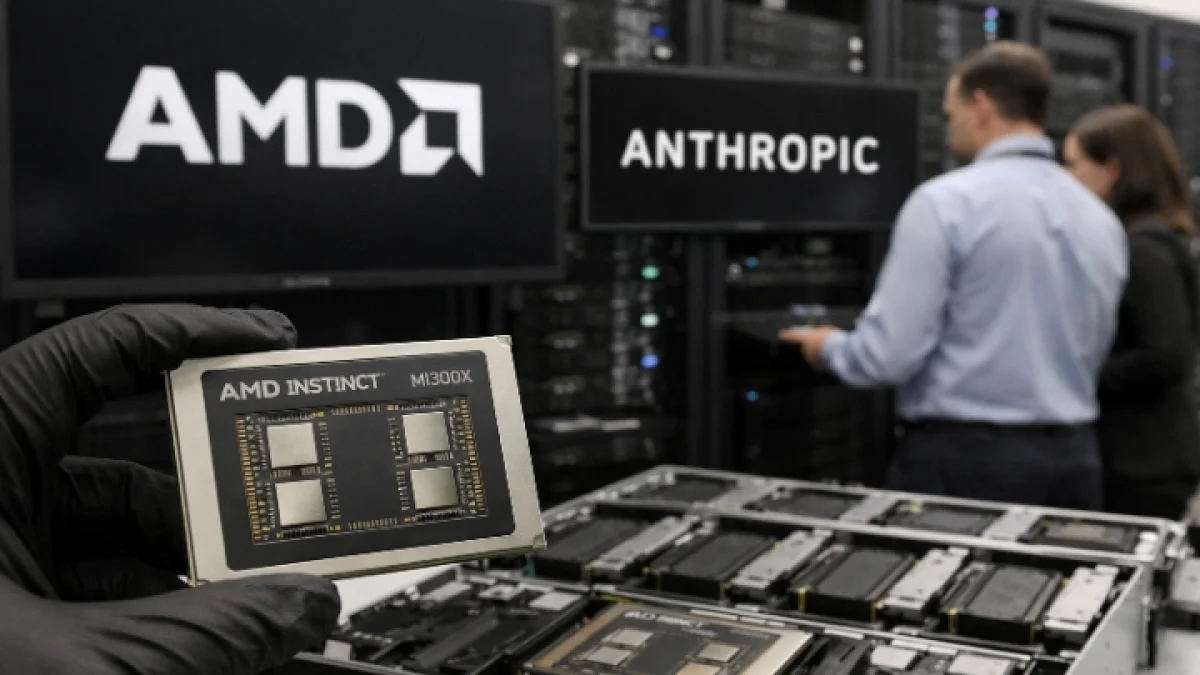
Rather than portraying AI as a universal economic stimulus, the IMF describes an increasingly uneven global landscape. According to the Fund, the benefits of AI investment are concentrated among economies deeply integrated into semiconductor manufacturing, advanced computing infrastructure, and technology supply chains. Countries positioned within the AI hardware ecosystem have experienced stronger industrial production, exports, and investment than anticipated, helping sustain broader global demand despite weaker conditions elsewhere.
This divergence illustrates how technological leadership is becoming a more important determinant of macroeconomic performance. The IMF notes that economies with significant participation in AI-related production have generally outperformed expectations, while energy-importing countries lacking strong technology sectors remain more vulnerable to higher fuel costs and weaker external demand. The result is not a uniform recovery but a widening gap between countries benefiting from the AI investment cycle and those still exposed primarily to geopolitical and commodity shocks.
The Fund's projections also underscore that the current AI-driven expansion differs from a productivity-led boom. Much of the economic support comes from investment spending on data centers, semiconductor production, networking equipment, and computing infrastructure rather than from widespread productivity gains already visible across the broader economy. Large-scale capital expenditure has increased demand across manufacturing and technology sectors, partially cushioning declines elsewhere. IMF officials have cautioned that many of the expected productivity benefits from AI remain prospective rather than fully realized.
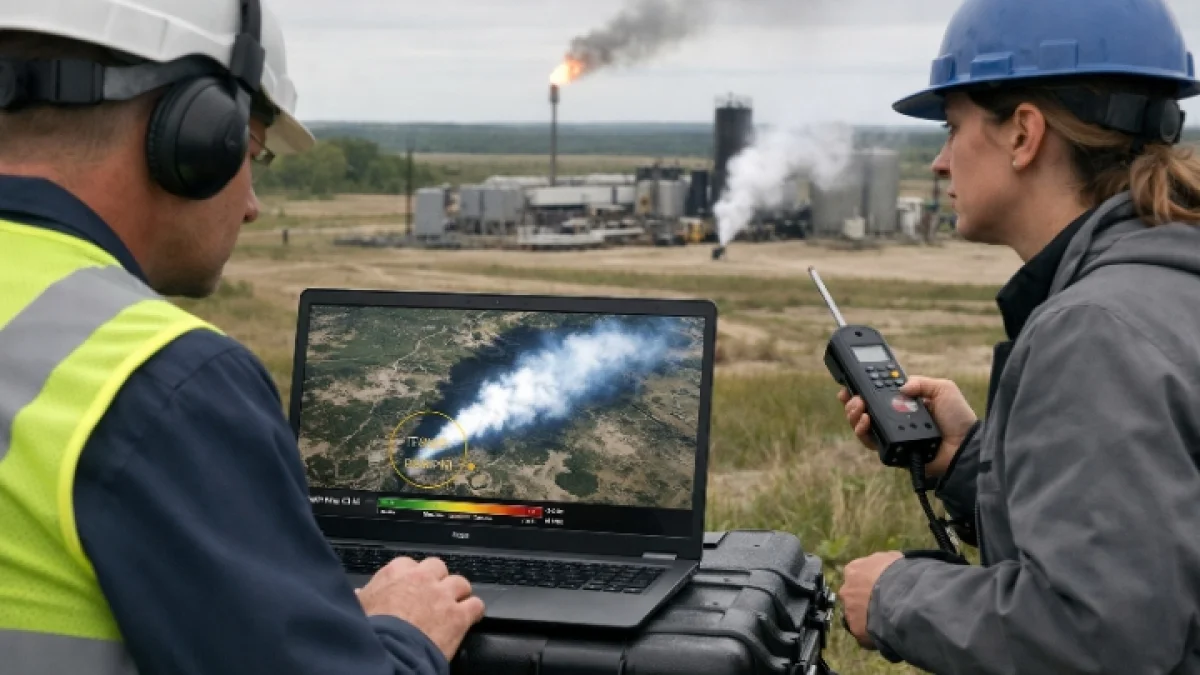
At the same time, the IMF stresses that geopolitical risks continue to dominate the outlook. Inflation has been revised higher for 2026 as energy prices remain elevated following the conflict, interrupting the steady global disinflation trend seen over the previous two years. The Fund's baseline assumes that disruptions to shipping through the Strait of Hormuz gradually ease and that oil prices stabilize over time. A renewed escalation in regional conflict could quickly alter those assumptions by reigniting commodity price volatility and tightening financial conditions worldwide.
The interaction between technology investment and geopolitical instability highlights an important structural change in the world economy. Previous global slowdowns were often driven primarily by financial crises or synchronized declines in consumer demand. The current environment instead reflects competing forces: a negative supply shock stemming from conflict and energy markets alongside a positive investment shock driven by rapid AI deployment. According to IMF officials, these opposing forces explain why aggregate global growth has weakened less than initially feared even as individual countries experience sharply different outcomes.
The Fund nevertheless warns against assuming that AI alone can sustain global expansion. Among the principal downside risks identified in the outlook are a correction in AI-related financial markets if profitability expectations prove excessive, renewed geopolitical escalation, persistent inflation, and continued trade fragmentation. Conversely, faster AI adoption across a broader range of industries could improve productivity more rapidly than currently projected, while quicker normalization of energy markets would also strengthen growth prospects. Both outcomes remain conditional rather than certain.
The policy implications are similarly balanced. The IMF advises central banks to remain focused on price stability while recognizing that inflation dynamics differ across countries depending on energy exposure and technology investment. Governments are encouraged to rebuild fiscal space after temporary support measures introduced during the conflict, while continuing structural reforms that improve resilience, strengthen energy security, and expand technological capabilities. The Fund also emphasizes that the benefits of AI will depend increasingly on countries' ability to adopt and integrate new technologies rather than solely participate in hardware manufacturing.
The IMF's latest projections therefore present a more nuanced picture than either an optimistic technology narrative or a pessimistic wartime outlook alone. The global economy continues to face slower growth than in recent years, persistent inflationary pressures, and substantial geopolitical uncertainty. However, stronger-than-expected AI investment has provided a measurable buffer against those headwinds, helping prevent a sharper slowdown. Whether that balance can be maintained will depend on the evolution of the Middle East conflict, energy markets, the durability of AI investment, and whether anticipated productivity gains materialize across a broader range of economies.