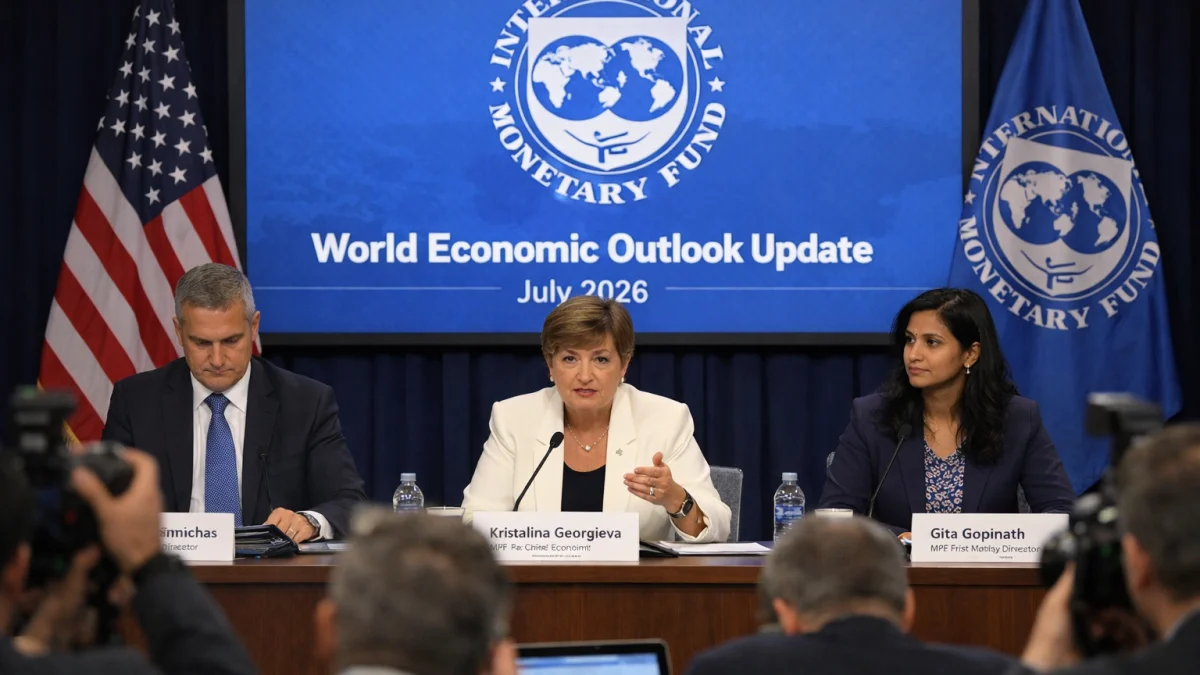
WASHINGTON — The International Monetary Fund said its July 2026 World Economic Outlook Update projects global economic growth of 3.0% this year and 3.4% in 2027, as the world economy absorbs the effects of conflict in the Middle East while benefiting from a surge in investment linked to artificial intelligence.
The update, released on July 8, revised the 2026 global growth forecast down to 3.0% from 3.1% projected in April, while leaving the cumulative outlook broadly unchanged by forecasting a stronger rebound next year. The IMF said the global economy is being shaped by opposing forces: higher energy costs and geopolitical uncertainty stemming from the Middle East conflict, alongside stronger technology investment and AI adoption.
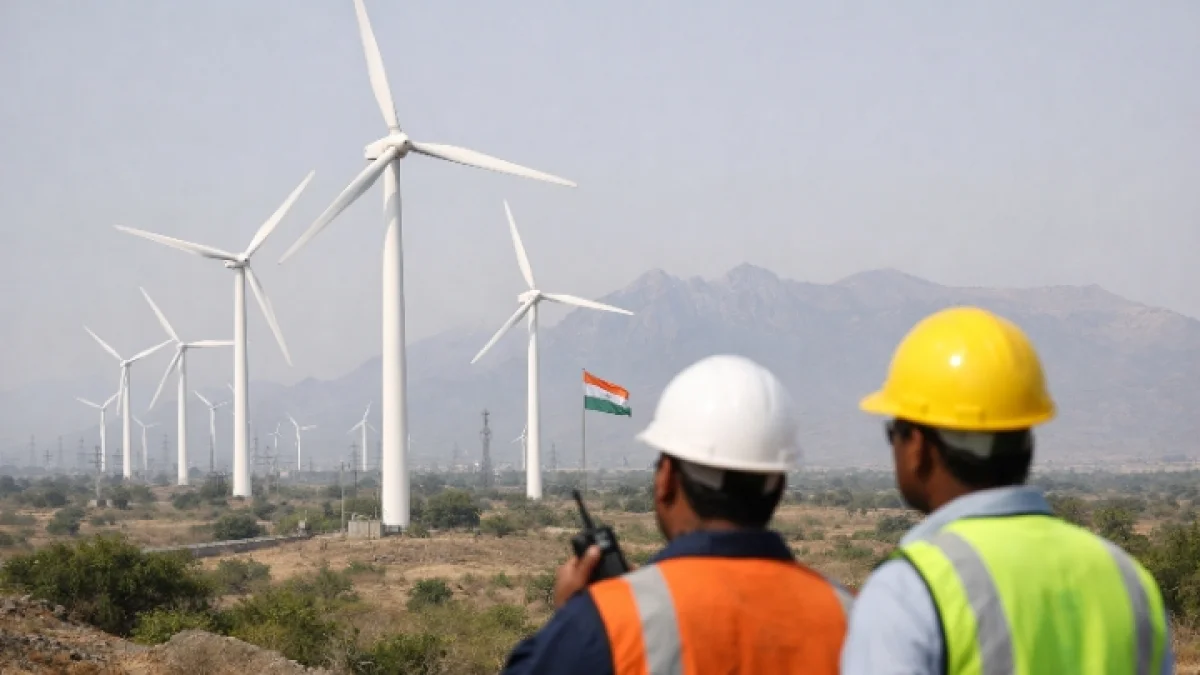
In the report, titled "Global Economy in Crosscurrents of War and Technology," the IMF said countries' economic performance is diverging depending on their exposure to energy-price shocks and their participation in the technology sector. Energy exporters outside the conflict zone have benefited from stronger terms of trade, while economies integrated into AI-related supply chains have seen improved activity despite higher energy costs. Many energy-importing and lower-income countries, however, face weaker growth prospects.
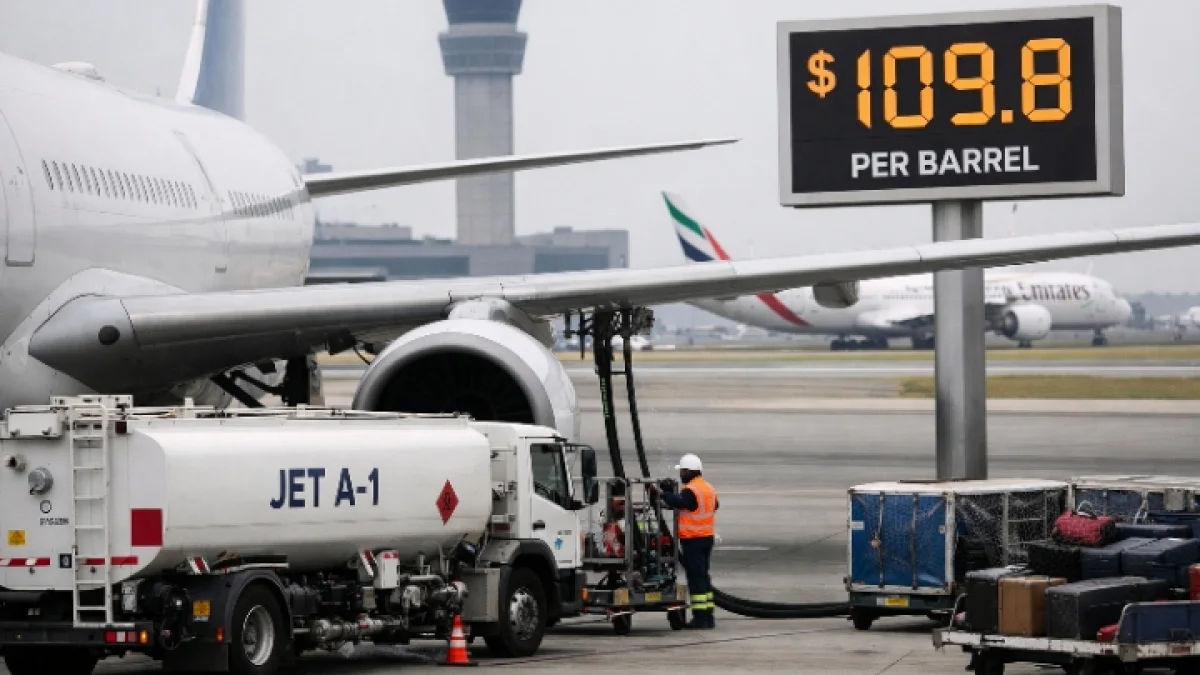
Global headline inflation is now projected at 4.7% in 2026, reflecting higher energy prices after the regional conflict disrupted oil markets. The IMF expects inflation to ease in 2027, assuming commodity prices stabilize and supply disruptions continue to diminish.
Petya Koeva Brooks, deputy director of the IMF's Research Department, said the world economy had weathered the recent shock better than initially feared but cautioned that risks remained elevated.
"The global outlook is being shaped by two powerful forces pulling in opposite directions: the lingering effects of the energy shock from the war in the Middle East, and a technology-driven investment boom," Brooks said during the report's launch. She added that a renewed escalation of the conflict or a sharp reassessment of AI-related financial markets could weaken the outlook.
The IMF's baseline forecast assumes that conditions in the Strait of Hormuz gradually normalize over the coming months and that oil prices average about $89 per barrel in 2026 based on market assumptions used in the projections. It also assumes geopolitical uncertainty remains elevated through 2027 while the current AI investment cycle moderates over time.
The Fund urged central banks to remain focused on price stability while tailoring policy responses to domestic conditions. It also called on governments to rebuild fiscal buffers as temporary energy-related support measures are phased out and to pursue structural reforms aimed at improving resilience and long-term growth.